
Before expanding U.S. Route 278, shouldn’t we first explore improving intersections?
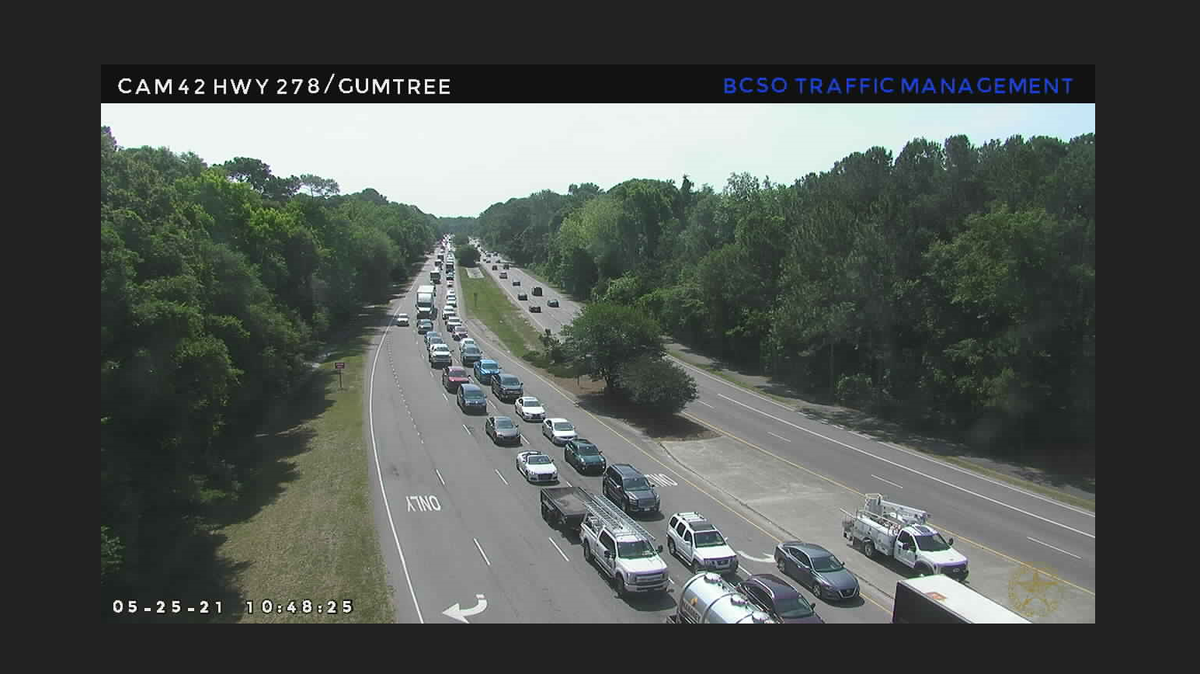
Hold up on expansion
The impact and projected taxpayer expense of changes envisioned for U.S. Route 278’s entrance to Hilton Head are enormous.
Before committing to the project’s final design, there are two fundamental questions that deserve a fully documented and transparent public airing:
(1) Will a six-lane motorway extending from the Bluffton flyover to the Cross Island Parkway effectively address rush-hour traffic back-ups?
(2) Is replacing the Graves bridge over Skull Creek truly required for structural reasons, or principally to expand the crossing from four to six lanes?
Those who endure the morning and afternoon rush hours know well the serious traffic back-ups that are associated with 278’s intersections at Moss Creek, Squire Pope, and Spanish Wells Roads.
They are not caused by lane constriction between these points.
And those familiar with this stretch recognize that the need for a safe and efficient intersection to serve the four communities on Jenkins Island cannot be seriously questioned.
Two new six-lane bridges and widening 278 between these intersections appear to accomplish little more than to expend taxpayer dollars and encroach on historically and aesthetically valuable land.
The public’s dollars would be far more effectively spent on creative intersection engineering.
Kent Collins, Hilton Head
Protect Amanche camp
Yesterday, I dug up old photos of a 2016 camping trip out west with my 23-year-old son, part of which involved visiting an obscure site with the odd name of Manzanar. Thanks to WiFi, we were able to learn what Manzanar was all about.
Now a national historic site, Manzanar was a Japanese-American internment camp from 1942 to 1945, occupied by 10,000 American citizens who only had the unfortunate luck of having Japanese ancestry. We were stunned.
Planted in one of the most inhospitable deserts in southern California, Manzanar National Historic Site presented visitors like my son and me with the stark reality of what this country did because of racial hysteria during World War II.
The National Park service at Manzanar has done a superb job with interpretive exhibits. We both left there changed persons.
By odd coincidence, the same day I revisited these photos, I read an editorial by Carlene Tanigoshi Tinker and her campaign to protect Colorado’s Amanche incarceration center, another Japanese American internment camp not yet federally protected. I recalled the words on the plaque at Manzanar: “May the injustices and humiliation suffered here as a result of hysteria, racism and economic exploitation never emerge again.”
Let us support Ms. Tinker’s entreaties to Congress to preserve the Amanche historic site. Let us ensure that future generations walk through the preserved sites and then leave “hysteria, racism, and economic exploitation” where it belongs: in the past.
Don Gibson, Fripp Island
Doing the math
I think people need to understand which party actually has created deficits and which one has reduced them.
When the Reagan Administration took office the deficit was $78.9 billion. By the time he left office it rose to $152.6 billion.
Bush41 took that deficit and grew it to $255 billion.
Clinton reduced it to a surplus of $128.2 billion.
Bush43 then erased the surplus and handed Obama a $1.41 trillion dollar deficit.
Obama reduced it to $584.6 billion.
Trump then almost doubled it to $1.12 trillion in four years.
Simple math tells you that every Republican president since Reagan has increased the deficit and every Democratic president has reduced it.
Maybe the next time someone blames Democrats for being budget busters, they might pay attention to the facts. (Numbers may be checked at The Poynter Institute’s Politifact.)
George Casey, Bluffton
Deep gratitude
Many thanks to the medical and nursing staff of Coastal Carolina Hospital and Compassus Hospice for the excellent care given to my dear husband, Frank Russo, who died there Sept. 7, after a stay of nine days.
Because of Covid restrictions, we were not able to visit him in person except for the last 18 hours of his life, but he, with his nurses, face-timed with us several times each day with updates on his condition. He faced his final days with courage and conveyed total trust in his caregivers. Our entire family is indebted to all of you who attended to his needs with such love and skilled treatment.
As a former medical social worker and later president/chief executive officer of a regional hospital, I bring a unique perspective to assessing the care he received and I am very grateful to all of you.
Joan Regan, MSSW, MPH, Bluffton