
Editorial: Meet the basic needs for research monkeys
It is an unfortunate reality that research into potential cures for diseases still rely on animal testing -- even in 2016.
Until technology advances, we must accept that a certain number of animals must be sacrificed for the good of humanity.
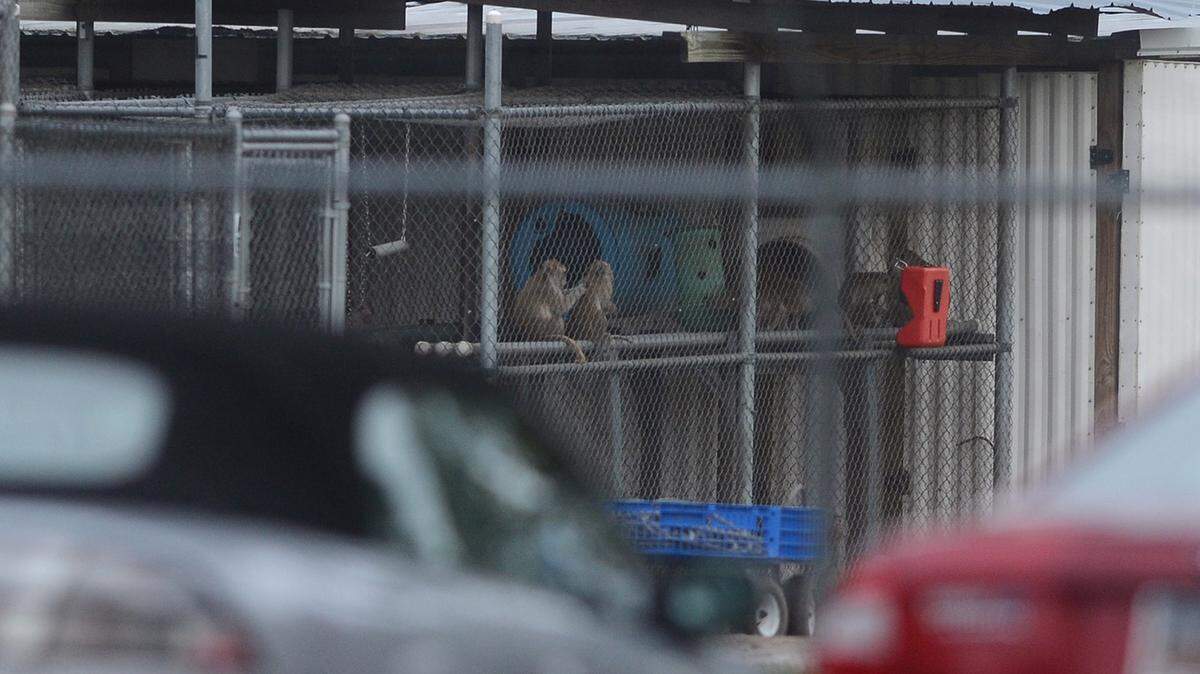
And the monkeys housed at Alpha Genesis Inc. in Yemassee are doing their part. According to media reports, the animals have played roles in vaccine development and research on cures for a wide range of diseases, including cancer, heart disease and multiple sclerosis.
Both the National Institute of Allergy and Infectious Diseases and the National Institute of Neurological Disorders and Stroke own animals at the site, where the animals have helped develop life-saving preventions and treatments for diseases.
We owe it to these animals to ensure their basic needs are being met. And we are alarmed to hear that may not be the case with all of the animals.
The U.S. Department of Agriculture's Animal and Plant Health Inspection Service recently confirmed an active investigation at the monkey breeding facility and research lab that has been going on since May.
While officials are mum as to what they're specifically looking into, recent documents submitted by the facility to the federal government may shed some light.
Between January and October of 2014, Alpha Genesis reported the deaths and injuries of 12 monkeys to the National Institutes of Health's Office of Laboratory Animal Welfare.
A certain number of deaths and injuries is expected at such a large facility where thousands of monkeys are kept.
But what the public doesn't -- and shouldn't -- accept is death resulting from carelessness and/or neglect by caretakers.
Reports show that one monkey died of thirst and four others were treated for symptoms of dehydration after the water supply to a set of cages was turned off for a week.
In another instance, a monkey's tail had to be partially amputated after being injured due to the cold.
A heater in the area was found to be connected to a faulty switch.
The incident echoed one from a prior year in which a monkey died after being left out in the cold on a January night that dipped to 9 degrees.
And another monkey was found dead in an enclosure thought by facility workers to have been empty. Three other monkeys from the same building also died in January due to the cold, found a USDA inspection.
These are not unavoidable side effects of thousands of monkeys housed in one facility.
Rather, it is incompetence. And it's 100 percent avoidable if a workforce is properly trained, outfitted, monitored and paid.
The facility has moved to make amends. Among other changes at Alpha Genesis, all employees have undergone training on checking water lines.
And supervisors must now check behind employees. The facility has also reported that it is experimenting with a temperature monitoring system to alert officials to future HVAC failures.
It remains to be seen just what the federal probe will uncover and what steps, if any, Alpha Genesis will be required to take.
But one thing is clear.
This level of worker incompetency must not be tolerated.
This story was originally published January 15, 2016 at 9:34 PM with the headline "Editorial: Meet the basic needs for research monkeys."