
The University of South Carolina can acknowledge its past, but must embrace the future
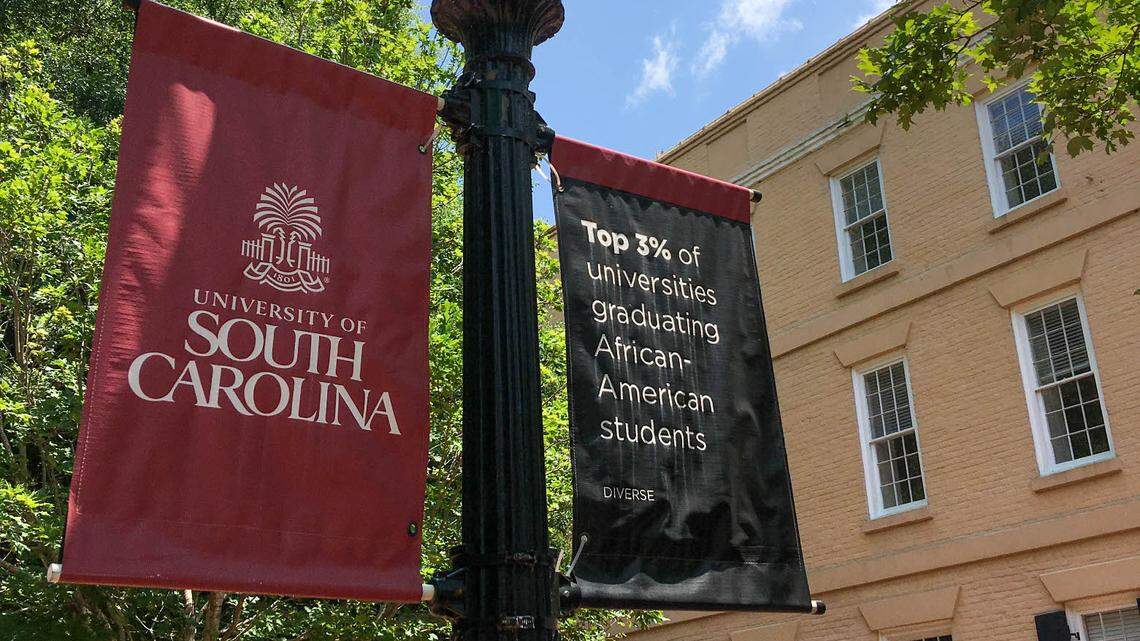
Banners along The Horseshoe at the University of South Carolina highlight recent accomplishments.
“Top 3% of universities graduating African-American students. Diverse,” reads one sign prominently displayed on a light pole.
Those same African-American students, however, will attend classes and events in buildings honoring men identified as secessionists, segregationists, slave owners and/or supporters of slavery.
Imagine that.
A subcommittee of the USC Presidential Commission on University History, a group of historians, faculty, students, trustees and others, has put together a draft report citing 11 buildings on campus that it recommends be renamed.
The university history subcommittee has also named 14 African Americans who could have buildings named after them.
A final vote on the report is due Friday and the administration can then decide if it should go before the school’s trustees.
Ultimately, however, the decision on whether to rename one, some or all of the buildings will rest with the state’s legislature, which under the Heritage Act, must approve such changes to public buildings with a two-thirds vote.
That seems unlikely given the makeup of the legislature.
But the buck doesn’t have to stop there.
There are other ways to make sure the university acknowledges the contributions of Black Americans and demonstrates its commitment to the current students and faculty who chose to make USC their academic home.
In 2013, for instance, on the 50th anniversary of the beginning of desegregation at the university, the school dedicated a Desegregation Commemoration Garden.
It celebrates Sept. 11, 1963, the day three brave students, Henrie Monteith Treadwell, Robert Anderson and James Solomon, registered as the first Black students at the university since 1877.
Treadwell, Anderson and Solomon are among the 14 people the subcommittee suggested should have buildings named after them.
“In the symbolic turning of the soil this morning, we acknowledge the past while anticipating a future of unity and growth,” President Harris Pastides said that day in 2013. “The design for the Desegregation Commemoration Garden is inspired by the important ideals of inclusivity, equality and dialogue.”
Pearl Fryar, the topiary artist for the garden, also spoke.
“I was one of those students that was on the picket line in the 60s,” Fryar recalled, “And, if you had said to me, at that time, I would someday be standing at the University of South Carolina doing three pieces for three students that desegregated the university, I would have said it was impossible. It (goes) to show you what change can happen and what effect change can have.”
If that banner hanging on a light pole has any real meaning, the university must demonstrate to this current generation of students that change is indeed possible.
This story was originally published July 15, 2021 at 3:00 PM with the headline "The University of South Carolina can acknowledge its past, but must embrace the future."