
Support Beaufort County as site for Reconstruction monument
Beaufort County has a remarkable story to tell about American history, and the nation is on the cusp of recognizing that fact.
We join others throughout this county — in both the public and private sectors — in urging the federal government to establish a new unit of the National Park Service here to tell the story of Reconstruction following the Civil War.
It is our hope that President Barack Obama will use the Antiquities Act to designate a Reconstruction Era National Monument here.
Historians nationwide have long recognized the gold mine Beaufort County is in this complicated story that many fear has been misrepresented over the years, or ignored.
More than 100 historians, governments, individuals, churches, nonprofits and advocacy groups have expressed support for Beaufort County to be the site of the new national monument, says Beaufort Mayor Billy Keyserling, who has been working with others for years to get to this point.
In addition, Beaufort City Council member Stephen Murray started an online petition signed by more than 1,200 people urging the president and Secretary of the Interior Sally Jewell to establish a multi-site monument in Beaufort County.
A national monument is not a monolithic stone, but land or buildings that help the public understand and protect landmarks of historic or scientific significance.
Beaufort County was ground zero for freedom when America painfully turned its back on slavery. The enslaved were free here first, practically if not legally, from the outset of the Civil War. We then became the earliest testing ground for how “liberty and justice for all” could actually happen. The Port Royal Experiment is considered the “rehearsal for Reconstruction.” And it resulted in ex-slaves having the vote, going to school, buying property, establishing community and electing Robert Smalls of Beaufort to five terms in Congress. Historians tell us that Reconstruction started here and lasted longer here than anywhere else. It should be a source of pride and study for locals, as well as the nation.
More than 100 sites have been identified throughout the county as significant to the Reconstruction story.
As Keyserling says, “We’re saying let’s get a toehold on this thing, and we’ll build on it over time. The country is ready for it now.”
That toehold could include historic sites at Penn Center, the Brick Baptist Church, the Robert Smalls house, the site at the Naval Hospital in Port Royal where the Emancipation Proclamation was read publicly to great fanfare on New Year’s Day 1863, and the old firehouse in downtown Beaufort.
Cultural and historic tourism is important here, and this could help force our community to have more to show visitors. Some sites of major significance, such as the Mitchelville village for freedmen on Hilton Head Island, are long gone physically but prime for new construction to tell their important stories.
The public will have a chance to hear details about this national monument opportunity at a hearing from noon to 2 p.m. on Thursday, Dec. 15, at Brick Baptist Church, 85 Martin Luther King Drive, on St. Helena Island. National Park Service director Jonathan B. Jarvis, and Capt. Jeffrey Korsnes, commanding officer of the U.S. Naval Support Facility Beaufort, are to participate.
This has been a long time coming. For more than 16 years, the concept has been percolating as documentation has been nailed down and more people came to understand the significance of Beaufort County. The Reconstruction story has many voices, and they must now be heard. This is not a Southern story or a Northern story, a white story or a black story. It is an American story.
We take pride that it also is a Beaufort County story — one that took historians Stephen Wise and Larry Rowland almost 1,000 pages to tell in their recently released second volume of Beaufort County’s history.
The cast of characters — including the celebrated Harriet Tubman, cameo appearances by Ulysses S. Grant and William Tecumseh Sherman, missionary teachers, Cabinet members, and lesser-known heroes like Rufus Saxton — sweep across our muggy stage like a Broadway musical. But the heart of the story is how a nation came to terms with its own ideals and coped with harsh realities.
We have the goods to tell that story. Now is the time.
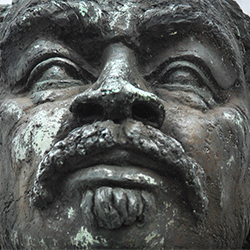
Feb. 22, 2015 100 years after his death, a look back at Robert Smalls shows his enormous legacy | READ
This story was originally published December 12, 2016 at 8:01 AM with the headline "Support Beaufort County as site for Reconstruction monument."