
How Hilton Head Island really reinvented itself in the 1980s | Opinion
I recently gave a talk about Hilton Head Island in the 1980s.
I spoke for about 45 minutes, but it could have been a lot shorter. It could have been four words: “All hell broke loose.”
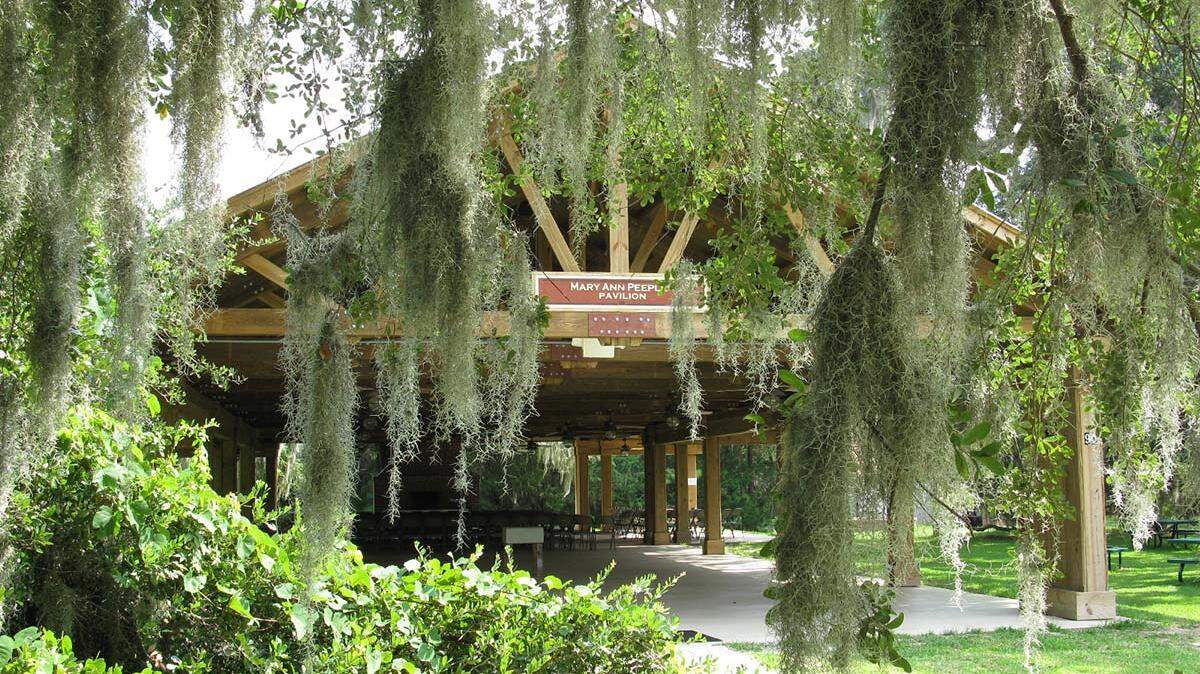
The occasion was part of the ongoing 40th anniversary celebration of the Coastal Discovery Museum at Honey Horn. Looking back, it’s clear that the museum was both a crucial part of the pushback and the antidote to the explosion of growth that it was born into.
Looking ahead, it’s clear the museum can be a guide to communities throughout South Carolina that are getting choked by rapid development.
In the 1980s, Hilton Head’s population more than doubled — increasing by 115% to 23,700, by far the greatest increase of any recorded decade. By comparison, the population grew by only 1.2% between 2010 and 2020, to 37,660.
Nearly 40% of all housing units on the island were built in the 1980s, according to the town’s 2024 conditions and trends assessment. And the town’s housing density increased in the 1980s from 0.3 units per acre to 1.2 units per acre, again by far the largest increase of any decade.
Think of all that transpired in the blur of the ’80s.
Three major oceanfront hotels opened and another added 160 rooms.
A wave of smaller motels arrived, including a Red Roof Inn (with a weathered-gray roof).
Planned communities such as Wexford, Long Cove Club, Windmill Harbour, Leamington and Shelter Cove Habour hit the market, ringed by businesses and condos.
The ground was broken for Indigo Run.
Reilley’s Grill and Bar opened, as did Giuseppi’s Pizza, which would eventually be pillars of two of the island’s major employers: the CRAB group and SERG group of restaurants.
The island stepped into the mainstream with an enclosed mall at Shelter Cove, with Belk and Jordan Marsh the anchors.
Walmart opened in the new Port Royal Plaza in 1985, a major improvement for the working class.
Northridge Plaza opened with a Winn-Dixie supermarket, and despite a petition drive to stop it, Shoppes on the Parkway opened as an outlet mall on William Hilton Parkway.
The Island Packet newspaper, where I toiled day and night in the 1980s, reflected this heyday, growing from two tabloid-sized editions per week, to three broadsheet editions, then five weekday editions with morning home delivery and, when the mall arrived, a Sunday edition.
We had no shortage of news: The original developers who held Sea Pines and the Hilton Head Co. sold to out-of-town owners, the swing-span bridge was replaced with today’s four-lane fixed-span bridge, a state tax on overnight lodging was enacted to pump millions annually into the arts and tourism promotion, state law was changed to enable shopping (and drinking) on Sundays, and the island weathered the bankruptcy of a company that had ended up holding both Sea Pines and the Hilton Head Co.
The Heritage Classic Foundation was born, the island got a high school and a St. Patrick’s Day Parade, and the Old Post Office Emporium hosted the Byrds, Phish and Widespread Panic.
To cap off the decade in 1989, we had a white Christmas.
But the biggest story of the decade was the 1983 vote to incorporate the island. It was part of a larger story of community angst about development.
The town was created to control growth, period. It flew under the banner of a “limited services government.” The Gullah community, citing a need for services such as water, sewer and paved roads, fought it in court but did not prevail.
Citizens quickly began fighting Town Hall because it could not immediately stop development. Citizen uprisings flew under a number of banners: the Resident Homeowners Coalition, Parallel Property Owners Association, Save Our Trees, the Grass Roots Amendment, the Traffic Safety Amendment and the Coalition of Expressway Opponents that fought all decade against the Cross Island Parkway that came to life in the 1990s.
The town’s land management ordinance was supposed to protect the island, and residents assumed it would safeguard it from clear-cutting development tracts and the advent of mini-hotels disguised as homes that are now taking over neighborhoods.
It hasn’t worked. Old clashes continue: paradise vs. parking lot, growth vs. no-growth, retiree vs. worker, resident vs. tourist, native vs. newcomer, the people vs. Town Hall.
More than anything else, these tensions show the true value of the Coastal Discovery Museum and other antidotes to urbanization that have bubbled up from both citizens and Town Hall.
Later in the 1980s, the town began a land-buying program that now totals well more than 1,000 acres and eventually afforded the public access to the idyllic 70-acre Honey Horn site that houses the museum.
In the ‘80s, utilities began using reclaimed water on golf courses and in wetlands, sea turtle protection took shape, Pinckney Island opened to the public as a National Wildlife Refuge, and a citizen-led effort began to beautify the William Hilton Parkway median.
And the Town Council declared April 27, 1985, Beany Newhall Day.
Since 1954, this woman of small stature had been a giant voice in the community. She said we should know and treasure our environment and protect it for future generations. She endowed the Audubon Newhall Preserve on the island’s south end.
And on her special day, a ceremony drew a couple hundred people to the 137-acre Whooping Crane Pond Conservancy in Hilton Head Plantation, where the 1,100-foot main boardwalk was rededicated and named for her.
President Ronald Reagan and U.S. Sens. Strom Thurmond and Fritz Hollings sent laudatory remarks.
And it was recalled that The Island Packet’s co-founder and columnist Jonathan Worth Daniels once wrote this about Beany:
“As long as men and women on this shore follow her flight as the heron for beauty and the hawk against polluters and other predators, this will remain the magic isle of our hopes and expectations.”
The museum that was born in a blizzard of change has been important to the island over the past 40 years. But the next 40 years are just as important if we are to indeed “remain the magic isle of our hopes and expectations.”
David Lauderdale may be reached at lauderdalecolumn@gmail.com.