
Celebrate the moment Lowcountry people said ‘Enough!’ and somebody actually listened | Opinion
Credit the Ridgeland Town Council and Beaufort County Council for soundly defeating development proposals that had stung the people like a Lowcountry fire ant.
On Sept. 18, Ridgeland Town Council voted down a move to annex 1,400 acres into the town, though it is nowhere near the heart of town, so that 2,000 residences and 250,000 square feet of commercial space could be built in a rural and environmentally sensitive area around Bolan Hall Landing.
The fight against it had a simple motto: “Keep Chelsea Rural.”
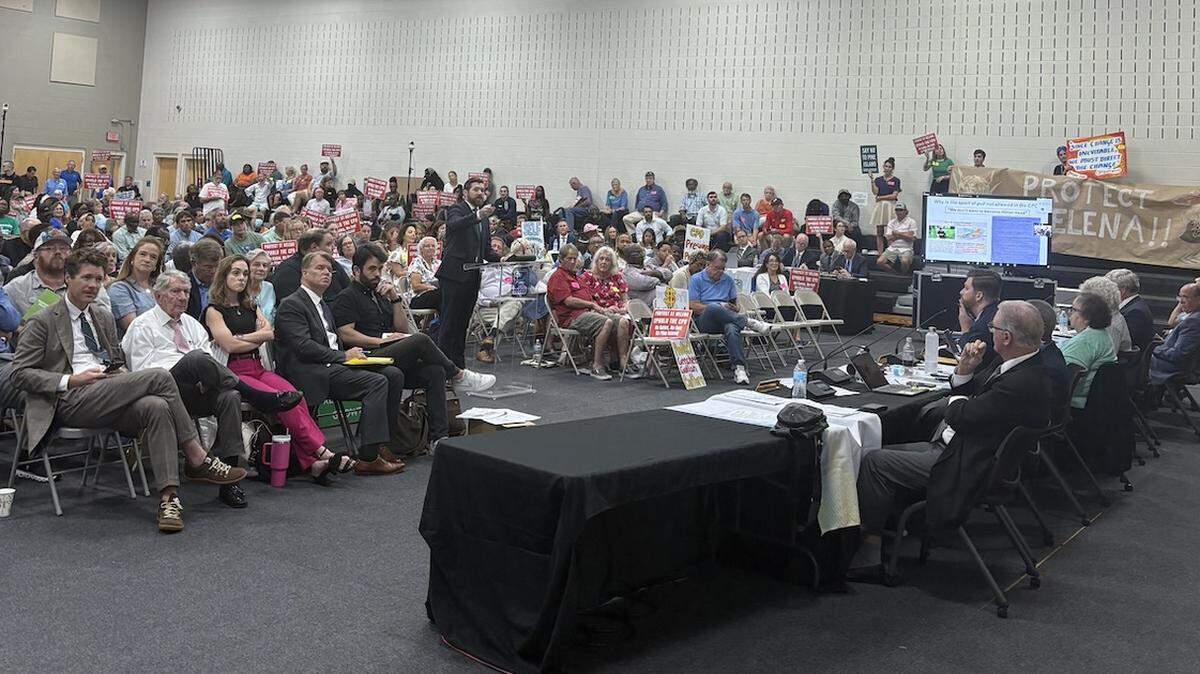
On Sept. 23, Beaufort County Council voted down a proposed development agreement for Pine Island on St. Helena Island. After that, a representative of the land owner pulled a request for a zoning map amendment that would have exempted Pine Island from an overlay district established a quarter of a century ago to preserve traditional land uses on St. Helena.
The battle cry there was also simple: “Protect St. Helena.”
Before the vote in Beaufort County, 400 people of all walks of life filled a public recreation center to tell the county council what they thought. Seventy signed up to speak in a hearing that lasted more than four hours.
You know you’ve struck a nerve when people are still giving 10-minute speeches at 1 a.m.
The vote came after 2 a.m.
Credit the county council for hearing all comers from both sides of this contentious issue.
Credit council leadership for calmly keeping order, and the crowd for obeying the rules against cheering and jeering.
In an area growing as fast as any in the state — with the population explosion in Bluffton, Hardeeville and Jasper County — these two projects seemed to be a tipping point, where citizens and their elected representatives said Enough!
People here know exactly what over-development means. Roads are inadequate and never catch up to demand. New schools have to be built. Clean waterways are threatened. And the quality of life and local heritage that define the Lowcountry fade away.
On Sept. 16, the Hilton Head Island Town Council also got an earful on from both sides regarding a suggested temporary moratorium for the acceptance and processing of applications related to short-term rentals, timeshares and major subdivisions.
Town Council did not vote on that.
But it has only itself to blame for this firestorm that pits fed-up residents against the real estate and tourism industries that fuel the economy.
Hilton Head short-term rentals contributed $43.5 million in fiscal year 2025 in state, county and local taxes and fees, including $7.4 million for beach nourishment on the island and $3.7 million in the Beaufort County Green Space tax, according to town figures. They contribute millions more to public school operations.
Short-term rentals have been part of the fabric of Hilton Head since the late Phyllis Stone became one of the first, if not the first, short-term rental agents on the island. In 1953, she advertised oceanfront cottages at Folly Field Beach at the height of the season for $70 weekly. (“See the moon rise over the Atlantic from the porch of your Folly Field Vacation Cottage. You’ll never forget it.”) At that time, Folly Field had 21 cottages, which were built to prove to the state that a bridge to the island was needed. Three of those short-term rentals boasted — if you can imagine — “TV sets.”
Short-term rentals per se are not the problem, although the estimated number of short-term rentals on the island has increased nearly 133% since 2020.
The problem are the gigantic “homes” that sleep 20 to 30 going up with virtually no setbacks from lot lines, no trees, no natural buffers — and no consideration of how this negatively impacts neighborhoods.
The town has enabled that by permitting it. How did that happen?
In all of these cases, the disregard for existing neighborhoods, traditional land uses and carefully established development standards has turned Lowcountry residents into fire ants.
Their fight will never go away.
But let’s stop the bulldozers for one moment to celebrate two local elected bodies that seemed to hear it — and get it — when the people said Enough!
David Lauderdale may be reached at lauderdalecolumn@gmail.com.