
‘I’ve never seen anything like it’: This is how we save the Lowcountry | Opinion
Brother, can you spare $10 million?
The South Carolina chapter of The Nature Conservancy had to make that plea this spring in order to protect Port Royal Sound and keep our sultry Lowcountry from becoming Little Atlanta.
It found itself having to scrape up $10 million in 30 days if it was going to be able to close on a $32 million deal for a 2,737-acre portion of the former Chelsea Plantation in Jasper County.
How it succeeded — and why — tells us a lot about what it will take to preserve a Lowcountry way of life.
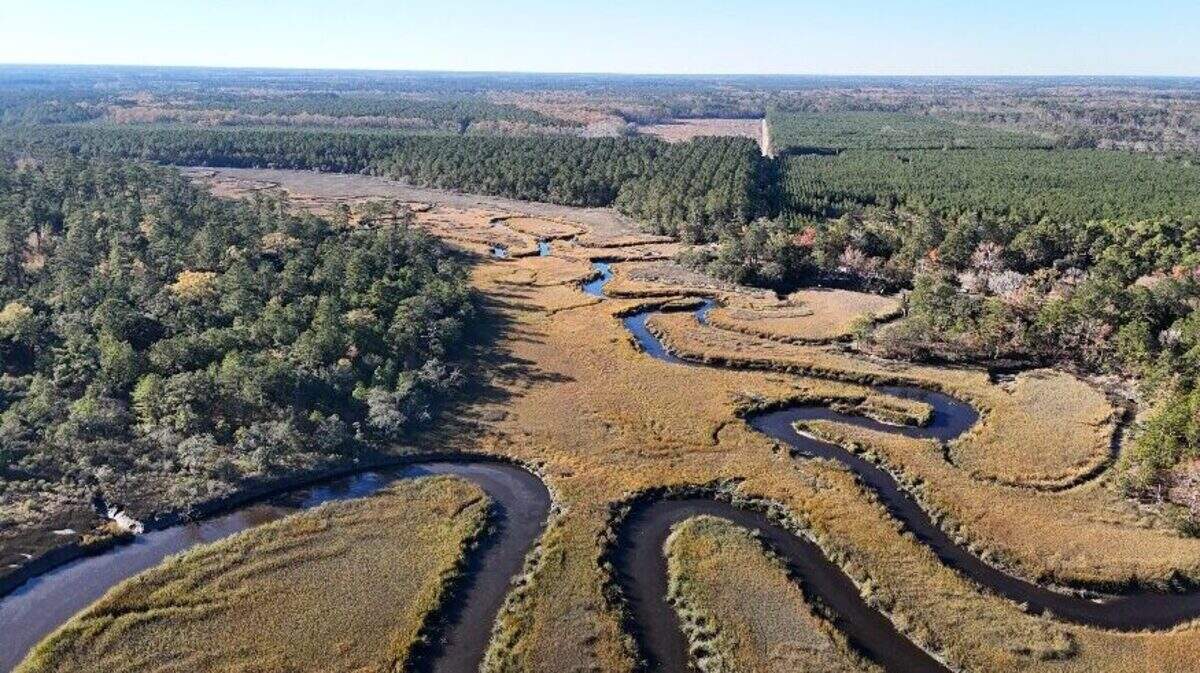
The plan is for the Chelsea tract to be bought by the South Carolina Forestry Commission, and to be open to the public.
It’s beautiful land that you can find only here — a mix of maritime and longleaf pine forests with more than 7 miles of frontage along Hazzard Creek. Its hustle and bustle are the scurrying fiddler crabs. Its silence is pierced by the high-pitched chirps of osprey high overhead.
But close by, and edging ever closer, roars the new and improved Lowcountry. The old two-lane state Highway 462 already runs thick with dump trucks, garbage haulers and impatient commuters.
“Chelsea’s fate was one of this region’s major tipping points for the future of its wildlife habitat, historical character, and water quality,” Dale Threatt-Taylor, executive director of The Nature Conservancy-South Carolina, said in a news release.
The Coastal Conservation League shares this warning about Jasper County: “The scale of proposed development, if fully realized, would more than triple the county’s existing housing and introduce an estimated 270,000 new car trips per day.”
But the story of Chelsea’s spare $10 million should be inspiring.
“Buying Chelsea was a true community effort,” David Bishop, The Nature Conservancy-South Carolina’s coastal and midlands director of conservation, said in a news release.
“Groups like ‘Keep Chelsea Rural’ went door-to-door with flyers against developing the property, there were local billboards saying folks wanted to preserve their rural community, and of course, we’re incredibly grateful for the many donors who stepped up and helped fund this acquisition.”
Matt Williams, an associate director of philanthropy for The Nature Conservancy-South Carolina, faced the $10 million obstacle.
“We had a gathering one evening,” he said in an interview. “One of our trustees was hosting. And we made a pitch to the crowd and explained the position we were in and said we need help. We told folks we were willing to be creative and think of different ways to do this.”
Some came through with seven-figure low-interest loans from their family foundations.
“The thing that I thought was most inspiring and creative was that two couples started the Friends of Chelsea LLC,” Williams said. “When it was all said and done, they loaned us $1.65 million for the deal and they got that from 20 different families.
“We say things like ‘inspiring’ and ‘monumental’ a lot in the nonprofit world, but this really was inspiring, and I’ve never seen anything like it.”
The Chelsea deal took donations from three generations of the Marshall Field family of Chicago, which owned Chelsea from the late 1930s to 2019: Marshall Field V, Stephanie Field Harris and family, Abby and Lloyd Gerry and Chloe Field.
It took money from the Gleason Family Foundation, Lowcountry Land Trust Capacity Fund, many residents of the Spring Island community and several anonymous donors.
It took help from the Newcastle Foundation and trustees Tim Barberich and Eileen Gebrian, Beaufort County residents Dan and Marty Boone, the Gaylord and Dorothy Donnelley Foundation, the South Carolina Office of Resilience, and the Coastal Community Foundation.
And you can help even if you don’t have $1 million to lend. You can support The Nature Conservancy, the Open Land Trust, the Coastal Conservation League, the Open Land Institute, state legislators who support the South Carolina Conservation Bank, and referenda to fund green-space purchases and conservation easements.
“There’s more to do, too,” Williams said. “I want that to be clear. We’re still working. We’ve still got things to do here.”
We now know that everybody’s going to have to chip in.
Even if all you can spare is a dime.