
Meet the Lowcountry horse who became a living history exhibit | Opinion
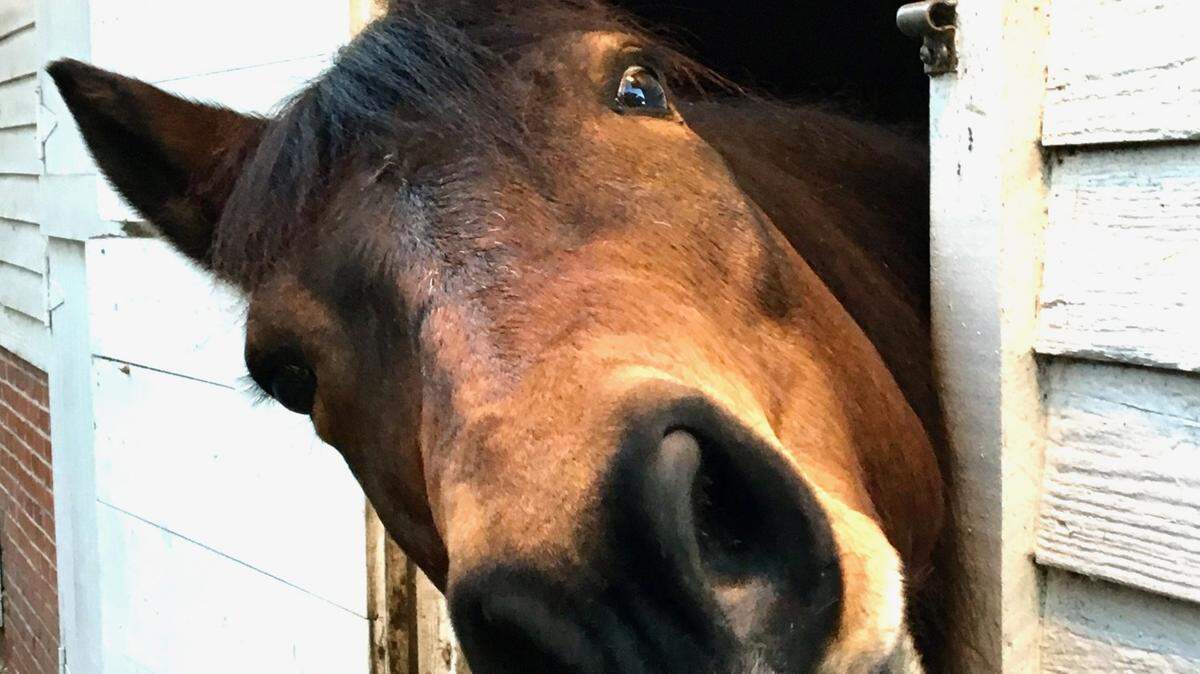
Comet was supposed to be common, but he wasn’t.
He was a marsh tacky horse from the Lowcountry of South Carolina, where his feral forebears had survived for centuries against the longest of odds after being left behind by Spanish explorers.
The name “tacky” came to this endangered breed long ago, to denote a horse of little value, one that was shabby, perhaps, or cheap.
No one would have had the nerve to tell that to Comet.
He was a strong-willed character described by those who knew him best as bossy, feisty, opinionated and pushy, but also loving.
In the last 11 years of his life, Comet was a living history exhibit at the Coastal Discovery Museum at Honey Horn on Hilton Head Island.
He was tended in the barn there by volunteers, and roamed a pasture as an ambassador, not only for his breed but for the value of freedom to objectively study, teach and preserve our history and unique cultures.
We’ll need more of Comet’s traits to keep that freedom.
Comet’s breed is smaller than “normal” horses, but larger in a lot of ways. They’re crafty, sure-footed, smart, unafraid, and great in the marsh and on the hunt. They’re task-oriented, competitive and sturdy as a bulldozer.
Comet’s kin helped “Swamp Fox” Francis Marion in the Revolutionary War, and roamed beaches in search of German U-boats in World War II.
And for the Gullah of isolated sea islands before bridges and electricity, Comet’s folks served as the tractor, tilling fields; the pickup truck, hauling goods to market; and the family car, going to church, school or the post office.
When Comet came to the Coastal Discovery Museum, he was in many ways coming home.
He was owned by Landon K. Thorne III of Brays Island in northern Beaufort County. As a boy, Thorne visited Honey Horn regularly when his grandfather, Landon K. Thorne, and his grandfather’s brother-in-law, Alfred Lee Loomis, owned some 20,000 acres on the island as a hunting preserve.
Thorne kept a little marsh tacky there, named Nellie Bell. And when he moved his family to the Lowcountry as an adult, Thorne turned to marsh tacky breeder D.P. Lowther in Ridgeland to buy one that looked like Nellie Bell.
Comet was a goofball from the beginning.
Thorne’s Labrador chased a ball, so Comet wanted a ball.
Comet peered in the window when the dog went inside, like he too deserved a spot on the sofa.
“He was a devil,” Thorne said. “A little imp.”
Comet would play a trick on Thorne when he was getting saddled up for a ride. He’d puff up his chest as a strap was being fastened around his girth to make Thorne think it was tight. But it wasn’t.
And then Thorne would slip and slide around, and Comet would turn and stare, knowing he’d pulled a fast one.
Comet was 16 when he came to Honey Horn to retire.
His main tender was the volunteer in charge of the barn, Laura Badger.
“He didn’t tolerate stupidity,” she said. “He knew what was supposed to be done and he’d glare at you if it wasn’t right. You had to be firm and be the alpha in the relationship. He wasn’t for the faint-hearted.”
One day a volunteer said Comet must not be feeling well because he hadn’t bitten or kicked her yet.
But, Badger said, “He could be so loving. He thought I was his girlfriend or his mother, I was never sure which.”
And she said, “He made me laugh every day.”
Comet’s health failed at the end of 2023, and he is buried on the Honey Horn grounds. Recently, Thorne had a marble stone installed near the barn to honor Comet and the volunteers who cared for him.
Thorne said his interest in Comet was very personal, but also a deliberate act of cultural preservation.
He’s going after it in another way now. Thorne has gotten a Master of Fine Arts degree in writing and his first novel has a Lowcountry theme.
Thorne said we must preserve the spirit of the place.
Maybe Comet showed us just what that looks like.