
Harbour Town presses on with RBC Heritage, after losing its ‘right arm’
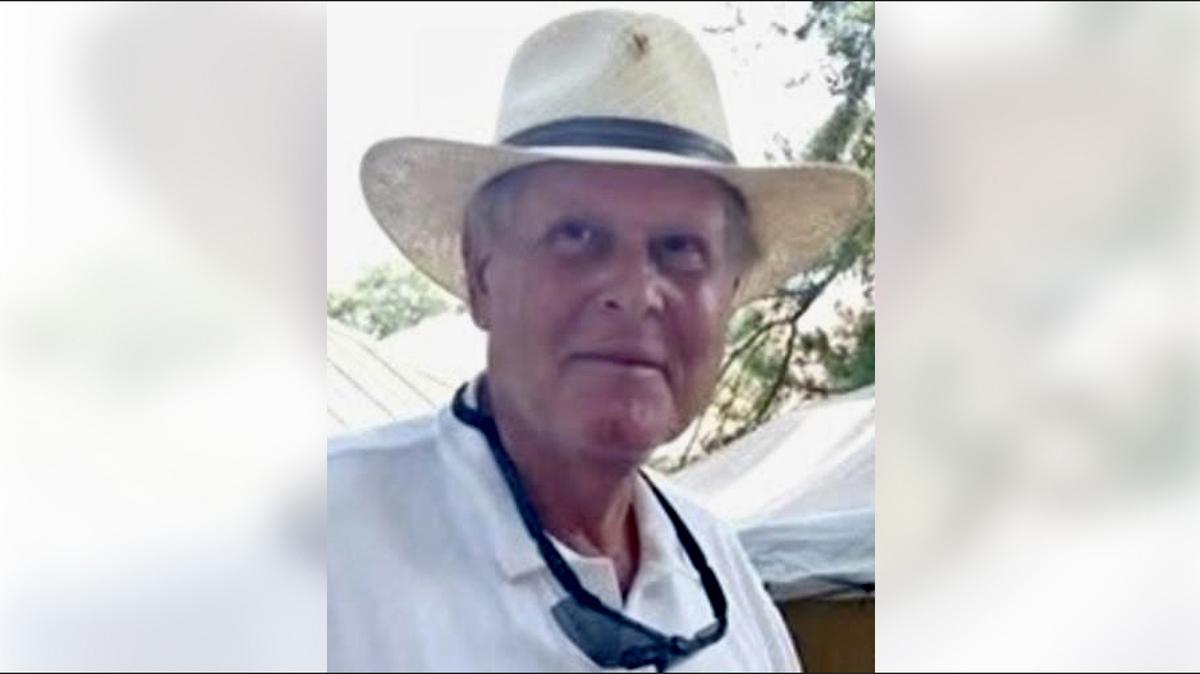
Bill Carson brought out the best in us, or so it seems each year when the PGA Tour comes to Hilton Head Island.
When the $20 million RBC Heritage Presented by Boeing is played this weekend over the Harbour Town Golf Links in Sea Pines, 72 of the best golfers in the world and tens of thousands of rollicking fans will little know what they owe Carson.
He was there in the beginning, when it was all just a crazy idea without the first tee or green. And this 57 th tournament will be the first one without him, following his death March 6 at age 84. A celebration of his life will be held a 2 p.m. Friday, April 25, at St. Luke’s Anglican Church on Hilton Head.
Carson was one of Sea Pines founder Charles Fraser’s stable of young employees when he and his boss, Donald O’Quinn, led the frantic construction of the course in just 13 months alongside legends Pete Dye and Jack Nicklaus.
Carson would later muse that the Heritage came to life on “a course built for tournament play in record time, by people who didn’t know what they were doing, by a relatively unknown architect, before many spectators who had never seen a golf ball.
“Charles Fraser needed a crowd, but wanted to limit ticket sales to 3,000. We all laughed. The population of the island in 1969 was 3,000, if you counted the marsh tacky horses.”
Carson then served as the director of four tournaments, from 1976 to 1979. With a staff of three, led by Bonnie Hunt, he had to handle the money, recruit the players, work with the PGA Tour, coordinate the committees, keep up with 400 volunteers, make sure golfers and their families were taken care of, find a place to park all the extra cars, and oversee security, ticket sales, publicity, press, and gallery control.
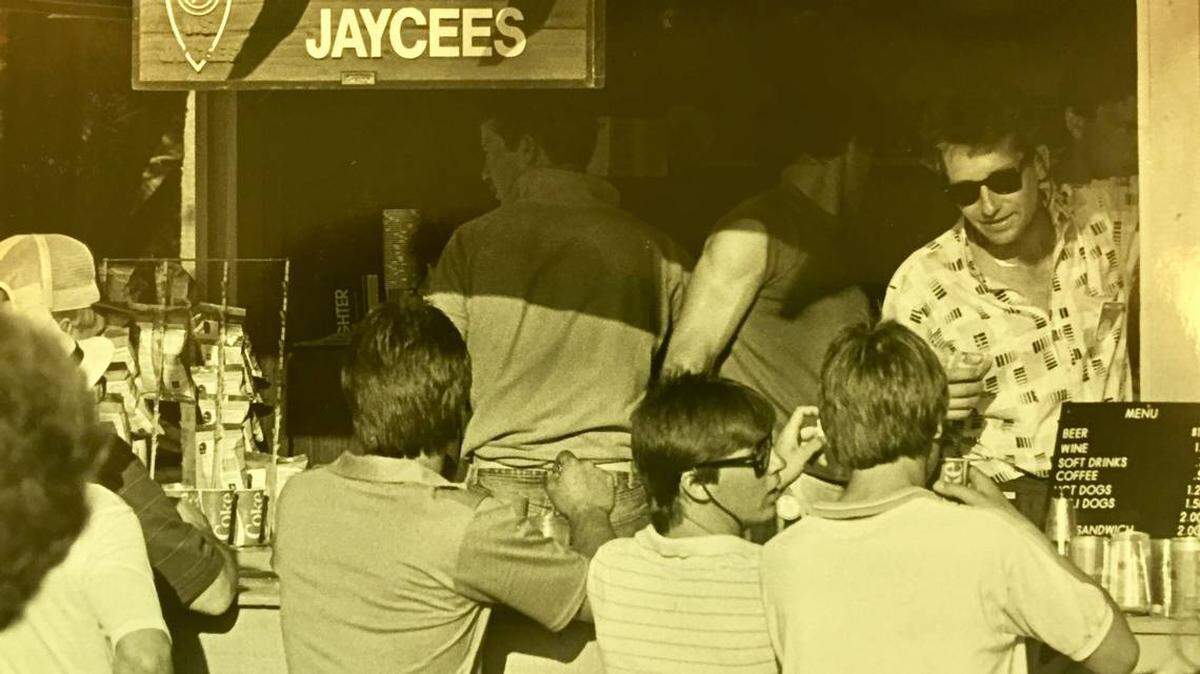
But it was another seemingly small change that brought out the best in us. “The most notable achievement during my tenure was initiating the use of local nonprofit organizations to provide concession services for the event,” Carson would later say.
Montessori school parents responded with homemade cookies and soup. Sea Pines Academy parents served oysters on the half shell. Others made barbecue and grilled hotdogs, and over the years, that one change has pumped millions of dollars into the nonprofits.
GATORS AND BROKEN ARROWS
Carson was a leader in the generation of can-do risk-takers who gave Hilton Head’s new era of development a foundation and attitude. They had fun doing it while working like mules.
He was reared on a farm in Summerton, S.C., got a landscaping degree from Clemson University and was serving in the U.S. Army when he and a buddy rode over to Auburn University from Fort Benning, Ga. They met two roommates who had to be back at the dorm by 9:30 p.m., and they would both end up marrying them.
He came to Hilton Head in 1965 to work as a Sea Pines landscape designer and maintenance supervisor. But he and Frederica “Freddie” Hunter couldn’t get married until he could move out of an apartment full of guys and build them a house.
She started teaching at Sea Pines Academy (now Hilton Head Preparatory School) when it opened in 1965, one of four teachers working with 28 students. She taught art there for decades, raised two daughters, and is back at the school teaching ceramics.
Bill Carson was one of the first coaches when his friend Maynard Barker founded the Hilton Head Gators youth football program in 1969. He built their first field at Sea Pines Academy, and helped mold children who would write letters as adults thanking him.
He was a volunteer with the island’s first fire department, president of the Jaycees and the island’s “Young Man of the Year.” He was named president when the island’s first Clemson alumni club formed.
He served on the Vestry twice at St. Luke’s Anglican Church. And he cooked whole hogs to raise money for charities with a group of friends – Zeke Jordan, Joe Harden, Wes Jones and Barker, known as the Broken Arrow Barbecue Team.
And he gave society at-large a gift when he wrote a courageous novel in 2018 that laid out the unfair and racist underpinnings of the share-cropping system widespread in his youth.
In “Emancipation Procrastination,” Carson used his experience as the son of a large farmer who was on the school board in Clarendon County when Blacks dared to ask for equal schools. It became the Briggs v. Elliott federal court case that was pulled into the Brown v. Board of Education case before the Supreme Court of the United States that outlawed segregated schools in 1954.
One of Carson’s closest childhood friends was a son of Harry and Eliza Briggs, an automobile mechanic and motel maid who lost their jobs and had to move after he signed the petition demanding equal schools.
“Something inside me was eating me up to do the book,” Carson told me. “Harry Briggs is a hero and nobody knows his name.”
Arnold Palmer and Shakespeare
Carson was involved with the construction of a number of golf courses, but spent most of his life here running his own landscaping business.
He was among 83 Sea Pines employees laid off on a single day in July 1979. He said then that he had no hard feelings, and quickly had a number of job offers.
“Harbour Town is like my right arm,” he told the newspaper. “I certainly don’t want to lose my right arm, and I don’t want to see anything happen to Harbour Town. “A lot of my sweat is out on that golf course. I’m proud I had a hand in it.”
He tried to keep its stories alive.
He recalled the first Heritage at Thanksgiving 1969, when players battled cold weather, tiny greens, grass that had barely taken root, pine straw covering bare spots, and a thick, unplayable jungle if your ball left the narrow fairways.
“I was standing next to Pete (Dye) when some of the players finished their first round and some of the comments were not very polite,” Carson wrote in a collection of his tournament memories.
Jack Nicklaus told him the pay for designing the course was $40,000 and Dye put it all back into the course. But Nicklaus said he was never reimbursed for airfare for the 23 trips to the site he made on his plane.
Carson would tell that “the No. 5 fairway was the Sea Pines dump. There are discarded appliances, junk cars and many other things buried there.
The fill to cover all of this rubbish came from the large lagoon on the left side of the fairway. Julius Boros loved to fish there.”
He could recite two dramatic golf shots that changed the history of Hilton Head, both by Arnold Palmer on Sunday afternoon when he won the first Heritage. One was Palmer’s recovery shot after hitting it into the lagoon on No. 10, which enabled him to save par. And his approach shot on No. 18, after his drive was inches from going into the marsh.
“Jack Nicklaus was emerging as the greatest golfer in the world,” Carson said. “Arnold Palmer was the most charismatic and it was a provocative golf course that would become the discussion of design concepts for the next half century.
“Shakespeare could not have written it better.”
David Lauderdale may be reached at lauderdalecolumn@gmail.com.
This story was originally published April 13, 2025 at 5:00 AM.