
If you feel pain in the center of your chest, don’t delay seeking medical care | Opinion
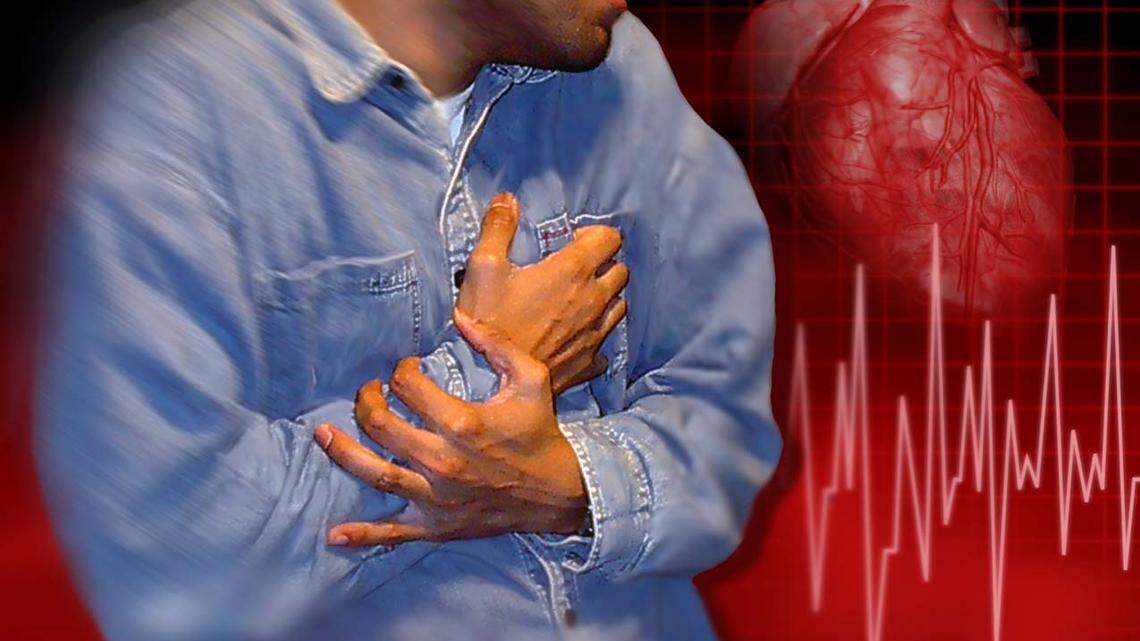
During medical school, I learned the characteristic triad that makes up the most common presentation of coronary artery disease: exercise-induced chest pain that is felt under the breastbone and relieved promptly by rest. I also learned about denial in illness — the tendency to disregard ominous symptoms.
When challenged by a dreaded disease, our minds can engage in magical thinking: “I’ll treat it as nothing and it will be nothing.” Despite many years of experience taking care of heart patients, I, too, went into denial when I first felt chest pain while working out.
I had always been in superb health. I competed as a gymnast in college, ran numerous 10Ks, worked out regularly, didn’t have high blood pressure, had never been overweight and had never smoked. My father lived to be 94. Being athletic and vigorous was an integral part of my self-image. At 62, I had no fear of impending heart disease.
One evening, I was gliding on the elliptical in the gym. Nine minutes into a 20-minute run, I felt a mild burning sensation in the center of my chest. I stopped, and the burning ceased right away. The possibility that this could be heart disease flashed across my mind. How could it not? But I knew that plenty of other irritations (such as acid reflux and muscle strain) can cause chest pain.
“I don’t have heart disease,” I thought to myself. “This must be something inconsequential.”
Three days later, I was back in the gym. Once again, around nine minutes into a vigorous elliptical workout, the burning returned. I stopped gliding, and the pain went away. I waited a couple of minutes and resumed exercising. The burning started again after less than two minutes.
The pain wasn’t severe — maybe a three on a scale of 10. Again, my first reflexive thought was, “I don’t have heart disease.” But this time, I asked myself a crucial question: What would I tell anybody else who told me this symptom history?
The answer became immediately obvious: a prompt cardiac workup, starting with an electrocardiogram and a stress test, the former to detect heart compromise at rest and the latter with exercise.
I called my doctor the next day and got scheduled for a stress test. That led to another study (angiograms) and the diagnosis of severe triple vessel coronary artery disease, including a narrowing known as the “widow maker.” Recuperating from open-heart surgery was no fun, but afterwards I was able to go back to my normal life, including full-time work, travel and sports.
That was over 14 years ago. I’ve had no cardiac symptoms since.
Neglecting symptoms can cause disaster not just from heart disease, but from cancer and psychiatric conditions. For example, someone might think, “this lump is not so hard, and not so big,” and let a tumor grow.
The best way to get past denial is to separate the problem from yourself. Consider giving advice to a friend who reports the symptoms you’re having. It’s a lot easier to be objective when it’s someone else’s problem.
Most chest pain is not due to heart disease. Most pain anywhere in the body is not caused by a life-threatening illness. But if you have pain in the center of the chest that comes on with exercise and is promptly relieved by rest, don’t let denial delay seeking medical care. You might not live to regret it.
This story was originally published February 27, 2025 at 8:03 AM with the headline "If you feel pain in the center of your chest, don’t delay seeking medical care | Opinion."