
Orrin Pilkey Jr., a coastal prophet, has died. His beach warnings must live on. | Opinion
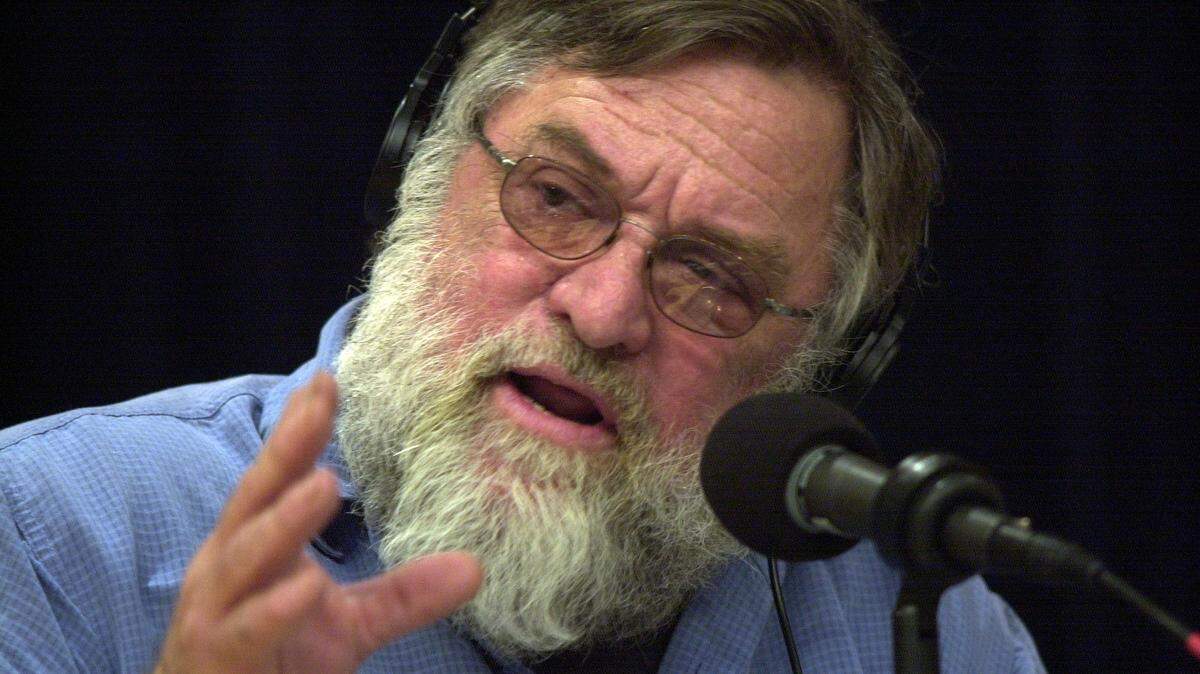
Our coastal prophet of doom is gone.
But it would be foolish now to throw to the winds the warnings of geologist Orrin Pilkey Jr., which pounded as relentlessly as ocean waves until his death last month at age 90.
Pilkey was a prominent figure in the news of Hilton Head Island — and up and down the coastline — for decades. His message was simple yet jarring: Retreat from the shoreline because you will never overpower the ocean.
He said that placing hard surfaces on eroding beaches only ends one way and that governments are spending fortunes to benefit a relative few people, temporarily, at the expense of everyone.
Pilkey also wasn’t a fan of today’s preferred method of battling beach erosion: renourishing beaches with sand pumped from offshore. He titled one of his more than two dozen books “Useless Arithmetic,” disputing calculations used to defend these costs.
None of this made the short, barrel-chested man with a sea captain’s beard popular with everyone in coastal communities. But he retained an endearing sense of humor, and he never turned away a reporter.
The retired Duke University professor once told The Raleigh Times that he knew he was “playing a public opinion game” and that “When the press starts ignoring me, I’m dead.”
Here are some other things he said that had developers and naturalists drawing lines in the sand.
“Shoreline erosion is never a threat to the beach, only to buildings.”
“Erosion’s not a problem for the beach. It’s only the beach moving back in space. If the goal is to preserve the beach, you must retreat. Buildings and beaches — we cannot have them both.”
“There are no compromises with the sea.”
“Nothing built on open shoreline should be considered permanent.”
“The issue is a simple one: whether we’re going to save the coast for our grandchildren.”
He was intimately familiar with our coastline, dating to 1962 when he joined the University of Georgia’s Marine Institute on Sapelo Island, Georgia. He later worked at the Skidaway Institute in Savannah before founding the Duke University Program for the Study of Developed Shorelines.
He said you didn’t have to be a geologist to see that “protecting” one section of the shore with hard surfaces only makes matters worse downstream.
When other professionals said Pilkey was wrong to claim you can’t do anything about erosion, he never flinched.
He was skeptical when the Town of Hilton Head Island began a series of beach renourishment projects in 1990.
That $9 million project injected 2.3 million cubic yards of sand along seven miles of island beaches. Projects have continued every seven to 10 years since then at a total cost of $60 million.
As Hilton Head pursued beach renourishment, Pilkey was just a phone call away.
“Hilton Head’s got to do something and do it fast,” he said. “If I were king, those rock revetments would be out in a month and buildings would move back.
“I would try to do it mercifully — as a good king should. I would wait until a storm came along and destroyed the buildings (and refuse to allow rebuilding).
“If I wasn’t king, if I were mayor, I’d nourish. It’s a politically easier solution.”
It is a solution that has served Hilton Head and its beach-driven economy well.
The town found funding with its beach preservation fee, a 2% tax on overnight lodging enacted in 1993. Then-town attorney Curtis Coltrane successfully argued for the tax before the state Supreme Court over objections from the lodging and hospitality industries.
The town budgeted $14 million in revenue from the tax this year, and it will help fund a $16.5 million renourishment project scheduled to start later in the year.
Few communities have enough heads in beds to afford that option, known as the lesser of the evils Pilkey warned us about.
But attacks continue to be as constant as the tides against South Carolina’s landmark 1988 Beach Management Act that controlled hard surfaces and construction along the coastline. And the tides and nor’easters never rest.
The common-sense warnings of the oracle of doom should always ring in our ears.
This story was originally published January 12, 2025 at 6:00 AM with the headline "Orrin Pilkey Jr., a coastal prophet, has died. His beach warnings must live on. | Opinion."