
Shack attack eating into the riches of South Carolina’s Lowcountry | Opinion
We seem to have evolved from stack-a-shacks to a shack attack.
“Stack-a-shacks” was the clever name given to prefabricated condo units stacked together on Hilton Head Island by cranes. That sight helped spur a community terrified by over-development to incorporate in 1983.
But the trees have never quit falling.
And now it seems that every square inch in all of the South Carolina Lowcountry is under attack.
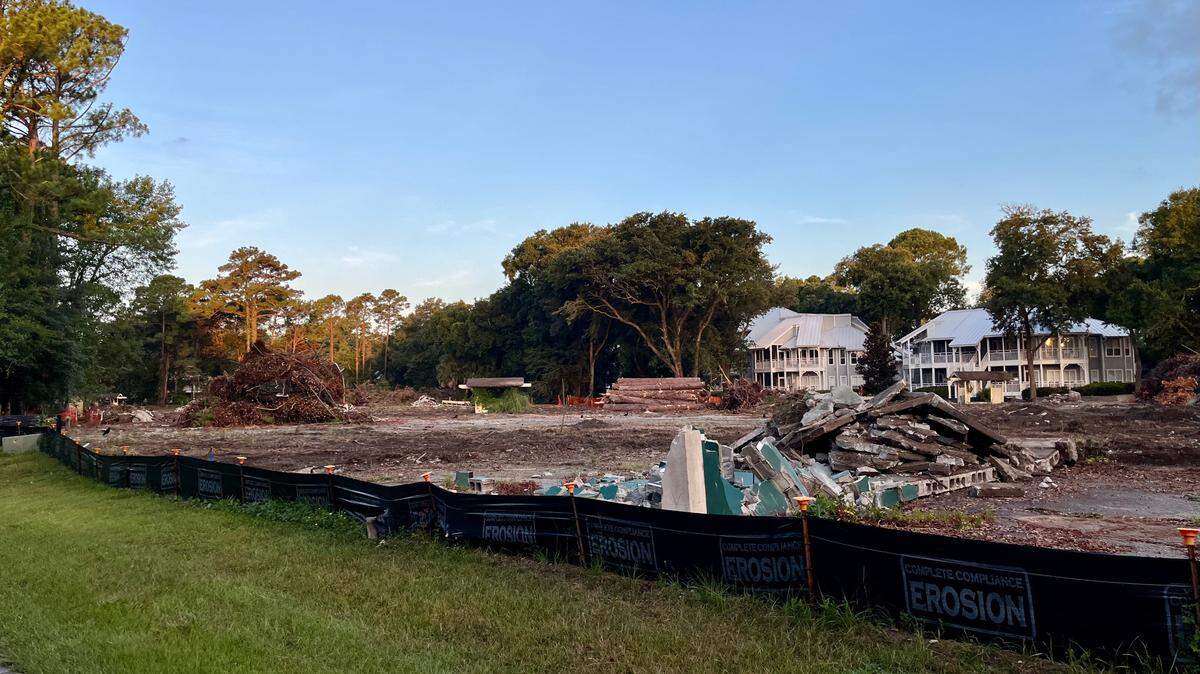
A lot on Folly Field Road now being cleared is a poster-child of the new era.
Fat trunks of downed pines lie about where the nest of an osprey couple that locals named Ozzie and Harriet was felled earlier this month, just two days after a new chick supposedly left home.
This 8.4-acre tract near Islanders Beach Park has been the eye of a storm since 2015 when Town Council voted to rezone it over the pitched objections of neighbors who felt betrayed.
We can trust that the new project will be done tastefully. But the area is already saturated with high-density, multi-family, resort housing.
This tract used to be home to the Port Royal Racquet Club, and is surrounded by condos. The land was sold for $4.2 million in 2017 and is at last being cleared to make way for 166 timeshare units, 221 parking spaces, a pool, spa and clubhouse.
The question is: Where is this taking us, and why?
Not long after the town incorporated with the express goal of controlling growth, a significant event was held in Planter’s Hall in the old William Hilton Inn, itself later torn down to make way for oceanfront timeshares.
On this day in November 1985, development done right was celebrated.
And the audience was counseled on the importance of maintaining a sense of place. “Place” here was nature, not lock-out units.
It also was the day that the town Planning Commission chaired by Orion D. Hack, whose family developed Port Royal, gave bronze Golden Palmetto Award plaques to 18 projects (from St. James Baptist Church to Beach Lagoon Villas) “for excellence in planning, design and construction, recognizing a significant contribution to the quality of life in our community.”
Also at that event, Sea Pines was honored by the Urban Land Institute as the best national example of “large-scale recreational development.”
“Hilton Head succeeds, it seems to me, because it looks to nature as its model,” said keynote speaker Alan Gussow of New York, an artist, writer and environmentalist who was then president of the Friends of the Earth Foundation.
Gussow wrote a beautiful book called “Sense of Place: The Artist and the American Land.”
He had spoken on Hilton Head four previous times, dating to 1972, first at the invitation of Sea Pines developer Charles Fraser and then for lectures sponsored by the Hilton Head Art League.
“People talk about the ‘Hilton Head Look’ in terms of texture, color, proportions, rhythms – all of these naturally occurring systems and qualities were translated into structures,” he said.
“If you’re ever in doubt as to what to do, … about kinds of choices you have to make, … look first at nature, look first at the landscape, and information is already going to be there.”
His warnings about not losing our special place came a week after Philip Morris, then executive editor of Southern Living magazine, told a gathering in Beaufort that “place-making” is a conscientious, community decision.
“We have forgotten what our fathers and grandfathers taught us about establishing a sense of unity and character in our communities,” he said.
He described typical development as “endless no place” that could be any place.
“This is not an example of American culture,” Morris said, “it is an example of no culture.”
Gussow said that Hilton Head had within its grasp the potential to remain a special place.
I wonder what he would think about our rush to now fill every acre with high-density housing.
Is that our legacy, our potential, our place?
“I can think of no condition more depressing,” Gussow warned, “than to be a victim of poverty of place.”