
Guest Viewpoint | Local government annexation process offers ‘fake transparency’
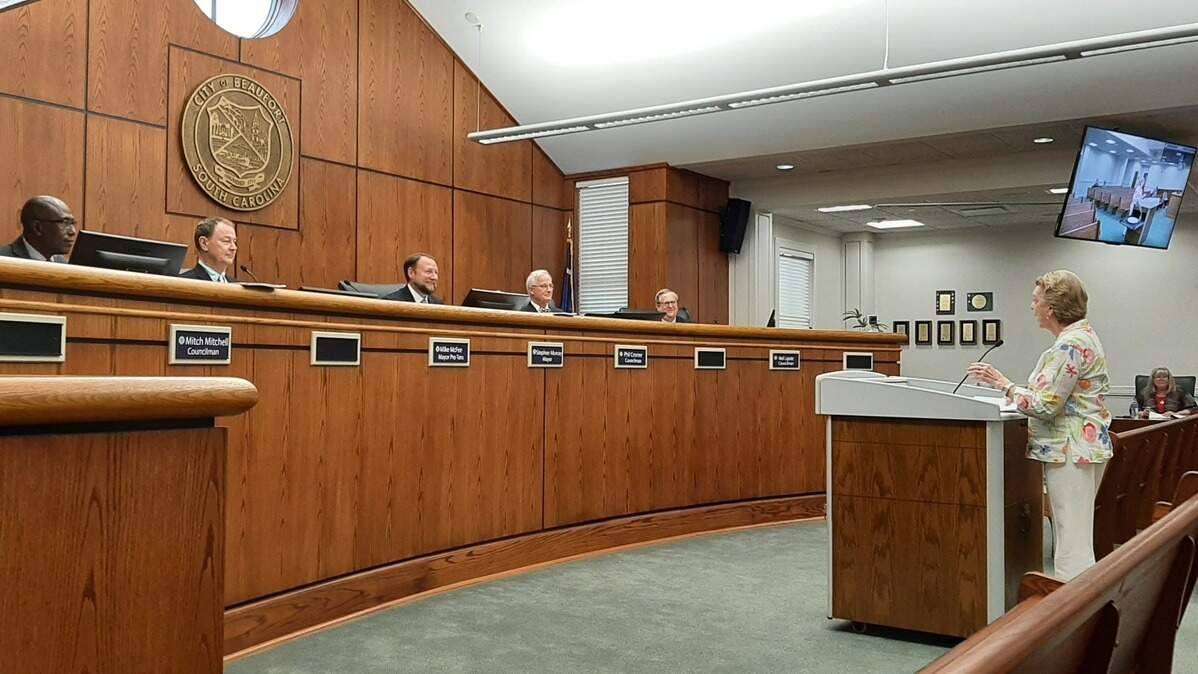
Here is a current good example of how the city of Beaufort goes to no lengths to let you in on what’s going on.
The city posted its agenda for a recent Beaufort City Council meeting. Mostly “standard” stuff, until you get to the good part — proposed annexations.
Which annexation are you interested in? R100 028 000 122D 0000? Or how about R100 001 0051 0000? Hard to know, unless you are an expert in cruising tax ID numbers on the county GIS system. And these are just two of them.
Why do governments do this? No typical resident knows how to navigate this stuff, even if they were interested. But posting notices like this seems designed to ensure the public stays disinterested, and in the dark.
Now, to be clear: We are not contesting, in this instance, these annexations. Each could be argued, but most make some sense. And more information on each of these parcels was available on May 10, when a required public hearing on the annexations was held. If you wanted to, you could have gone to City Hall and asked.
And by the way, Beaufort County doesn’t do it any better. The hoops one must jump through there to learn the details of a proposed development would challenge any Olympian athlete. Some of it is here, another part is over there. And so on.
But here is our plea to the city, and to the county: Just as there ought to be continuity in zoning, there ought to be continuity in information. All the information on a given development or annexation application needs to be in a single place, and easily accessible to the public.
As it is now, if concerned about planning and zoning issues and decisions, one needs to have lots of time available, a willingness to learn to navigate city and county websites and information systems, the ability to call city and county officials and ask “What is this?” plus time to attend both internal staff meetings and published meetings of city and county bodies, and a good understanding of city and county community development codes, master plan and zoning ordinances (not to mention the relevant state statutes).
Anyone want to get involved? Probably not. And because such government practices work to push the public away, those with the most to gain — large landowners and developers, primarily — have the field to themselves. And most of the time, without anyone watching, they get their way.
No, it’s not illegal. It’s just that the system was never designed to allow sunshine in. For all the blather about good government and transparency, city and county information systems and practices don’t walk the talk. Here’s what we most deserve from government (City and County) in this context:
▪ A real-time development information system, accessible electronically by the public, focused on planning and development activities.
▪ Posting of every development application or rezoning/annexation application, posted the same day the formal application is received and time-stamped.
▪ Posting of all subsequent documents and communication related to the application, and a continually updated index of all documents and communications regarding the application.
▪ Downloadable working documents — applications, engineering and architectural designs and drawings, staff and consultant reports and evaluations — for each filed project.
▪ Online commenting system to provide for easy interaction and communication between planning staff, applicants, and the public for each filed project.
Were this kind of a system in place (something entirely doable in today’s digital world) we might join with elected officials to brag about the openness and “full transparency” we have achieved. Until then, it’s just “fake transparency,” no matter how much lipstick we put on the pig.
The mission of the Sea Island Corridor Coalition is to ensure successful and sustainable development of Beaufort’s Sea Island Parkway Corridor, and the land and water it touches. Contact: seaislandcoalition.com
This story was originally published June 15, 2022 at 11:41 AM.