
SC DOT needs to pursue innovative methods to reduce US 278 traffic in Hilton Head
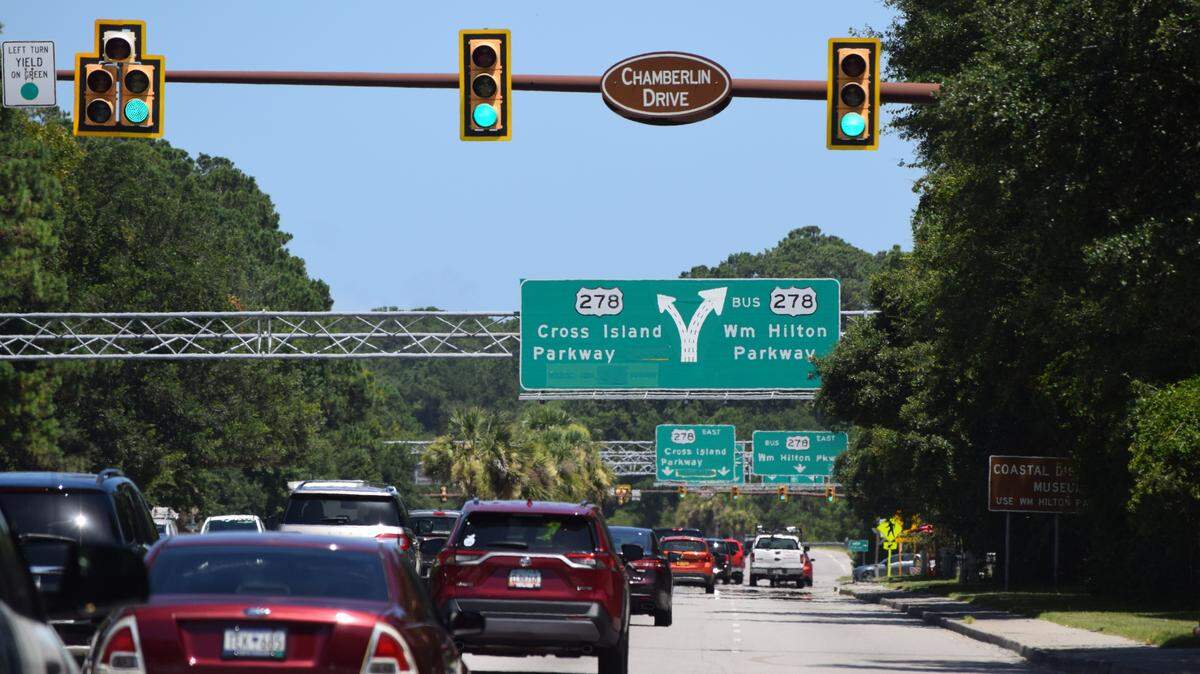
On the list of time-wasting events, sitting in traffic tops the charts.
In our local rush hour, an estimated 5,000 cars sit in traffic for over three hours in the morning and afternoon rush hour, according to the South Carolina Department of Transportation.
At a rate of $20 per hour this translates into $300,000 a day and comes to $1,500,000 for a five- day work week. On an annual basis, this is roughly $75 million per year in wasted time and lost productivity.
Now let’s look at the psychological aspects of our shared traffic experience. Frustration and aggravation lead to irritation, short tempers, and loss of driver attention. A review of US 278 shows almost daily accidents in support of this fact.
What if there is a way to reduce this road anxiety and create a more continuous flow of traffic from Buckwalter Parkway to Sea Pines circle? Well, there is.
There are a few traffic engineering companies that provide adaptive traffic systems where each intersection communicates with the others and lights are controlled via a smart traffic network management system. The system optimizes traffic by reducing signal wait times and provides for a smoother flow of traffic.
The leading company in this market is Rhythm Engineering, which has installed systems nationwide, including in South Carolina. Where employed the overall result is fewer accidents, a reduction in fuel consumption with accompanying CO2 emissions, and a 25-35% average reduction in travel time based on Rhythm Engineering nationwide system deployment data.
How much would an adaptive traffic system cost the public for installation on the US 278 corridor?
With roughly 40 intersections with traffic lights, the cost is about $50K per intersection, accruing to $2 million overall.
Now here is the good financial news for our community: the Environmental Protection Agency, advocating cleaner air, will provide 80% of this cost, leaving South Carolina with a $400,000 bill. Installation of such a system takes just 3 months.
Whatever your view on the building of new bridges for the US 278 corridor project, and whether it will reduce traffic congestion, the installation of a proven automated smart traffic control system is a no brainer.
As a bonus, it will also give us minute-by-minute data on the number of cars, bikers and pedestrians using our roads, and that will finally give us an accurate picture of where the traffic bottlenecks are.
The decision on this lies with the state’s Department of Transportation, but it does, however, need our town, county and state elected officials to make this happen.
Honk your horn! It is time to tell our state politicians and the Department of Transportation to shift gears.
Diederik Avocaat is a senior advisor to the World Bank on infrastructure projects and mergers and acquisitions and owner of a property management firm on Hilton Head Island.
Steven Baer is an electrical engineer, network planner and a retired county councilman.
Joseph Kernan is an electrical engineer and was involved in Hilton Head’s Circle-to Circle project.
Gray Smith works in institutional fixed Income and is dedicated to preserving the beauty and character of Hilton Head Island.
Richard Wallace is the retired owner of a consulting firm that specialized in analyzing and solving complex problems in a variety of industries.