
Residents question plans for Hilton Head Island’s Route 278 road project
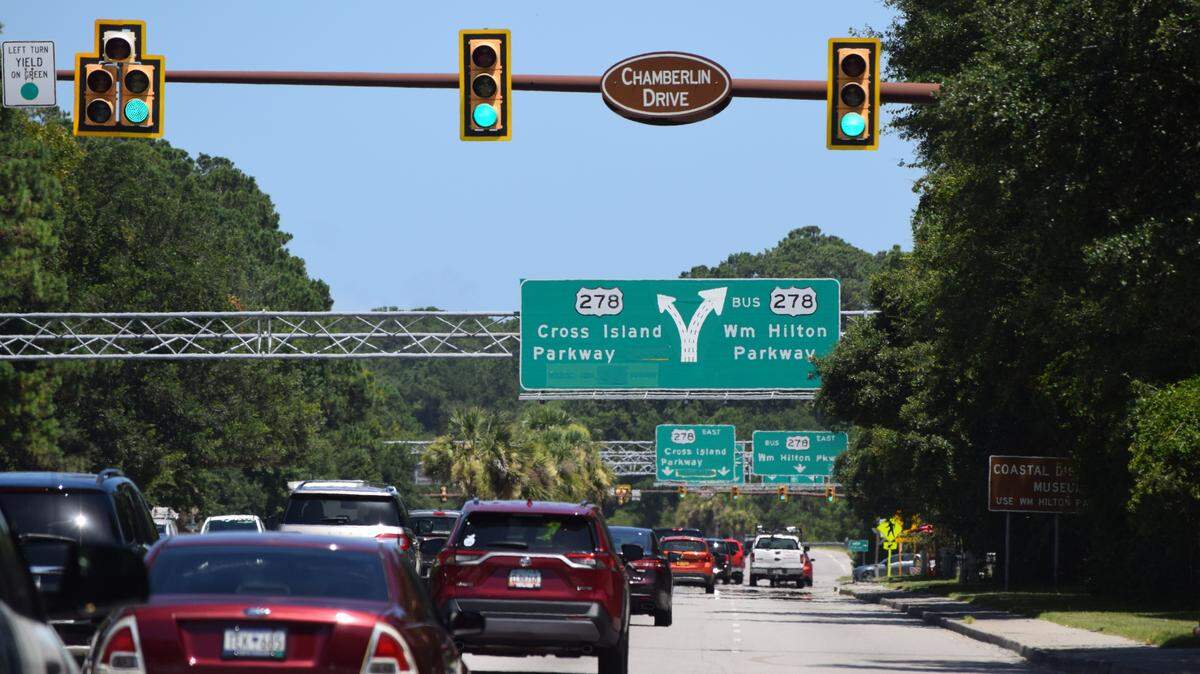
Costs for the Route 278 Corridor Project are expected to escalate from $240 million to over $300 million.
The SC State Infrastructure Bank will soon be asked to fund this shortfall, but a few local politicians are pushing this project without adequate independent engineering review.
Many local groups have spoken against it, and over 7,100 citizens have signed a petition against it.
As Hilton Head Island residents, we believe much more due diligence by the infrastructure bank is required or they may be overspending taxpayer funds to go down the wrong path.
Until a complete independent assessment is conducted, it cannot be determined that the requested funds will accomplish any significant project goals.
Problem areas include:
Incomplete Scope – SCDOT’s project scope extends only to Spanish Wells Road, while Beaufort County’s extends only to Squire Pope Road, but most of the traffic flows causing congestion are to the Cross Island Parkway and Local 278 near Gumtree Road are not addressed.
Intersection vs. End-to End Analysis – SCDOT and consultants hired by Beaufort County and Hilton Head have not fully considered network impacts of multiple lights, intersections, merges, splits, U-turns throughout the entire route. Without end to end simulation, over the proper scope, it is impossible to quantitatively compare one plan with another.
Inaccurate growth projections for Hilton Head Island – SCDOT used a regional 25-year growth projection to justify a six to 11-lane highway to Hilton Head. We believe this is excessive since Hilton Head is fully developed. Census data for Hilton Head shows a six year declining population trend.
Inadequate Attention to Other Alternatives – Congestion problems are caused by peak traffic flows during worker commuting hours and by a Saturday visitor surge. Worker peaks can be mitigated by better public and hotel-supported transportation services, and inducements to have more than one person per vehicle. Several other alternatives have been suggested but ignored.
Another low-cost alternative is to employ modern “smart” traffic technology to operate all traffic lights as a single system, improving traffic flows in real time. South Carolina may be the only state to not use this technology and SCDOT has not included this in the plan.
These and other methods have been suggested, and ignored, as alternatives to spending large sums and causing massive disruption for an expansion that may not provide much improvement or may be in the wrong location.
A frequent comment from the community is that we should repair/replace the one aging bridge span and put funding and energy into a second bridge. This would add a second evacuation route in the event of a hurricane.
This project is the largest single road undertaking in the history of Beaufort County.
Yet, after several years of planning, neither the county, town, nor state, have been able to provide a plan that is complete, quantified, verified by independent bodies, or wanted by the community.
The magnitude of the project runs the very real risk of destroying the character, uniqueness, and beauty of Hilton Head Island.
Due to these deficiencies, we do not have confidence that SCDOT’s plan will meet its stated goals without significant additional components and funding to overcome its known gaps and weaknesses.
As stewards of taxpayer funds, the infrastructure board has the responsibility to assure that they are properly used.
Based on the project’s escalating costs, missing parts, inadequate scientific planning, inaccurate population growth assessment, adverse environmental impacts, and nearly universal community disapproval, we believe that it is inappropriate to commit any more public funds to it until a much more thorough independent analysis, including examination of other viable options, is performed.
Diederik Avocaat is a senior advisor to the World Bank on infrastructure projects and mergers and acquisitions with a background in business and finance and owner of a property management firm on Hilton Head Island.
Steven Baer is an electrical engineer, network planner and a retired county councilman.
Joseph Kernan is an electrical engineer and was involved in Hilton Head’s circle-to-circle project.
Gray Smith works in institutional fixed income and is dedicated to preserving the beauty and unique character of Hilton Head Island.
Richard Wallace is the retired owner of a consulting firm that specialized in analyzing and solving complex problems in a variety of industries.