As Hurricane Gabrielle moves away, forecasters watch two tropical waves off the East Coast
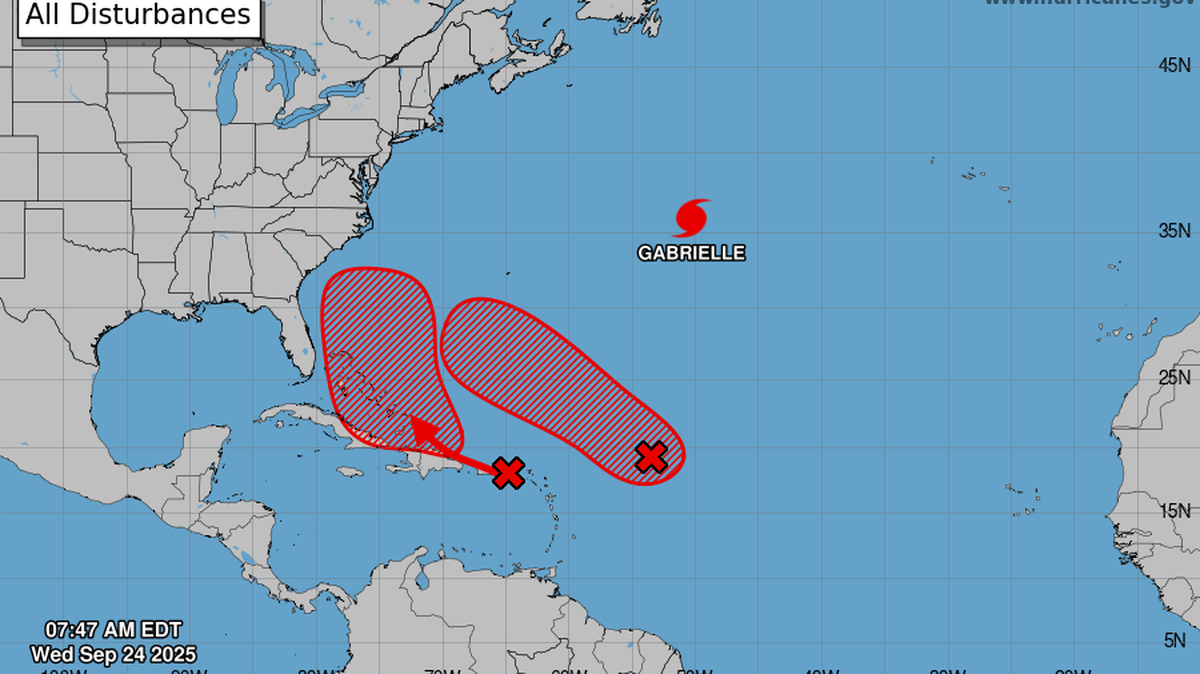
While meteorologists are watching Hurricane Gabrielle race east across the Atlantic and away from the United States, two other systems closer to home could bring the next round of storms to the area.
There are two tropical waves off the coast of the Southeast U.S. that forecasters with the National Hurricane Center are keeping an eye on. Tropical waves are areas of low pressure that move across the tropical Atlantic and are the precursor to hurricanes and tropical storms.
One such tropical wave, dubbed AL93, has a 90% chance of forming into a tropical depression in the next two days, according to the National Hurricane Center.
Another tropical wave called AL94 currently has a 80% chance of forming into a cyclone in the next seven days. National Weather Service office in Charleston said on Tuesday that there is a lot of uncertainly surrounding where this system could go when it develops and the office is monitoring the situation.
In an newsletter from Hurricane expert Michael Lowry, he said the AL94 system puts it near the Carolinas next week. However, the forecast is difficult to determine at this time due to how close the two systems will be to one another.
Even if this system stays offshore, Lowry said it could bring heavy rain to the area next week.
If and when these storms form, the next names on the list are Humberto and Imelda.
This story was originally published September 24, 2025 at 12:00 PM.