Tropical Storm Gabrielle struggles over Atlantic. What does it mean for Hilton Head?
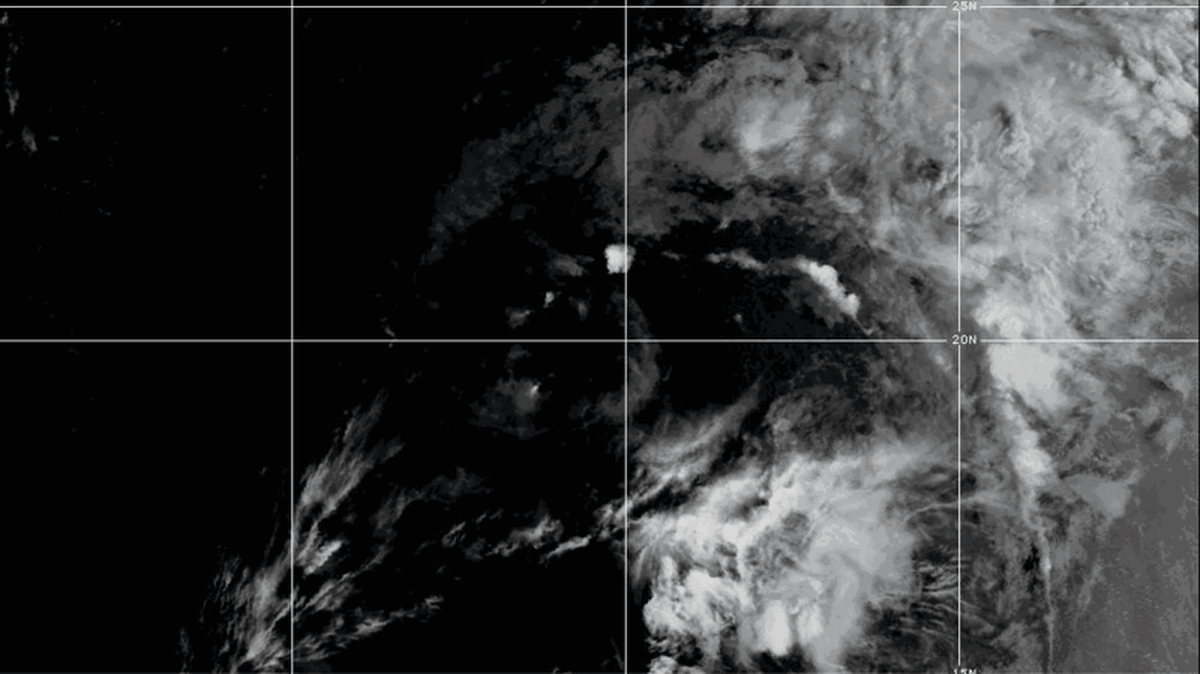
As Tropical Storm Gabrielle struggles over the central Atlantic, meteorologists with the National Weather Service say the system does not pose a direct risk to land.
With wind speeds around 50 mph, a one-two punch of dry air and high winds have kept Gabrielle from organizing and strengthening. These conditions are expected to continue for the next few days, though forecasters do expect that the storm will strengthen into a hurricane early next week.
Current forecasts show the storm moving northwest from its position 755 miles northeast of the Leeward Islands until it swings to the northeast early next week. While Bermuda will need to keep an eye on the forecasts, it’s looking like Gabrielle will stay over the Atlantic. Meteorologists are not predicting any direct impacts to the Hilton Head or the rest of the East Coast.
Gabrielle is likely to become the Atlantic’s second hurricane of the season, following an unusual dry spell in what is typically the most active part of the Atlantic basin’s hurricane season.
In mid-August, Hurricane Erin formed into a Category 5 hurricane, but did not make landfall on the mainland United States. While far offshore, Erin did produce high surf and a dangerous rip currents on Hilton Head’s beaches, leading lifeguards to order beachgoers to venture only no further than ankle deep water.
The National Hurricane Center is also tracking a tropical wave in the Atlantic. As of 12:45 p.m. Thursday, the system has a 20% chance of developing into a cyclone in the next seven days.