We’ve been doused and now soaked, rainfall has drenched Hilton Head
On an island where the day’s weather is known to turn on a dime, one thing is for certain. It’s been a summer with abundant downpours.
Hilton Head saw five significant rain events in 40 days, with total rainfall nearing 24 inches or more on the southern half of the island, Jeff Netzinger, engineering director for the Town of Hilton Head, said. The rainfall events are some of the heaviest the island has seen since the mid 1990s.
“It was just tremendous,” Netzinger said.
What are the numbers?
As the Atlantic enters the most active period of the hurricane season, the timing couldn’t be less ideal. The ground is soaked through, and another round of heavy rainfall would have nowhere to go, leading to more flooding and downed trees, Netzinger said.
There were five rainfall events between July 19 and Aug. 27, the heaviest of which dumped over 10 inches of rain on Sea Pines over a five day period, according to town data.
“Usually when we have a devastating rainfall, it’s associated with a tropical storm or a hurricane,” Netzinger said. “This was just tremendous amounts of rain.”
During Hurricane Matthew in 2016, the biggest rainfall event in recent memory, the island saw 18 inches of rainfall over a two day period. Tropical Storm Debby dumped 10 inches of rain on the island over four days, according to Netzinger.
The last time the island saw rainfall of this magnitude was in the mid-1990s, an event that helped inspire the county to develop a stormwater plan and utility.
After the flooding from an unnamed storm in 1994 and the closure of shellfish beds in Broad Creek due to fecal coliform levels, the county created the stormwater utility in 2001, according to previous reporting from The Island Packet.
Looking down and ahead.
Hilton Head’s low lying nature and high water table mean the island can’t soak up a ton of rainfall. When the ground is saturated, rainwater has nowhere to go. Those conditions lead to more flooding and downed trees, whose roots struggle to hold onto wet soil, Netzinger said.
According to Charleston’s National Weather Service office, there are a number of different metrics forecasters can use to get an idea of the ground saturation. They do not use a specific measurement or threshold and instead look at recent rainfall data to determine if there are areas at risk of increased flooding due to over-saturated soil.
Urban areas that are largely paved over have the highest susceptibility to flash flooding, and the soil moisture doesn’t really matter because rain just runs off the pavement.
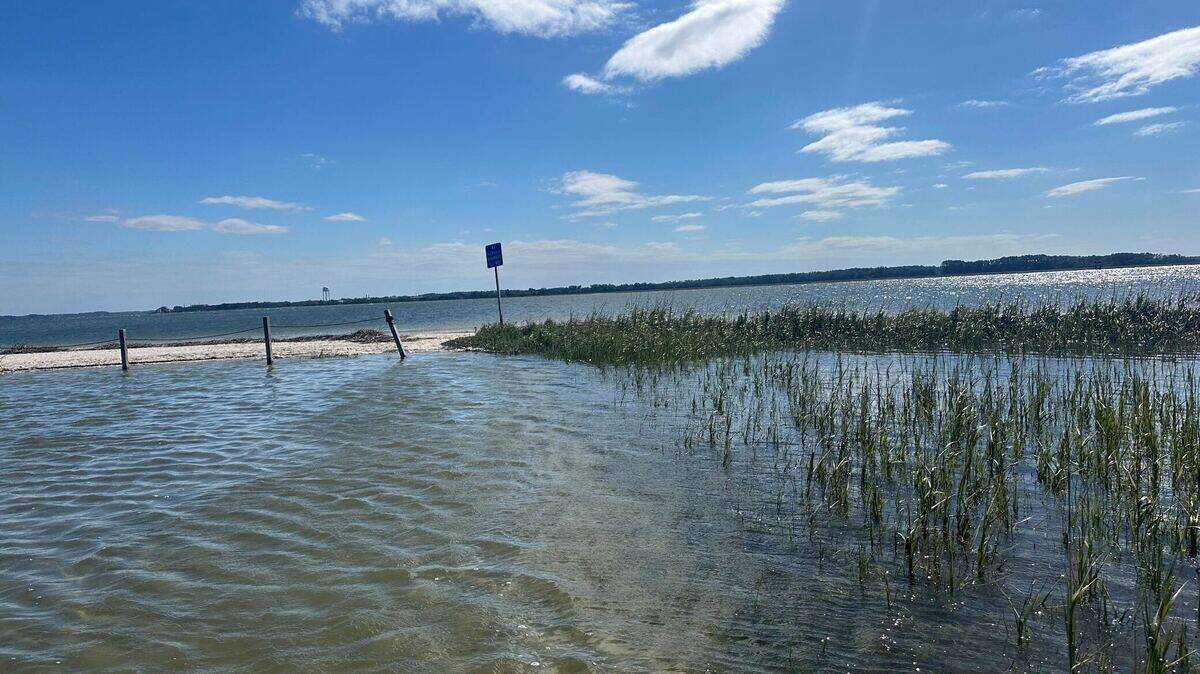
On the island, Netzinger said the rain caused flooding of people’s yards and roads. A couple of buildings flooded because there was nowhere for the water to go.
The town is holding its breath as days pass without more rain that would fall with nowhere to go, leading to an increased risk of flooding and downed trees. The lull may not be long lived, as hurricane season reaches its peak in mid-September.