Video: Gator seen chilling in icy pond on Beaufort-area island during snow day festivities
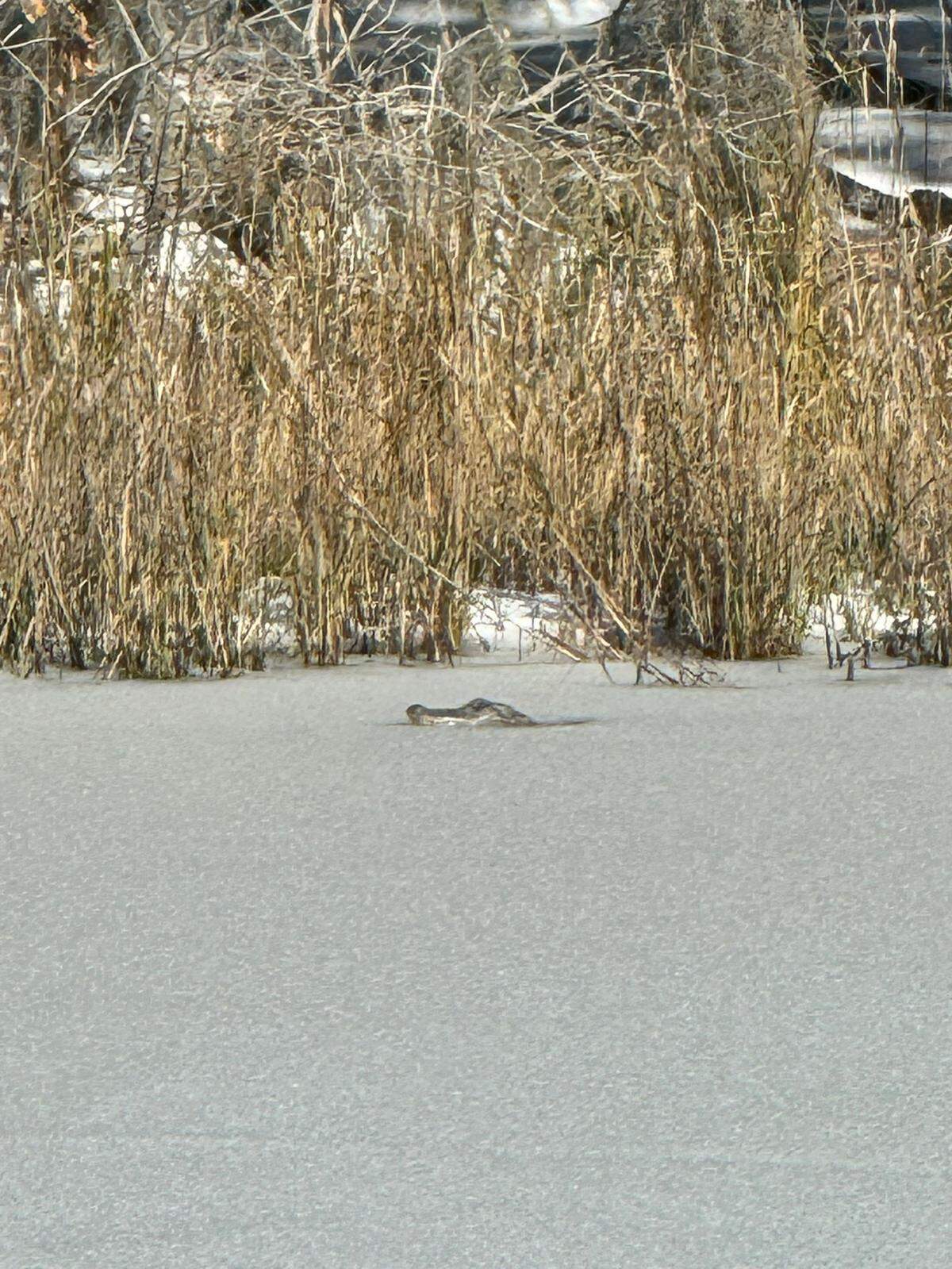
As a group of Beaufortonians romped in the fresh snow after a rare winter storm, a local alligator sat motionless in an icy pond less than 50 feet away.
The gator was handling the cold conditions in a much different way.
“Somebody else had spotted it, and then I’m like ‘Oh my gosh, this is so cool,’” said Ginger Wareham, a resident of Cat Island who snapped the photos and video of the scaly snout peeking out of the ice. “What was interesting is, after a little while, he did go down.”
Wareham said about 20 people were sledding and enjoying the snow Wednesday morning near the Cat Island Club golf course when they saw the chilly critter.
“All the kids were up on the hill, and literally, if you (sledded) off of the hill, you could have ran into the pond,” Wareham said with a laugh. “So we were definitely making sure that nobody was going in that direction anyway.”
Like many other reptiles facing cold conditions, the gator was in a state of brumation, similar to hibernation in mammals. To tolerate temperatures cooler than 55 degrees Fahrenheit, the cold-blooded alligator enters long periods of inactivity as its metabolism and body temperature decrease.
During brumation, gators hide out in large burrows or mud holes they dig into the banks of rivers, ponds and swamps, sometimes going months without eating.
Unlike hibernating mammals, brumating alligators will periodically leave their burrows to move around or bask in the sun on warmer days. When basking gets too hot, gators will open their mouths to dispel heat.
Experts say alligators can sense when water is about to freeze, so the animals are known to stick their snouts above the water so they’re able to breathe when their home ices over. They might appear dead, but the reptiles are simply conserving energy in an intense lethargic state.
“As long as they can keep their nostrils above water level, they should survive,” according to the U.S. Forest Service.
But Wareham said the gator on Cat Island didn’t appear to be encased in ice. At some point, he retreated back below the pond’s icy surface.
“He was frozen up there for, I don’t know, a good hour, and then we did not see him anymore,” she said. “(The pond) wasn’t thawed out, but obviously he was able to go under.”
The gator might have been trying to preserve its breathing hole in the icy pond, said Morgan Hart, a wildlife biologist at the South Carolina Department of Resources who leads the agency’s alligator research team. An alligator in brumation can hold its breath for hours at a time but will come to the surface intermittently for fresh air.
“Especially as it gets closer to spring, people tend to forget that alligators exist in these places because they don’t see them all winter,” Hart said. “(The alligators) were there the whole time — in their dens or under the water or wherever — and it’s just as important for the ecosystem now that you can see them as before when they were fast asleep.”
Wareham, a co-owner of the local marketing agency PickleJuice Productions, posted the clip of the icy alligator to her Lowcountry-themed Instagram page beaufort.southcarolina, where it garnered more than 3,000 likes.
This story was originally published January 28, 2025 at 12:37 PM.