Ice, cold temps lead to hazardous roads in Beaufort County. What drivers should know
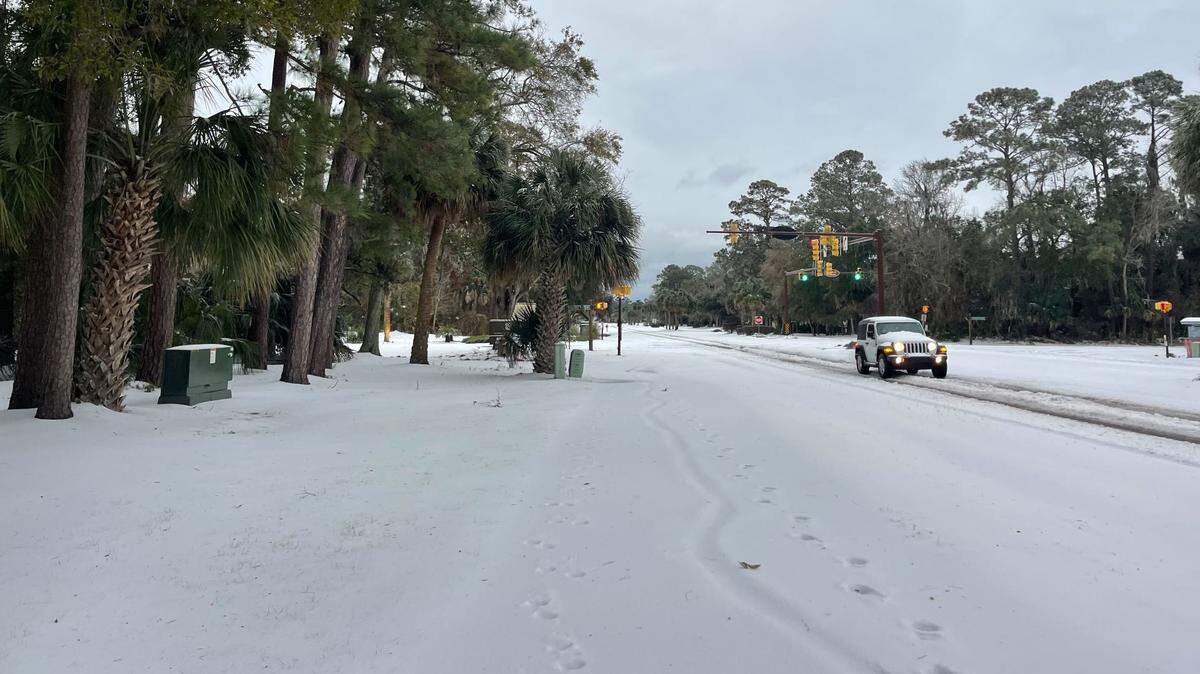
Beaufort County residents shouldn’t pack up their sleds and winter coats just yet.
While the snow has fallen and the worst of the cold temperatures passed Wednesday night, the region will remain colder than usual through Thursday, and hazardous road conditions may persist, according to the National Weather Service.
The cold weather advisory will lift at 10 a.m Thursday, with a daytime high of 38 degrees and a low of 23 degrees.
Temperatures will creep higher Friday and through the weekend, with highs in the mid to upper 40s and nighttime lows in the 20s and 30s.
At the moment, the largest safety risk is the refreezing of snow and slush as temperatures dip below zero during the night. These conditions have the potential to coat the roads in a thin, transparent coating of ice, known as black ice, which creates dangerous and slippery conditions for those out on the roads.
Wednesday night the Beaufort County Sheriff’s Office advised residents to stay off the roads, citing the risk of black ice.
The risk remains for Thursday night, when the temperatures will creep back down below freezing after daytime highs in the upper 30s. Even in the daytime, shaded areas can still remain frozen as well.
This story was originally published January 23, 2025 at 6:58 AM.