What’s the difference between a cyclone, hurricane and typhoon? Here’s the breakdown
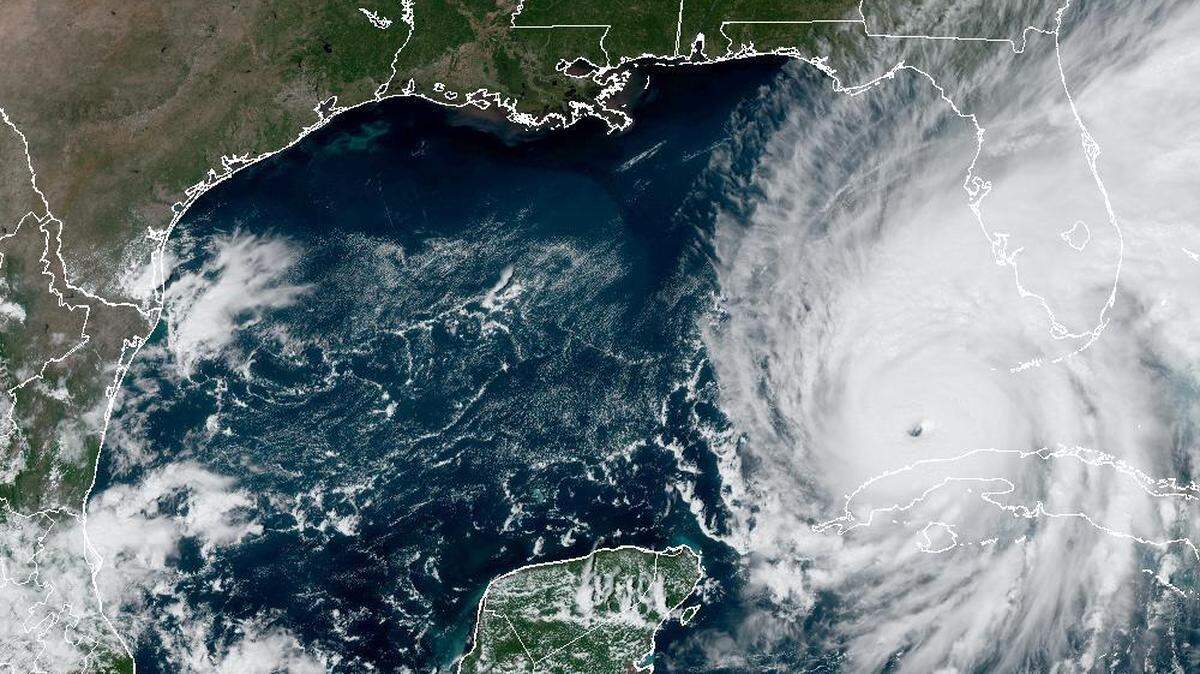
In the peak of Atlantic hurricane season, words matter. And using the right ones at the right time can be the difference between alerting of a far-out rotating storm system to a nearer full-blown hurricane.
When the term “tropical cyclone” is used, in the simplest of terms, it’s all encompassing of a rotating organized system of clouds and thunderstorms, according to the National Hurricane Center. They form when it pulls its energy from warm tropical waters, has a warm core and non-frontal, the strongest winds are near the center in the eyewall and there’s symmetry of precipitation.
Under the tropical cyclone umbrella there are tropical depressions, tropical storms, hurricanes and major hurricanes.
The flurry of words is further complicated by the different classifications of a storm system with sustained winds greater than 74 mph. In the Atlantic and Eastern Pacific oceans, the word “hurricane” is used, the Western North Pacific calling the system’s “typhoons,” and the western South Pacific and Indian oceans deem the storms “cyclones.”
While hurricanes, typhoons and cyclones are one in the same, different names are used to “bear the imprints of history, culture, and geography,” the National Oceanic and Atmospheric Administration said.
Why a hurricane?
“Hurricane” is a word that originated in the Caribbean, where the indigenous Taíno people of the Greater Antilles worshiped a storm deity named Juracán, NOAA said. The administration said the god’s name could have also derived from the Mayan god of wind, Huracan.
Later, Spanish explorers embraced “huracán” and “furacán” as words describing intense storms. They brought the two terms over to Europe.
The word became widespread in the English language as European colonial powers expanded their territories, where they would often encounter the strong storms in the Atlantic basin.
Why a typhoon?
Typhoon does not have a clear origin.
It may have a Greek root due to European influence, NOAA said. Some people think the word comes from the Greek word Τυφῶν (Typhôn), which was the name of a mythological monster connected with the power of the winds.
It may also have Persian influence from the word, tūfīdan, which means “to roar or blow furiously,” according to the administration. When Portuguese sailors traveling through the Western North Pacific, the brought back the word tufão. The term comes from the Urdu and Hindi — tūfān — and could have originated from an earlier Chinese word, tai fung, which means “great wind.” The word has since evolved into dà fēng in modern Mandarin Chinese and taifū in modern Japanese.
Some scholars may argue that the Arabic word, tāfa, meaning “to turn around,” could have contributed to the modern word typhoon, NOAA said.
Why a cyclone?
Cyclone has origins in ancient Greek, the administration said. It likely came from from either κύκλος (kúklos, “circle, wheel”) or κυκλόω (kuklóō, “go around in a circle, form a circle, encircle”).
Cyclone was first a word used to describe any system characterized by circular motion.
Around 1840, Henry Piddington, an official with the East India Company who also studied meteorology, adopted “cyclone” based on the root to describe tropical storms in the Indian Ocean and the South Pacific. Since then, in the nearly two centuries that have passed, cyclone remains the preferred term for the storms in these regions.
Waves and disturbances
During the Atlantic hurricane season, even before a tropical cyclone forms, there are words like “tropical wave,” “tropical disturbance,” “invest” and “potential tropical cyclone.” While the latter is self-explanatory, the others may leave some confusion.
Tropical wave: Also known as an easterly wave, a tropical wave is an elongated area of relatively low pressure or cyclonic curvature maximum moving east to west across the tropics. The wave can lead to the formation of a tropical cyclone.
Tropical disturbance: The system has organized convection and originates in the tropics or subtropics, having a non-frontal migratory character that’s maintained for 24 hours or longer.
Invest: A weather system that interests forecast centers, wanting to collect specialized data sets and/or running model guidance. Invest does not correspond to the likelihood of system development into a tropical cyclone.
While the above three terms do not indicate a tropical cyclone, they can intensify in certain environments to become one. It would start with a tropical disturbance, which must have closed surface circulation and wind speeds less than 39 mph.
Once winds whip between 39 and 73 mph, a storm system is deemed a tropical storm. Hurricanes are called when the storm’s sustained wind speeds clock 74 mph or greater, with 111 mph winds being classified as a major hurricane — Category 3.
This story was originally published September 25, 2024 at 2:32 PM.