Tropical Storm Idalia slowly strengthening Monday. When will Beaufort County see impacts?
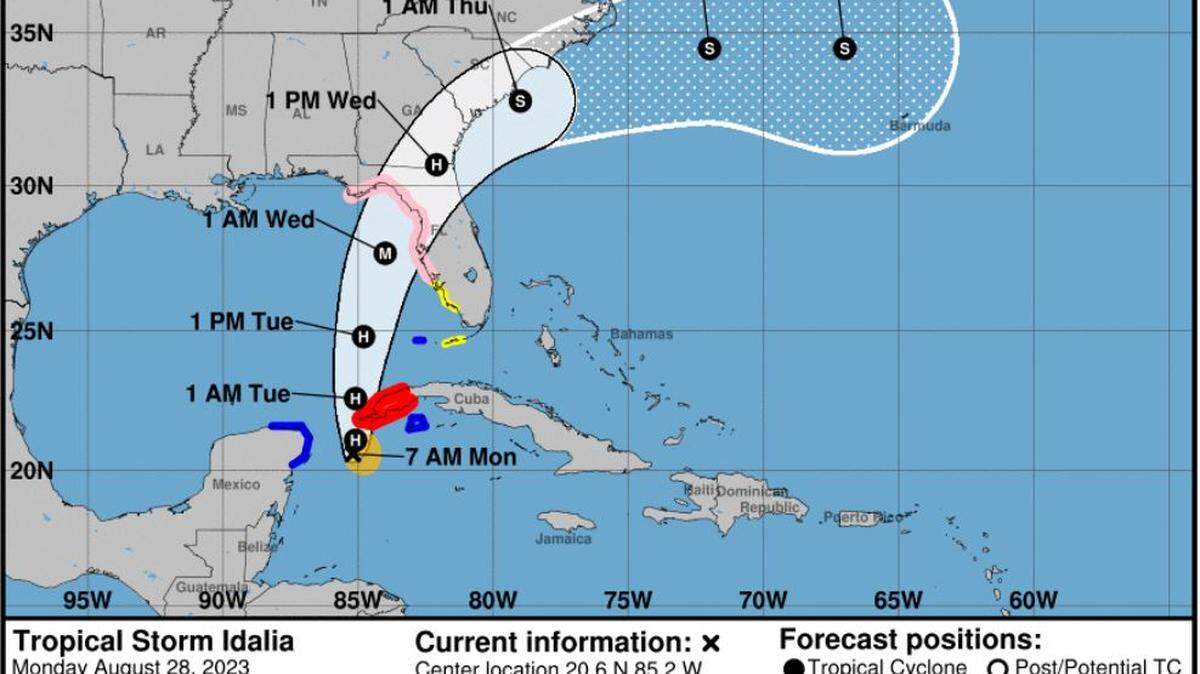
As Tropical Storm Idalia brewed near the western tip of Cuba on Monday morning, with the forecasters predicting the storm to soon strengthen to a hurricane, an early glimpse at the potential threats to Beaufort County unfolded.
Between 4 and 8 inches of rain, strong, gusty winds, flooding, dangerous rip currents and severe erosion could pummel the Lowcountry beginning Wednesday evening, according the National Weather Service Charleston Office.
Early Monday morning, Idalia was about 90 miles south of the western tip of Cuba and had maximum sustained winds of 65 mph. If the storm continues to track as expected, slowly moving northward and intensifying before reaching Florida, the soon-to-be predicted hurricane would make landfall between Tampa and the Big Bend region on Florida on Wednesday morning. Idalia would then continue to track along Georgia and South Carolina coast as a tropical storm Wednesday and Thursday.

Throughout the week, Beaufort County was at a moderate risk for flash flooding and potential tornadoes throughout Wednesday, according to the local service Monday.
Steven Taylor, meteorologist with the NWS’ Charleston office, said weather conditions will begin to “steadily deteriorate” Wednesday and peak in the evening and into early Thursday. However, he added during a Monday morning weather briefing that it was too soon to talk specific wind ranges and surge values, as they are dependent on the “timing of the wind shift associated with the center of Idalia as it pushes through” the Lowcountry.
“If the winds stay onshore and the system ends up being slower, the risk for coastal flooding and significant impacts will increase along parts of the Georgia coast and linger even longer up in the lower South Carolina coast,” Taylor said.
According to tide charts via the US Harbors site, Beaufort County’s Wednesday morning high tide will reach 8.2 feet at about 9 a.m. The evening high tide at 9:30 p.m. will swell to 9.1 feet. Thursday morning’s 9:50 tide is predicted to reach 8.6 feet. Those values are without potential rainfall amounts from Idalia.
Taylor said the “big concern” from Idalia’s wrath will be rainfall and freshwater flooding, which when considering the already-high tides, could devolve into “major flooding.” Marine conditions, including dangerous rip currents that are currently rippling along the southeast coast, will also be of concern. Throughout Tuesday, rip current conditions will grow stronger as swells increase, Taylor said.
There were no watches or warnings issued for the Lowcountry as of Monday morning but, according to Taylor, that could change.
In May, the National Oceanic and Atmospheric Administration predicted there would be 12 to 17 named storms this year, and on Aug. 10, NOAA upped its estimate to 14 to 21.
Tropical Storm Hilary, the first tropical storm to crash into Southern California in 84 years, sent record-breaking flooding onto roads and caused mud and rock slides on Sunday. Tropical Storm Harold, which was the first storm of the Atlantic hurricane season to make landfall, pounded southern Texas with heavy rains and whipping winds on Tuesday.
On Wednesday, Tropical Storm Franklin battered the Dominican Republic, damaging homes and roads, leaving one man dead, and rendering hundreds of thousands without power and over a million without potable water, The New York Times reported.
By Monday morning, since upgraded to a hurricane, Franklin intensified to become the strongest storm of the year so far. With maximum sustained winds up to 145 mph, Franklin is considered a Category 4 hurricane but is not considered a threat to land, however its wake could cast wide enough to require watches for Bermuda later Monday, according to the National Hurricane Center. Franklin is expected to weaken Tuesday afternoon, the center said.
This story was originally published August 28, 2023 at 11:38 AM.