Beaufort County could be in for another round of severe thunderstorms. Here’s what time
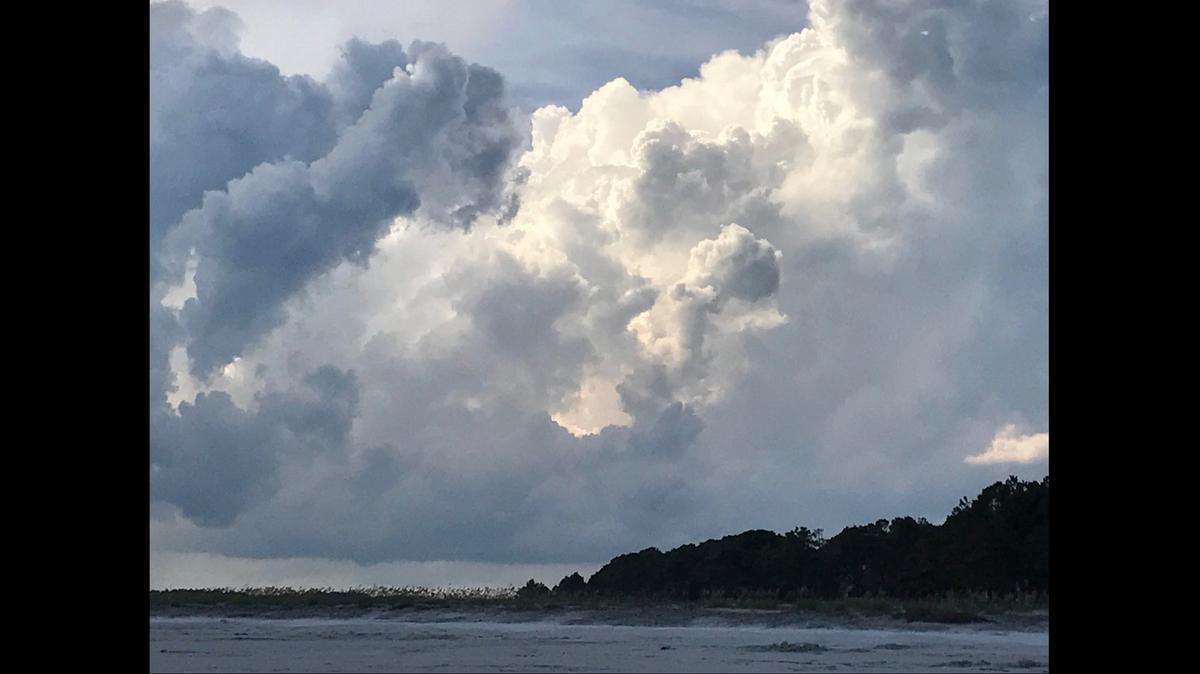
Heading into the weekend, Beaufort County could be in for the same weather conditions it saw at the start of the week.
While numerous thunderstorms and showers are expected Friday, the National Weather Service said some could be severe. The service said the likelihood of isolated-to-scattered severe thunderstorm is greater along and north of a line from Statesboro, Georgia, to Hilton Head Island.
The severe thunderstorms could kick up high winds with gusts up to 58 mph winds, and bring locally heavy rainfall and frequent cloud-to-ground lightning. The NWS said the severe weather would begin at about 2 p.m. and last until 8 p.m.
Minor flooding and potential damage to trees and power lines could come from the storms’ wrath.
On Monday and Tuesday, the Lowcountry was under similar predictions of severe thunderstorms. Mondays’ storms filled the night sky with lightning and dropped a small amount of rain. Tuesdays’ high winds left over 8,000 Beaufort County residents without power, which was quickly restored that evening.
If the weather does go south this afternoon, listen to the National Oceanic and Atmospheric Administration’s Weather Radio or go to weather.gov for more information about the following hazards.
High heat
On top of what could be a blustery and wet afternoon, the heat will be brutal. Beaufort’s heat index — the mix of actual temperature plus humidity that makes it feel warmer — may needle up to 105 degrees Friday.
The county is not currently under a heat advisory.
However, when there’s a heat advisory, it’s vital to stay hydrated, reschedule outside tasks to the early morning or evening and trade the baking sun for an air conditioned room. Check on friends and neighbors during the dangerous heat, particularly the elderly, people with chronic conditions, pregnant women and infants. Children and pets should never be left alone in cars. Since the beginning of the year, 16 children have died from vehicular heat stroke in the United States.
Excessive heat kills more people most years than hurricanes, floods and tornadoes combined, according to the Scientific American.
When experiencing heat exhaustion or heat stroke, both conditions require that the person to move to a cooler place, have cool cloths placed on them or get in a cold bath, according to the Centers for Disease Control and Prevention.
People experiencing heat exhaustion can sip water, but medical help is needed if they’re vomiting, symptoms are worsening or last longer than an hour. A heat stroke victim is a medical emergency that requires a 911 call. The person should not be given anything to drink.
Heat exhaustion
- Heavy sweating
- Cold, pale and clammy skin
- Fast, weak pulse
- Nausea or vomiting
- Muscle cramps
- Tiredness or weakness
- Dizziness
- Headache
- Fainting
Heat stroke
- Body temperature of 103 or higher
- Hot, red, dry or damp skin
- Fast, strong pulse
- Headache
- Dizziness
- Nausea
- Confusion
- Losing consciousness
This story was originally published August 11, 2023 at 9:11 AM.