
SC homeschool students aren’t eligible for vouchers. Why are so many receiving them?
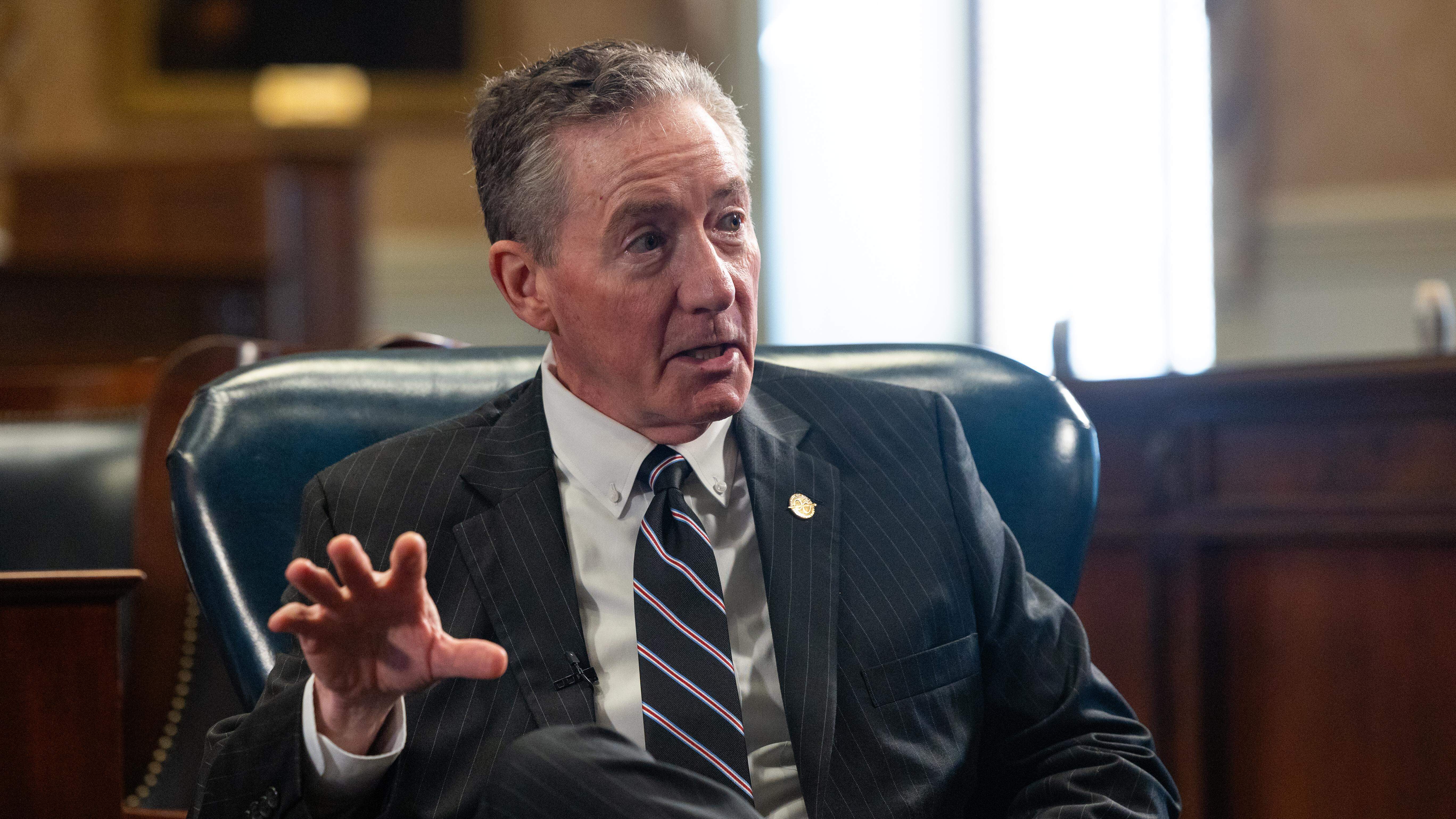
A loophole in South Carolina’s school voucher law is allowing students educated at home to receive state-funded scholarships in circumvention of the program’s prohibition on homeschool students, the law’s lead sponsor said.
Senate Education Committee Chairman Greg Hembree, R-Horry, who co-sponsored the 2025 law that revamped South Carolina’s Education Scholarship Trust Fund, has filed legislation to turn off the spigot for home-educated students.
“I feel like I’ve got a moral responsibility to go back and say, ‘Look, I didn’t intend this. I told you it wasn’t going to be like this. I believed that,’ ” said Hembree, who described the current situation as a “free-for-all.”
More than 1,000 home-educated students are participating in the program this school year and another 4,000 have already applied to participate next year, according to S.C. Department of Education data.
The department did not release how much money home-educated students had spent to date, but it’s likely well into the millions. Qualifying families receive $7,500 per student this school year, meaning that by year’s end roughly $7.5 million will have been distributed to the home-educated students who are enrolled.
While Hembree said he’s not inherently opposed to allowing homeschooled students to participate in the program, he wants their participation to be the result of a thoughtful policy discussion, not a technicality.
“I’m not saying it is a good idea or a bad idea — yet,” Hembree said. “I’m saying we need to debate this because this is a decision that needs to be made at the policy level, not based on an interpretation by a lawyer over at the Department of Education. That’s not the right way to enact this new policy.”
Lawmakers debated the participation of homeschool students in the run-up to the voucher law’s passage, but ultimately excluded them from the bill at the urging of homeschool parents concerned about the possibility of government overreach.
As a result, parents who accept voucher funds to subsidize their educational expenses are required to attest that their children won’t participate in any of the three home instruction models outlined in state law.
But rather than serving to keep homeschoolers out of the program, as lawmakers intended, the prohibition has led to the formation of a nebulous new class of home-educated students whose participation state education officials have sanctioned and encouraged.
Unbundlers, as the S.C. Department of Education calls the students, are voucher recipients who neither participate in a legislatively-defined homeschooling program nor attend a private school full time.
Instead, they typically engage in curated education programs composed of various elements purchased à la carte from different vendors, the department explained in a recently released report.
Ordinarily, such students would fail to satisfy South Carolina’s compulsory attendance requirement. But a quirk in the voucher law allows participants to meet that requirement as long as parents attest that their children are being provided instruction in several core subjects and taking certain assessments.
“The law is clear on this,” Education spokesman Jason Raven wrote in response to questions about the department’s decision to permit education scholarship recipients to engage in home-based instruction. “(Education Scholarship Trust Fund) recipients are legally allowed to educate as unbundlers, provided they do not participate in the three home school options.”
Hembree said he and his colleagues never discussed, or even contemplated, the possibility that the state’s voucher program would spur the creation of an amorphous and legally undefined “Homeschool Category No. 4.”
“Nobody ever said to me, ‘This is the intention. This is the effect it’s going to have,’ ” he said, adding. “If that was my goal, I would have said, ‘Hey, let me tell you what this is going to do. It’s going to be great, and let me tell you why.’ ”
Department officials pushed back against the assertion that its interpretation of the law to allow unbundling was controversial or unanticipated, arguing that South Carolina legislators modeled their bill off of Arizona’s Empowerment Scholarship Account program, which allows the practice.
“From the Department’s perspective, the ability for families to ‘unbundle’ and customize educational services is an important feature of education savings account programs nationwide, including in states such as Arizona, West Virginia, and Florida, which helped inform South Carolina’s approach,” Raven wrote in an emailed statement. “This flexibility allows families to tailor services to meet their child’s individual needs while remaining subject to statutory accountability requirements.”
The Education Oversight Committee, which is tasked with evaluating and publishing reports about the state’s voucher program, also appears to have been in the dark about unbundling.
The committee’s parental satisfaction report, which is published annually, has viewed the participation of home-educated students in the program as a bug, not a feature.
In each of the past two years, the report has highlighted the potential confusion that permitting recipients to spend voucher dollars on homeschool curricula has created for parents, apparently unaware that the department was permitting families to home-educate with the money.
“Home instruction is expressly prohibited in Act 11 as it was in Act 8, yet some surveyed parents report satisfaction being able to use (Education Scholarship Trust Fund) funds for homeschool curriculum to provide home instruction to their children,” the latest EOC report notes in its ‘Recommendations’ section. “This allowable use of funds creates confusion, so it is recommended that homeschooling be an allowable choice for ESTF or that homeschool curriculum be removed from the allowable use of funds.”
Hembree’s bill, which is scheduled for a Senate Education subcommittee hearing Wednesday morning, would do the latter.
It prevents parents from spending voucher money on “any other educational expense approved by the department to enable personalized learning”; clarifies that contracted teaching services and education classes must be “designed to supplement a students’ learning program provided by an eligible school”; and removes the section of the law the department has used to argue that unbundlers meet the state’s compulsory attendance requirement.
The bill is likely to face stiff opposition from home-educating families that are benefiting under the current law, some of whom Hembree said have already contacted him.
“They’ve heard, however they heard it, that Hembree’s after your money, and they’re writing these nasty emails to me,” he said. “And that’s OK.”
The Horry County senator said he’s open to preserving their participation in the program, if that’s what the General Assembly decides, as long as lawmakers can erect a coherent policy to support it.
“Let’s debate it, let’s talk about it, let’s build a structure around it,” he said. “Because right now it’s the Wild West on that thing. There’s no rules. None at all.”
This story was originally published February 4, 2026 at 9:06 AM with the headline "SC homeschool students aren’t eligible for vouchers. Why are so many receiving them?."