With no vaccine, this virus may spike in SC alongside other winter illnesses. Here’s what to know
Amid flu, common colds, COVID-19, and measles cases sweeping across the Palmetto State this year, another pesky virus is making the rounds: norovirus.
Also known as the stomach flu or “winter vomiting disease,” norovirus is active year-round, with spikes typically occurring from November to April.
Here’s what you need to know about the virus and how to stay healthy during its peak season.
What is norovirus?
Norovirus is a foodborne illness and the leading cause of vomiting and diarrhea. It causes inflammation of the stomach or intestines and anyone at any age can contract the virus because it is highly contagious.
Currently, there is no vaccine to prevent norovirus.
According to the Centers for Disease Control and Prevention, about 2,500 outbreaks are reported in the U.S. each year.
Norovirus is not tracked as closely as other viruses, such as influenza, but the CDC’s most recent 2025 update shows South Carolina was reporting a higher number of outbreaks than most other states.
How do you get sick with norovirus?
Most outbreaks occur when infected people spread the virus to others, usually through direct contact.
Some common places for outbreaks include:
- Health care facilities
- Restaurants or catered events
- Schools
- Child care centers
- Cruise ships
The virus is often contracted through:
- Surfaces, food or water contaminated with the virus
- Direct contact with infected people
- Eating food such as oysters harvested from contaminated water or fruits and vegetables sprayed with contaminated water
Outbreaks are often fast-spreading and difficult to control. Norovirus causes an estimated 19–21 million illnesses, 109,000 hospitalizations and 900 deaths annually in the U.S., according to the CDC.
What are the symptoms of norovirus?
With other illnesses like the flu also spiking in winter, it’s important to recognize the signs of norovirus.
The virus typically lasts one to three days, but during that period, infected individuals can experience severe illness and frequent vomiting.
Symptoms usually develop 12 to 48 hours after exposure and may include:
- Nausea
- Vomiting
- Diarrhea
- Stomach pain
- Fever
- Headache
- Body aches
- Dehydration
The CDC states that children younger than 5 years old, older adults and people with weakened immune systems are more likely to develop severe infections.
What to do if you get sick
If you do get sick with norovirus, the South Carolina Department of Public Health recommends:
- Staying home
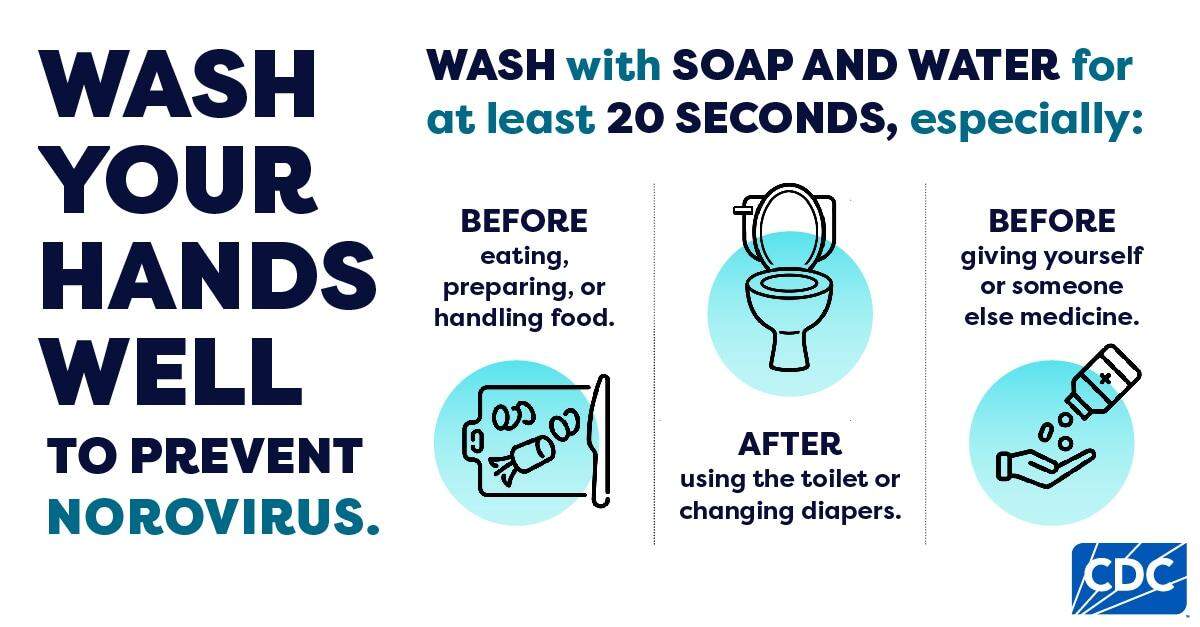
- Washing hands thoroughly and frequently with soap and warm water
- Staying hydrated
- Resting
- Avoiding preparing food while sick
- Waiting three days after symptoms resolve before handling food
- Disinfecting contaminated surfaces with a bleach solution
The Environmental Protection Agency has a list of disinfectants that work against norovirus. Tests are also available to confirm a norovirus diagnosis.
If a person who is infected is no longer able to retain sufficient fluids, the SCDPH says medical attention is needed to avoid complications from things like dehydration.
To prevent future spreads, the SCDPH recommends:
- Wash hands well and often
- Cook shellfish completely and wash fruits and vegetables
- Clean and disinfect contaminated surfaces, like doorknobs and faucets
- Wash laundry, sheets and linens thoroughly
To learn more about norovirus, visit the CDC norovirus webpage.