
Former SCANA official, initially sentenced to prison, will avoid the slammer. Here’s why
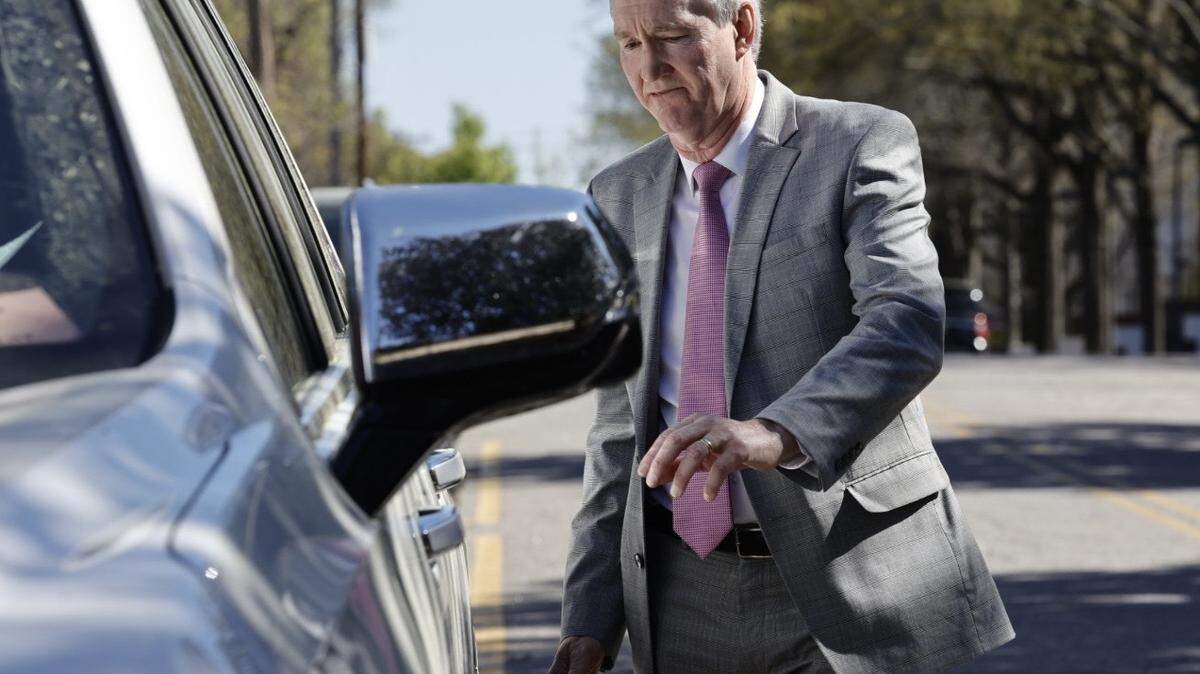
Stephen Byrne, who was getting ready to spend 15 months in federal prison for his role in the former SCANA’s $9 billion dollar nuclear fiasco at the V.C. Summer nuclear plant, got a nice New Year’s gift on Thursday.
He won’t have to go to prison after all.
Byrne, a former Irmo resident who now lives in the Charleston area, is getting a reward for cooperating with federal prosecutors — no slammer.
Instead, he’ll spend 15 months in home confinement. That way he will avoid sleeping behind bars, eating bland prison food and living with other criminals.
He also has to pay a $200,000 fine.
Byrne, who is in his early 60s, married and has three grown children, was supposed to report to a federal prison in Williamsburg County on Jan. 6. The facility is classified as a medium security prison with some 1,200 inmates.
At SCANA, Byrne was second-in-command and in charge of the company’s nuclear projects including the construction of new nuclear units at V.C. Summer. His official title was executive vice president.
Byrne was rewarded for his early and full cooperation with the federal prosecutors in their seven-year investigation and prosecution of SCANA wrongdoing, said his lawyer, Jim Griffin of Columbia.
An “amended judgment” wiping out Byrne’s prison term and replacing it with home confinement was filed Thursday morning in U.S. District Court in Byrne’s case by Judge Mary Geiger Lewis, according to the federal court records public database.
In July 2020, Byrne pleaded guilty to criminal conspiracy fraud charges in federal court. In March 2023, Lewis sentenced him to 15 months in prison, but the sentence was held in abeyance until the other SCANA-related criminal cases were finished. He had been fired by SCANA in October 2017, three months after the nuclear project was halted.
In November, after the last defendant in the case, Jeffrey Benjamin — a former Westinghouse executive in charge of nuclear projects — was sentenced to prison, federal prosecutors filed a motion in federal court for a reduction in Byrne’s sentence. Byrne was at Benjamin’s sentencing hearing in case Benjamin or his lawyers said anything that needed to be rebutted.
“They (prosecutors) wanted to wait until he completed all his cooperation,” Griffin said. “His cooperation was not finished until after Benjamin’s sentencing hearing. He was prepared to testify if needed.”
All other defendants pleaded guilty so Byrne never needed to take the witness stand.
Assistant U.S. Attorney Winston Holliday, lead prosecutor on the SCANA case, said, “Byrne was the first substantial defendant to come in, he offered us critical information in testimony and documents he provided to the case, and for that reason, we thought that a sentence of home confinement would be appropriate. We do like to reward those who assist the government in making substantial cases.”
The failure of SCANA and Santee Cooper to complete their $9 billion project to build two nuclear reactors near Jenkinsville in Fairfield County north of Columbia was one of the biggest business failures in modern South Carolina history.
The announcement in August 2017 that the project was halting threw some 4,000 people out of work and led to the acquisition of SCANA by Virginia energy giant Dominion Energy. It also sparked a years-long FBI investigation and led to criminal charges against two top executives at Westinghouse and two executives at SCANA.
SCANA’s failure also affected the pocketbooks of hundreds of thousands of people and businesses. For years, the company had jacked up customers’ monthly power bills to help pay the billions in ongoing construction costs for the two nuclear reactors that were supposed to be built, but now will never generate power.
Former SCANA CEO Kevin Marsh pled guilty to fraud in the case and was sentenced to two years in federal prison. A former Westinghouse executive who worked under Benjamin, Carl Churchman, pled guilty to lying to an FBI agent in the case and received six months home detention.
Federal prosecutors alleged that there was a cover-up by SCANA and Westinghouse officials to hide the extent of problems in ongoing construction and woeful lack of progress at the nuclear site. It is a crime for a publicly traded company such as SCANA to fail to disclose to regulators, investors and the public any problems that might affect its stock price.
A charging document in Byrne’s case said he deceived regulators and customers ”through intentional and material misrepresentations and omissions... in order to maintain financing for the project and to financially benefit SCANA.”
As part of a plea deal Byrne made with federal prosecutors, State Attorney General Alan Wilson agreed not to prosecute him on state charges.
(This story has been updated.)
This story was originally published January 2, 2025 at 3:32 PM with the headline "Former SCANA official, initially sentenced to prison, will avoid the slammer. Here’s why."