Yes, SC has an official state amphibian and it’s a bit weird. Here’s what to know about it

Many may know that South Carolina has an official state bird (Carolina Wren), or that the official state animal is the white-tailed deer. But did you know that the Palmetto State also has a state amphibian?
That’s right.
South Carolina has an official amphibian that represents the state.
That amphibian is none other than the spotted salamander.
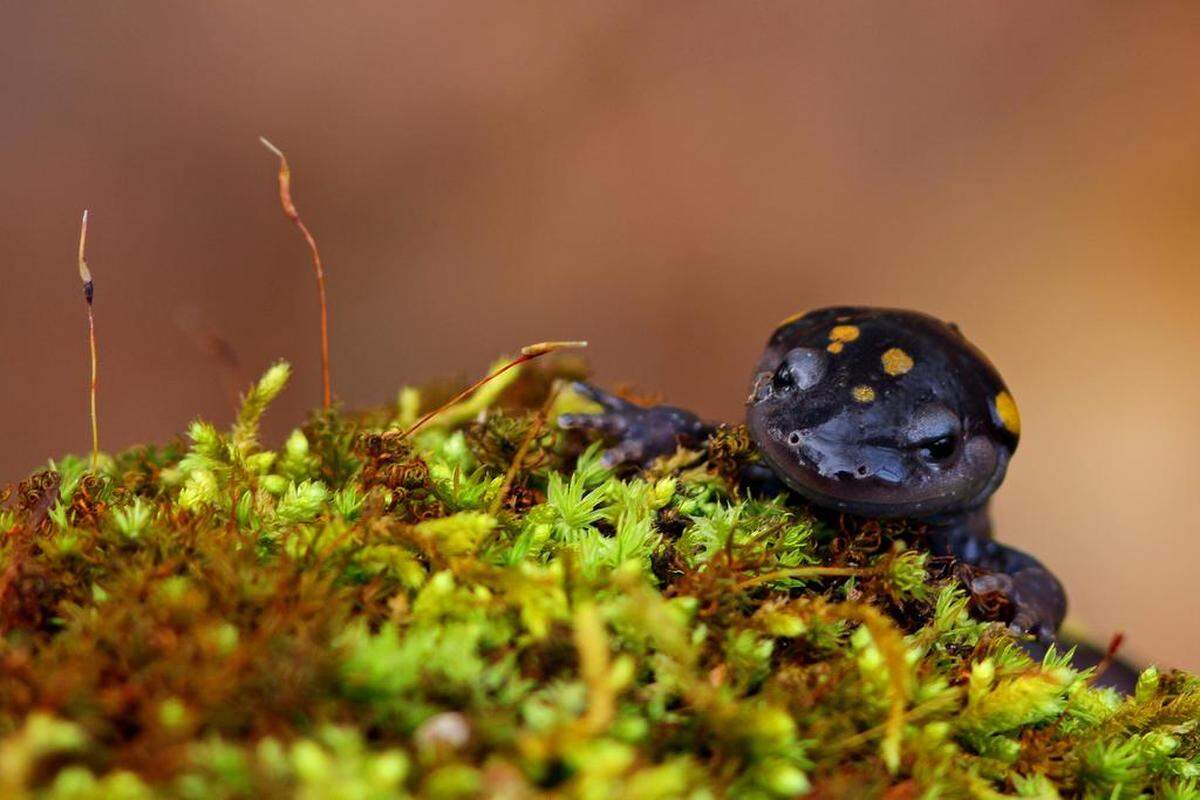
“The spotted salamander (Ambystoma maculatum) was designated the official state amphibian of South Carolina in 1999 after a campaign by the third grade class at Woodlands Heights Elementary School in Spartanburg,” according to State Symbols USA.
The state of South Carolina adopted the amphibian as its official representative 23 years ago.
All this time. Who knew?
The Palmetto State shares the state amphibian with one other state: Ohio.
What do spotted salamanders look like?
The spotted salamander can be hard to initially spot and can be recognized at first glance by its dark-colored exterior and the bright yellow or orange spots along its back. These creatures have two bright-yellow rows of spots beginning at their heads and continuing down the length of their bodies. Occasionally, it is possible that orange or yellow-orange spots may appear on the head, but this is more unlikely. The darker hues of the body generally range from a very dark blue to black, a dark gray or occasionally, brown. They can vary in size ranging from 5.5 to 9 inches in length, according to Sciway.
Regardless of reaching a fair size for a salamander and having brightly-colored spots, these amphibians can be quite difficult to spot.
Where can they be found?
Spotted salamanders generally spend a majority of their adult lives underground in burrows or can also be found beneath rotting logs or various fauna. For this reason, they aren’t frequently seen by people unless vegetation is being overturned. They tend to prefer deciduous forests with ponds containing a limited fish population.
These salamanders eat a variety of things which include insects, insect larvae, spiders, beetles, millipedes, snails, slugs, mollusks and large quantities of earthworms.
“They emerge from their subterranean hiding spots only at night to feed and during spring mating. They will actually travel long distances over land after a heavy rain to mate and lay their eggs in vernal pools and ponds,” according to National Geographic.
Are they dangerous?
Spotted salamanders do produce poisonous skin secretions, which allow them to taste bad to predators. For a human, these skin secretions are more irritating and would not kill an adult or even a child, even if ingested. However, these secretions can kill a mouse, or other small rodent and can potentially make other small animals sick, according to Amphibian Planet.
However, while technically not poisonous to people, they have been known to carry Salmonella, which can be detrimental to any person to come in contact with one. Handling these creatures should be kept at a minimum. If handling is necessary, be sure to wash your hands promptly and practice good personal hygiene following the encounter.
While these small creatures may be docile toward people, humans can pose a danger to them.
While exciting to see, the spotted salamander should not be handled by humans if at all possible. The amphibian’s skin has a sensitive, slimy coating, which, if removed through handling, could seriously harm it.
This story was originally published August 31, 2022 at 5:00 AM.