Living with alligators: After another SC attack, how do we coexist? What should be done?
When the calls pour in, James “Jim” Cline knows what’s coming next, and he’s ripped back to the day that haunts him most in the place he still calls home. The place his wife used to call her “heaven.”
Every year since Cassandra “Cassie” Cline lost her life in August 2018 in an alligator attack near the couple’s Sea Pines home, the person on the phone is ringing to tell Jim about another tragedy in Beaufort County.
Most of the calls are the same. Just like Cassie Cline, someone was walking their dog or trimming shrubbery. Or, they fell too-near a pond where an alligator lurked just below the water. Harrowing details follow.
The alligator that killed Cassie Cline was euthanized. But rules and regulations — those of the state and municipality — did not radically change.
“I don’t know how much time and money it’s going to take, but if we want to live in these areas, something needs to be done,” Jim Cline said.
After Cassie Cline’s death, her husband assumed the onus of keeping the community safe. In 2019, he filed a wrongful death suit against the Sea Pines Resort, its Community Services Associates group and Sea Pines Country Club. He quietly settled the suit earlier this year.
But little has changed in the past four years.
Between August 2018 and August 2022, six people in Beaufort County were attacked by alligators. At least one each year. Two died, including Cassie Cline. The sixth attack resulted in the death of 88-year-old Nancy Becker on Aug. 15.
In the past decade, alligator attacks in Beaufort County have slowly crept up as the animal’s population has stabilized. The attacks evoke fear in some, indifference in others, but for everyone, it’s a stark reminder that Beaufort County residents choose to live among creatures who’ve walked the earth for millions of years and hold a top-tier spot in the ecosystem.
However, it becomes clearer with each violent encounter that the danger of man and beast coexisting in the ever-developing Lowcountry isn’t going to cease.
Amid the horror that rattles the Beaufort County community and beyond after an attack, there exists solutions. It starts with the state agency that regulates alligators to those who study the alligators’ movement patterns and the residents who call for increased and more thorough education.
Living in the Lowcountry means alligators
Nobody knows how many alligators are in the Palmetto State, let alone in the Lowcountry. But in 2019, the South Carolina Department of Natural Resources estimated about 100,000 apex predators were among us.
While the American alligator appears to be running rampant, plastered all over local social media websites as the half-ton reptiles mosey across main roads and into people’s backyards, experts say their population is currently stable.
Decades ago, a poorly regulated harvest of American alligators severely depleted their population in the United States, which siloed the apex predator into federal protection as an endangered species in 1967. But by 2008, the population had swelled enough in South Carolina that SCDNR opened up a regulated hunting season.
The alligators’ comeback may be why Lee Cope, Cline’s lawyer and a lifelong South Carolinian, has seen a clear rise of alligator sightings in the Lowcountry. As a teen, spotting a gator was like finding a needle in a haystack. Now, even running along Hilton Head Island’s waters, it seems inevitable. And Beaufort County boasts the perfect spot for the apex predators.
South Carolina’s coastal marshlands attract American alligators, with the ACE Basin being one of the most critical nesting areas, according to SCDNR. The habitat was created as a result of wetland alteration during the rice-growing era and includes Colleton, Charleston and Beaufort counties, the department said.
Hand in hand with the alligator population’s stabilizing in Beaufort County are quickly developing communities. The combination poses a problem. A local alligator hunter swears that away from development and humans’ feeding hands, the predators are scared of people. But that changes drastically when there’s an influx of too-curious, animal-feeding humans.
“We have moved to the Lowcountry for the intrinsic beauty of the wildlife and the ecosystem,” said Joe Staton, University of South Carolina-Beaufort natural sciences department chair. “And, unfortunately, sometimes, we’ve taken land that used to be marshy swamp wetlands and we’ve converted them into gated communities with retirees.”
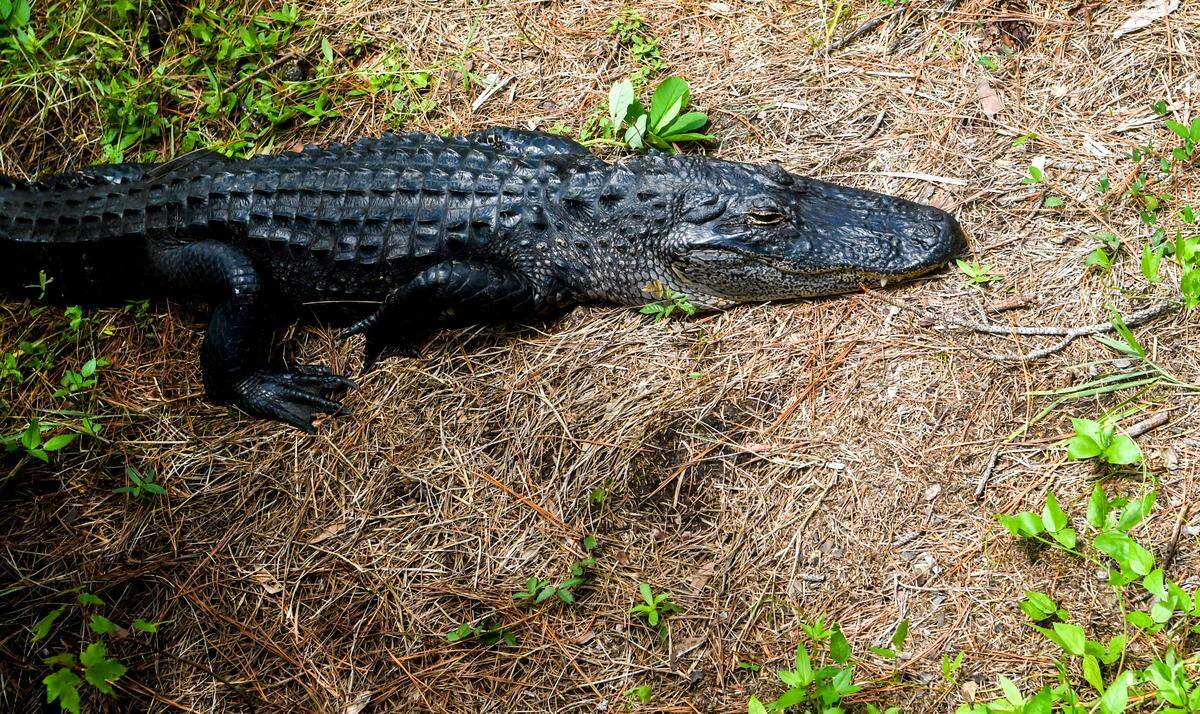
Even with less natural wetlands to take to and a waning habitat in some areas, alligators will not simply move elsewhere. Instead, experts say alligators find what feels familiar. Retention ponds dotted around gated communities on Hilton Head Island or Sun City in Bluffton “will have alligators in them,” Staton said.
And he’s certain they’re not going anywhere, which means that as the human population continues to grow in Beaufort County, more people will be exposed to alligators.
Greg Lucas of the SCDNR estimated that the department gets about 2,000 calls regarding alligator concerns in South Carolina each year. The agency has three methods to legally remove alligators, he said, and 1,000 and 1,200 of the reptiles are harvested in the state every year.
Nine times out of 10, who is to blame for an alligator coming too close and creating panic? Humans, said Justin Ludy, Palmetto Wildlife Extractors CEO.
Is education enough to stop alligator attacks?
In Cypress Ridge, just 15 minutes from Old Town Bluffton, Jeff Lessey is no stranger to alligators.
He listens to neighbors recount stories of an alligator basking in the sun near a pond close to his home and then crawling to another nearby. Lessey, who calls himself a “country fella,” doesn’t mind the roaming predator.
“The idea of wildlife in your backyard is not really a big deal for me,” the 2.5-year Beaufort County resident and local real estate broker said.
Like many residents or visitors who flock to the Lowcountry for the distinctive flora and fauna, Lessey understands that alligators are a way of life. Sure, he said, for someone from New England who sees a half-ton predator, that is a “very scary thing.” He compares the shock to when he and his wife lived in the Midwest and weren’t familiar with the monthly tornado siren test. You panic at first, and then you learn to live with it.
When it comes to alligators, once the initial fear subsides after a first sighting, Lessey said he believes the responsibility to coexist safely falls onto humans.
“You’re not going to get rid of them,” Lessey said. “There’s not really anything you can do, so I think it is up to the community and to individuals to educate themselves.”
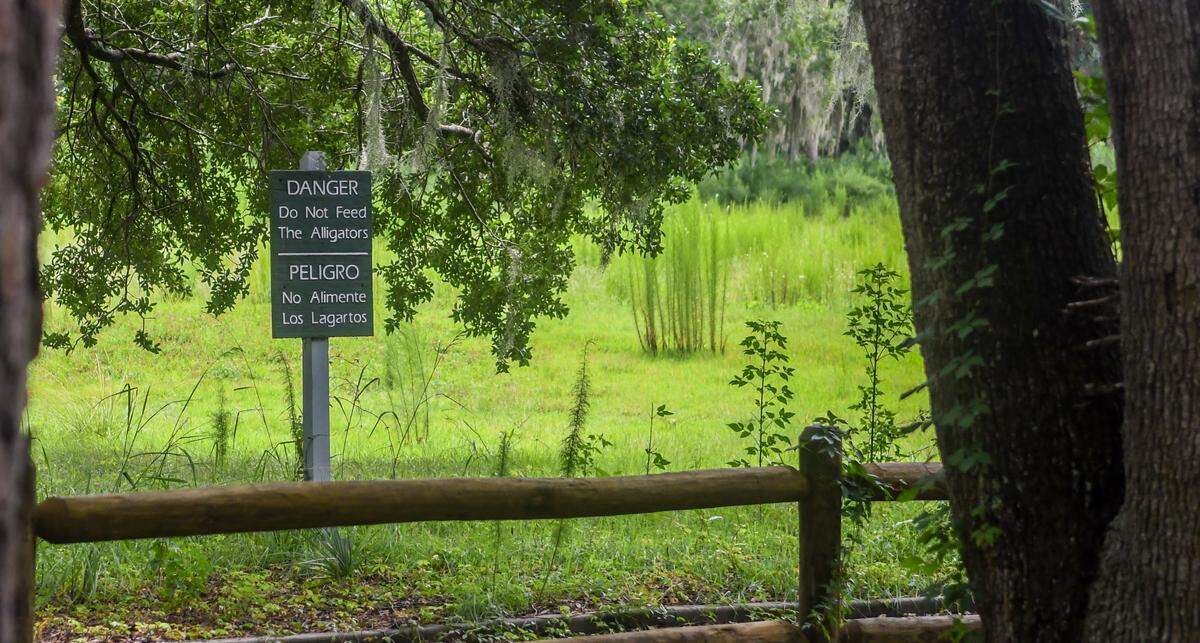
That means reading signs commonly posted around larger retention ponds, lagoons or other marshy areas that warn of alligators. Or taking seriously the age-old saying “A fed gator is a dead gator,” as the practice of feeding an alligator is illegal in South Carolina. It’s also ensuring dog walking happens far enough away from the water and never at dusk or dawn — the times alligators feed and travel.
Rather than living in fear, many residents and Beaufort County visitors would rather educate the community better than euthanize large numbers of alligators in order to avoid having one show up in the backyard.
Education in coastal communities is provided in in pamphlets, signs, welcome speeches, websites and by word of mouth. They tell residents and visitors to keep safe distances — at least four car lengths — from alligators; to keep pets and children away from the water’s edge; to not feed or harass alligators (both of which are illegal in South Carolina) and for anglers not to toss used bait into the water.
But for Debbie Eubanks, who owns property on Hilton Head Island but calls Ridgeway home, education alone won’t cut it. She’s seen alligators walk along U.S. 278, another plod along a busy bike path, and the one that garnered thousands of social media clicks after walking around a fast food joint.
Thirty years ago, when Cheryl Battisti Renfro started her trips to the island, riding bikes in the early morning was a way to play the game of spotting an alligator. Now, with two little boys in tow and increased sightings, she’s more cautious.
“It does seem they are getting a bit close to homes for comfort,” Battisti Renfro said. “I know it is their home first and we built in their backyards, but we have a responsibility to keep humans safe as well as wildlife.”
Similar to Battisti Renfro, Eubanks isn’t at all comfortable with alligators creeping up to back doors.
“I don’t want to hurt any gator, turtle or living creature, but when they come up to your door that’s a game changer,” she said.
For safety, Eubanks wishes some alligators would be relocated off the island in less densely human populated areas and that they would exist in a controlled environment. But that’s much easier said than done, according to Palmetto Dunes Chief of Security Jim Griner. Often, after an alligator is relocated, it can travel miles back to where it was initially extracted, he said. Plus, under South Carolina law, alligator relocation is illegal, according to SCDNR.
Like many intimately familiar with the Lowcountry, the chief of security points to education as the most vital way to live safely among the reptiles. That education begins with understanding the prehistoric animals.
Shifting apex predator behaviors
Long misunderstood by humans, the American alligator, which holds a prime spot in the food chain, is vital to the ecosystem.
They feed on prey out in saltwater. They move nutrients from one ecosystem to the other. They control predators that might discourage certain birds from nesting. They’re also what Cathy Jachowski, an assistant professor in Clemson University’s Department of Forestry and Environmental Conservation, calls “environmental engineers.”
Female alligators build enormous terrestrial mounds with grass and mud, and they use them for nesting. But the nest mounds are also a haven for many other animals, Jachowski explained.
“We don’t know exactly how things would change if we were to lose alligators,” the professor said. “But I would venture to say that it would probably change in some ways; we might not see the same birds nesting or they might not nest in the numbers that they used to, or the aquatic communities might shift.”
Clemson University researchers, including Jachowski, have studied South Carolina alligator behavior. How do they interact with their environment? Where do they travel? And how do certain catch-and-release protocols shift alligators’ tolerance of humans?
“At the end of the day, I think one of the fun parts about our work is that we’re figuring out what we can do and how we can leverage the learning ability of these large predators to create an environment that’s less risky for humans,” Jachowski said.
It’s work that could have the power to save lives and, conversely, understand how the human footprint will continue to impact the apex predators.
Alligators in the numbers
The state DNR offers three legal programs to remove alligators. There’s public hunting, which includes a lottery process, private lands hunting, and the nuisance alligator program.
The lottery, allowing hunters to apply for a tag to harvest one alligator, rakes in about 7,000-8,000 vying participants from around the state. But only 1,000 tags are granted to hunters each year. However, this does not mean 1,000 alligators are harvested via the lottery.
According to the most recent SCDNR figures in 2020, about 300 of the nearly 1,000 alligators harvested were from the lottery. The other 700 were nearly evenly distributed among private lands hunting and the nuisance alligator program. Private land hunting also require permits and a set of lengthy rules and regulations for the season that runs Sept. 1 through May 31.
“Landowners with alligator habitat are able to participate in the private lands alligator season and are allocated tags based on the amount of habitat present on their property,” according to SCDNR’s Lucas.
Griner, chief of security at Palmetto Dunes for the past 13 years, says the community hasn’t had an alligator-human attack throughout his entire tenure. He wears it like a badge of honor.
He ascribes it to constant and ongoing education of a community that he said includes about 82% short-term rentals. About every three or four weeks, a call comes in about an alligator concern, Griner said. Some years, two or three of those calls end up in an alligator being euthanized. But other years, the resort doesn’t identify a true nuisance alligator and never uses all of its SCDNR-granted nuisance tags that allow the harvest of the animal.
Just because the large predator is swimming in a pond or basking at the edge of a bank does not mean it’s a menace, said Ludy, the Palmetto Wildlife Extractors CEO. Usually, he does a splash test in the water to see if the alligator he’s received a call about begins to swim toward him.
Then, he monitors the animal’s behavior for aggression.
Ludy gets about two calls for extraction from Beaufort County communities each month, and in a year, he euthanizes between three and four alligators from the area. But after a human is attacked, the calls, many from the public, come flooding in.
For Hilton Head Plantation, euthanizing an alligator happens “maybe once a year,” said General Manager Peter Kritisan.
“There isn’t, this time of year, a day that goes by that we don’t have some type of an alligator call,” he said. “Ninety-nine percent of the time, it is a call that ‘There’s an alligator in my pool. There’s an alligator on my front lawn. There’s an alligator on my back porch. There’s an alligator looking at me in my front door.’”
In September 2021, in the Rookery community of Hilton Head Plantation, a woman was walking her dog near a lagoon when an alligator pulled her into the water. She survived the traumatic attack. Since then, no one else has been attacked in the broader community.
Kristian called alligator education a “constant challenge,” and urged residents who live near lagoons, retention ponds and wetlands to always assume the predator is in the water, whether you see it or not.
He instructs golfers not to pick up lone golf balls lying by the side of the water, as they resemble eggs — a food alligators like. Be wary of fishing, let your bait go and keep small dogs away from the water, Kristian said. And never feed alligators, not even the remnants of a gnawed-down chicken wing.
His advice, in sum, is simple: “Observe them from a reasonable distance, and again 99.9% of the time, they are more afraid of you.”
After all, as Ludy puts it, the chances of a person being attacked by an alligator “is about as much as if you were electrocuted by a lightning bolt.”
Sea Pines, where Cassie Cline lost her life, noted that its security department is “available 24/7 to address wildlife sightings and concerns reported in the community.”
Sea Pines employs “a full-time wildlife officer and wildlife biologist to help maintain the delicate balance between humans and our Lowcountry environment,” according to an email from Amanda Jones, communications director with Sea Pines’ Community Service Associates.
Jones said wildlife reports are handled on a case-by-case basis, and the community works with SCDNR to manage wildlife in the area.
Jones did not respond when asked how many resident complaints of alligators Sea Pines had in the past year, how many alligators needed to be euthanized in the past five years and whether safety measures were increased in the following years.
Cline, who still owns a Sea Pines home, said the community’s rules and regulations regarding alligator safety are “loosey goosey.” And, as the wrongful death suit outlines, residents had warned of an aggressive alligator before his wife’s death. While Cline said there are some physical signs posted near the water and information about alligators is available, he wants more to ensure the safety of humans and animals.
His lawyer offered potential proactive solutions for alligators coexisting safely in populated Beaufort County communities. They include building small walls around lagoons or ponds to ensure the animals don’t spring from the water and developing small islands in the middle of lagoons to provide places for the alligators to bask away from humans.
“Does anyone think working in your garden or yard is a life or death task?” Cope, Cline’s lawyer, asked. “Should it be?”
Moving forward after the attack
Nearly four years ago to the day after Cassie Cline died from an alligator attack, 88-year-old Sun City resident Nancy Becker lost her life to a nearly 10-foot apex predator. She was trimming shrubs in her backyard, which abuts a lagoon within the gated community for residents 55-plus in Okatie.
Becker slipped and fell down a steep embankment into the water, according to previous Island Packet and Beaufort Gazette reporting. As determined by an autopsy at the Medical University of South Carolina in Charleston, she died from blunt force trauma from an alligator attack, according to Beaufort County Coroner David Ott.
It was ruled an accidental death. Since 2019, Sun City has reported three alligator attacks; Becker’s was the only fatal one.
Sun City residents say they were not given information after Becker’s death. Management for the gated community did not respond when the Island Packet reached out for comment.
Becker’s next door neighbors, John Bruce Iler and Sharyn Iler, said they fielded calls all the way from California and Texas asking what had happened. The Ilers called it a “tragic, freak accident” and are accepting the risks of Lowcountry living. They even let their black cat, Lucky Boy, prowl outside near the lagoon.
“Do I live in fear? No.” John Bruce Iler said, adding that he’d like SCDNR to consider removing the big alligators.
But two houses down, Mikey Caron is still shaken. She’s already considering moving to Hilton Head Island.
For Caron, the fear is for the vulnerable — grandchildren and the elderly. She said she believes it’s incumbent on Sun City to create more rules and regulations around alligator safety, more than the signs that dot the larger retention ponds on the property. Similar to Jim Cline, Caron wants more done. Perhaps an ordinance in place that restricts people from moving too close to alligators, she offered.
It’s not a “kill all the alligators and start over” conversation, Cope said. After all, it doesn’t work.
A day after Becker’s death, a 6-foot alligator made its way to the pond where the now-euthanized alligator once basked.
This story was originally published August 29, 2022 at 11:50 AM.