What we know and what we don’t know about the Beaufort County jet fighter crash
Marine Corps Air Station Beaufort on Saturday asked anyone with photos or video of the F/A-18D before it crashed to send their name and contact information to bfrt_jpao@usmc.mil.
The U.S. Marine Corps fighter jet that crashed Thursday afternoon in northern Beaufort County sparked a 12-acre fire that roared through oak trees surrounding a grave site on former South Carolina Gov. Mark Sanford’s family property.
“The plane was completely destroyed,” Sheldon Fire Chief Buddy Jones said.
Marines with Aircraft Rescue and Firefighting were still on scene Friday, a spokesperson said at about 1 p.m.
A cause of the crash is still under investigation.
Meanwhile, the two pilots who safely ejected from the multimillion-dollar F/A-18D Hornet combat jet walked away mostly uninjured. One pilot had a bloody lip, a witness said.
The Marine Corps on Friday still was not releasing the names of the pilots or disclosing information about what forced them to abandon the aircraft.
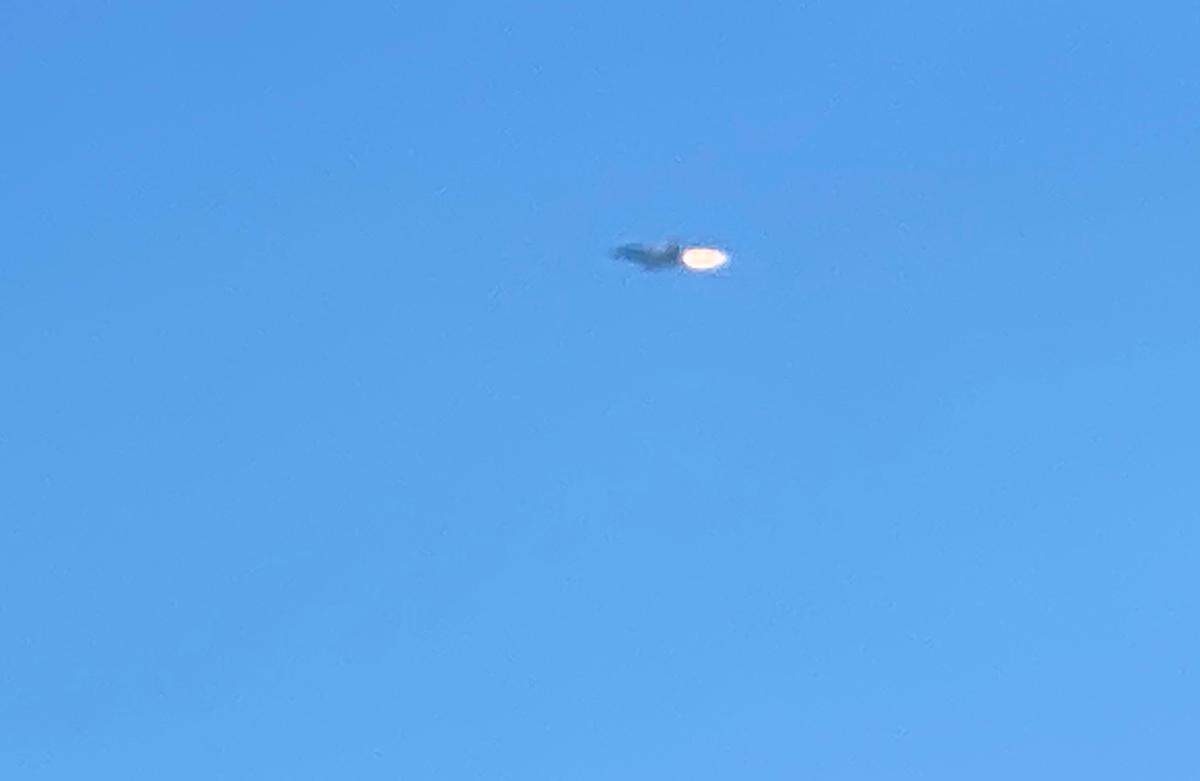
One resident Thursday said she saw a “great yellow, white flame” shooting out of the back of a jet engine before the crash and resulting explosion.
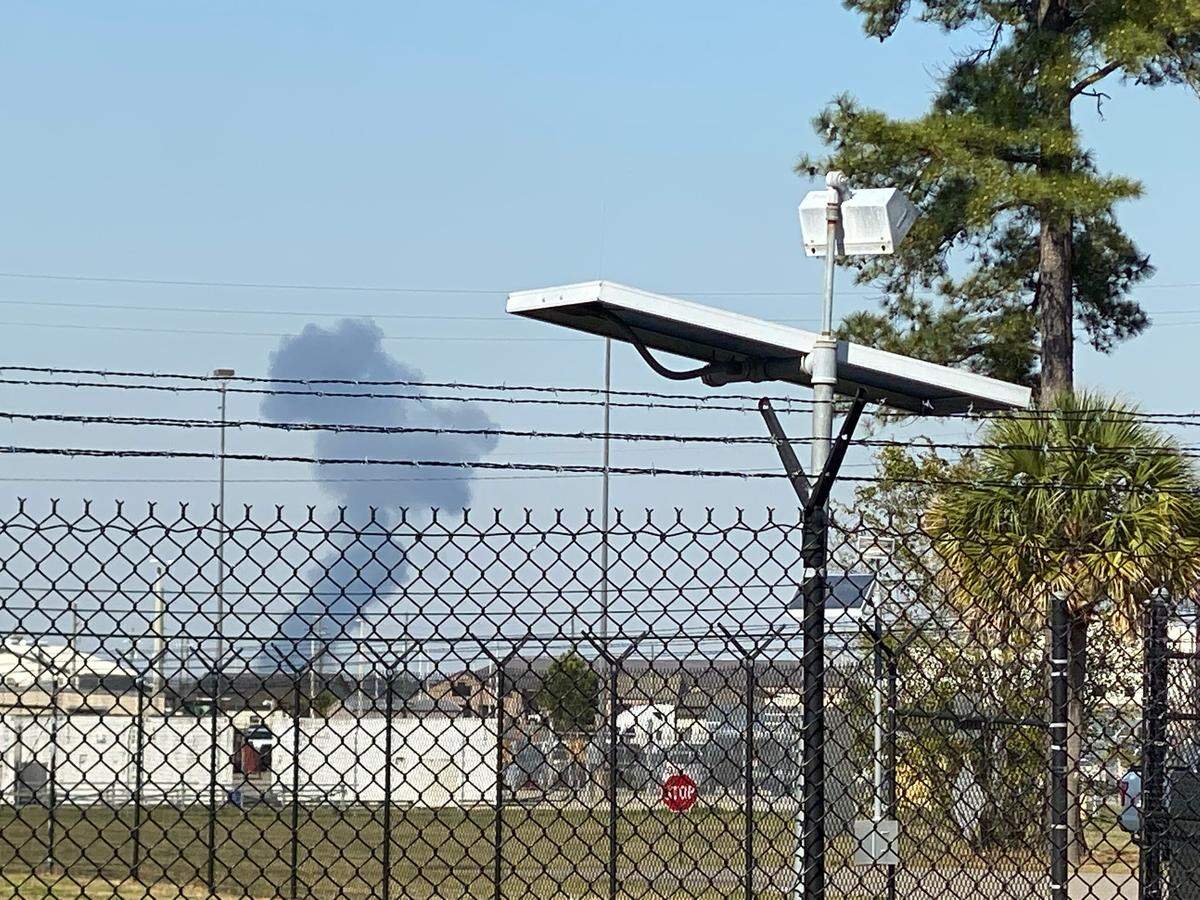
Here’s what we know about the incident
▪ The jet crashed on Coosaw Plantation, which is former South Carolina Gov. Mark Sanford’s family property
▪ The crash site was near Halfmoon Island, according to the Beaufort County Sheriff’s Office and Sarah Sanford Rauch, the former governor’s sister. Halfmoon Island is about 4 miles north of U.S. Marine Corps Air Station Beaufort and is close to multiple unincorporated communities like Dale, Lobeco and Seabrook.
▪ The combat jet went down at about 3:15 p.m. Thursday, according to the Marines.
▪ Two Marine pilots were able to safely eject from the jet and were in stable condition Thursday, the Marine Corps said. The pilots were “conducting a routine flight.” Rauch, who saw the jet take off from Marine Corps Air Station Beaufort, said one pilot had a “really bloody lip” after the crash, but otherwise was fine.
▪ There were no civilian casualties, Beaufort Air Station spokesperson Capt. Thomas Jones said. Some private property was damaged, Jones said, and the military was working with the owners on that.
▪ Sanford, the former governor, in a Friday phone call with The Beaufort Gazette and Island Packet said a number of large oak trees surrounding his late father’s grave on Coosaw Plantation were destroyed in the crash.
▪ Jones, the Sheldon fire chief, said the fighter jet crashed in a wooded area a half-mile from the nearest home. When firefighters arrived, the aircraft was on fire, Jones said. The fire burned “pretty hot” and spread to 12 acres of nearby woods.
The air station’s fire department sent two crash rescue trucks with large foam retardant capacities, and Sheldon had two water tankers on scene. Burton firefighters also responded, and South Carolina Forestry plowed a fire line around the blaze. “When you deal with aircraft like this,” Jones said, “you are dealing with fire from fuel, and you’re dealing with parts everywhere.”
▪ Rauch, the former governor’s sister, gave this account of the crash Thursday: “We watched this plane take off, and my brother (Bill) made a comment about the afterburner and ... it was like this great yellow, white flame shooting out of the back of one of the engines, and I said, ‘That’s a fire.’ Then all of a sudden, the plane started slowing down and slowing down, and the flames were getting bigger and bigger, and they were, you could tell, kind of reeving to try to stay in the air, and all of a sudden it just slowed down and then it went nose-down ... and I yelled to my brother, ‘No, no, no, no, no, it’s going down.’ (I) watched it roll, and then go nose dive, and then a couple seconds later, it was a colossal explosion.”
▪ The Marine Corps is investigating the crash, a spokesperson said Friday. The Federal Aviation Administration said “the military will investigate.” A spokesperson for the National Transportation Safety Board said the agency does not investigate military aircraft accidents. “The only exception would be if there were a midair collision involving a non-military aircraft,” the spokesperson wrote in a statement.
▪ The F/A-18D Hornet military jet that crashed was part of the 2nd Marine Aircraft Wing, the major East Coast aviation unit of the Marine Corps headquartered at U.S. Marine Corps Air Station Cherry Point, North Carolina, which has fixed-wing aircraft based at Marine Corps Air Station Beaufort.
The D model of the F/A-18, produced by McDonnell Douglas (now Boeing), first became operational in 1987 and costs $29 million per unit, according to the U.S. Navy. F/A-18Ds are used by the Navy for “attack, tactical air control, forward air control and reconnaissance squadrons,” according to Military.com.
Here’s what we don’t know about the crash
▪ Maj. Melanie Salinas, a spokesperson for the 2nd Marine Aircraft Wing, and Capt. Thomas Jones, the spokesperson for the Beaufort Air Station, said Friday no additional details about the pilots or the investigation into the crash would be released because the crash is under investigation.
The Beaufort Gazette and Island Packet sent a detailed list of questions to Salinas on Friday about the pilots and the crash. The names of the pilots have not been publicly provided.
▪ There still is no official word on how close the jet was to the ground when the pilots ejected from the aircraft.
BEHIND THE STORY
MOREThis is a breaking news story
In a breaking news situation, facts may be unclear and details may change as the story develops. Our reporters are trying to get important information to the public as quickly and accurately as possible. This story will be updated as more information becomes available. Refresh this page later for the most up-to-date report.
This story was originally published March 4, 2022 at 2:22 PM.