
Eerie photos show sharks appearing to sleep atop shipwrecks off North Carolina
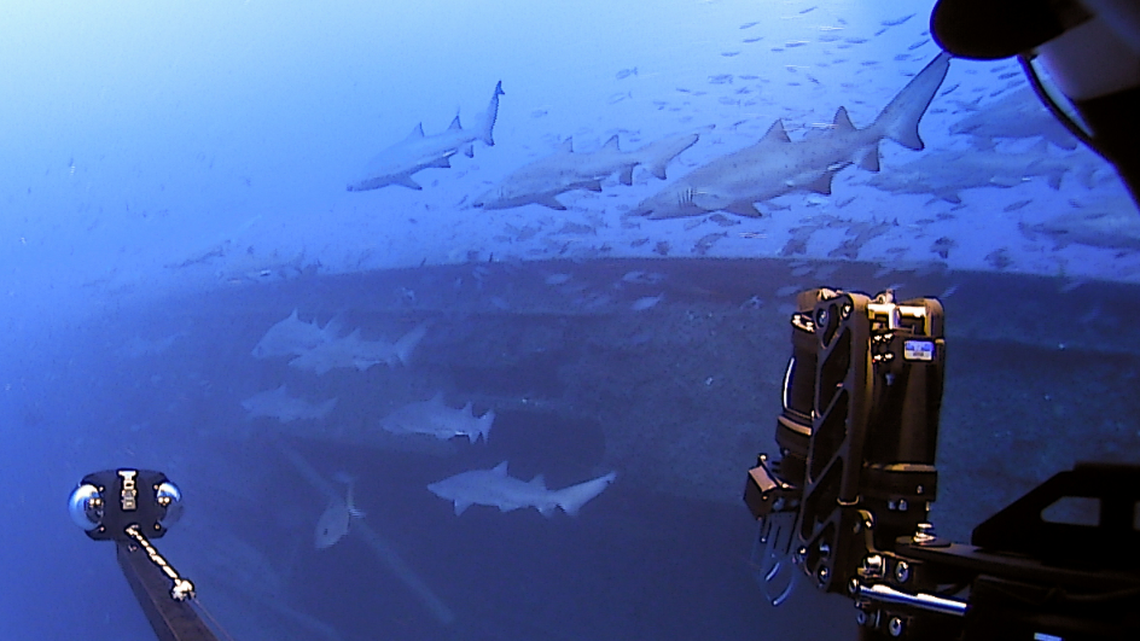
A team of scientists exploring waters off North Carolina saw repeated instances of large sharks appearing to be asleep around historic World War II shipwrecks.
The eerie sight was first recorded as the NOAA-backed team visited the massive 500-foot-long wreck of the E.M. Clark, which was sent to the seafloor in 1942 by torpedoes from a German U-boat.
Photos shared on Facebook by NOAA show groups of sand tiger sharks in stasis around the remarkably intact tanker.
The appearance was deceiving, according to Dr. J. Christopher Taylor of National Centers for Coastal Ocean Science, Marine Spatial Ecology Division.
“The sand tiger sharks are somewhat unusual for sharks in that they can hover or seem to rest,” he told McClatchy News.
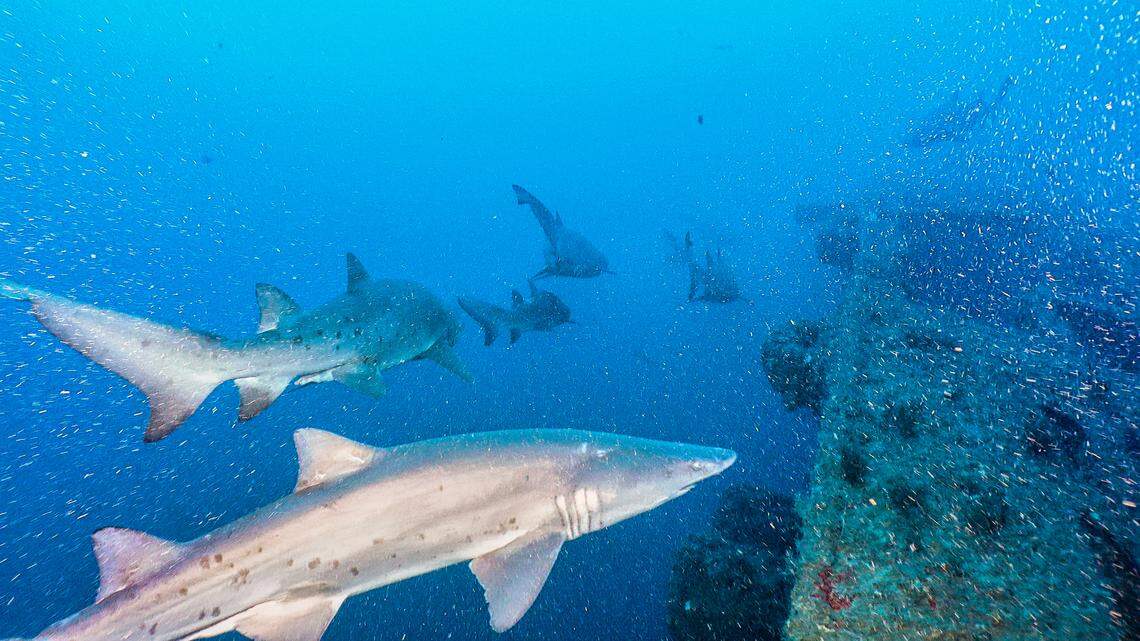
“It is likely they use the shipwrecks for feeding, and as rest stops along their migration up and down the Atlantic coast. ... Their presence represents a vibrant diverse community of fish supported by these living shipwrecks.”
The images were recorded during the Valor in the Atlantic mission expedition, which used “cutting-edge technology” to explore shipwrecks around NOAA Monitor National Marine Sanctuary, 16 miles off the N.C. coast.
The expedition, done in partnership with the Global Foundation for Ocean Exploration, also found hundreds of invasive lionfish are gravitating to the same shipwrecks.
Sand tiger sharks grow to about 10.4 feet and researchers have long known they gravitate to shipwrecks as a place to feed on reef fish, including jacks and barracuda.
However, it has lately been noted sharks actually prefer shipwrecks over natural reefs, according to Dr. Avery Byrd Paxton, a research marine biologist with the National Centers for Coastal Ocean Science.
This is likely due to the “height and shape” of the wrecks, she said.
“Shipwrecks tend to be taller than rocky reefs in the area. Taller reefs like those formed from shipwrecks generally host more large predators,” Paxton told McClatchy News.
“We see this pattern primarily for fast-moving predators, such as sharks, jacks, and barracuda, that live and hunt in the water column around taller shipwrecks and artificial habitats. Shipwrecks and other artificial habitats can play an important ecological role ... by supporting large water-column predators.”
As for whether sharks actually sleep, a researcher paper published in March out of Australia reports some species (such as draughtsboard sharks) “frequently entered a restful state to conserve energy,” LiveScience reported.
During such periods, they “adopted a flat and rigid body posture,” but didn’t always close their eyes, the researchers said.
This story was originally published May 27, 2022 at 9:24 AM with the headline "Eerie photos show sharks appearing to sleep atop shipwrecks off North Carolina."