
Marines must ‘stay away from all wildlife’ due to rabies threat at Camp Lejeune in NC
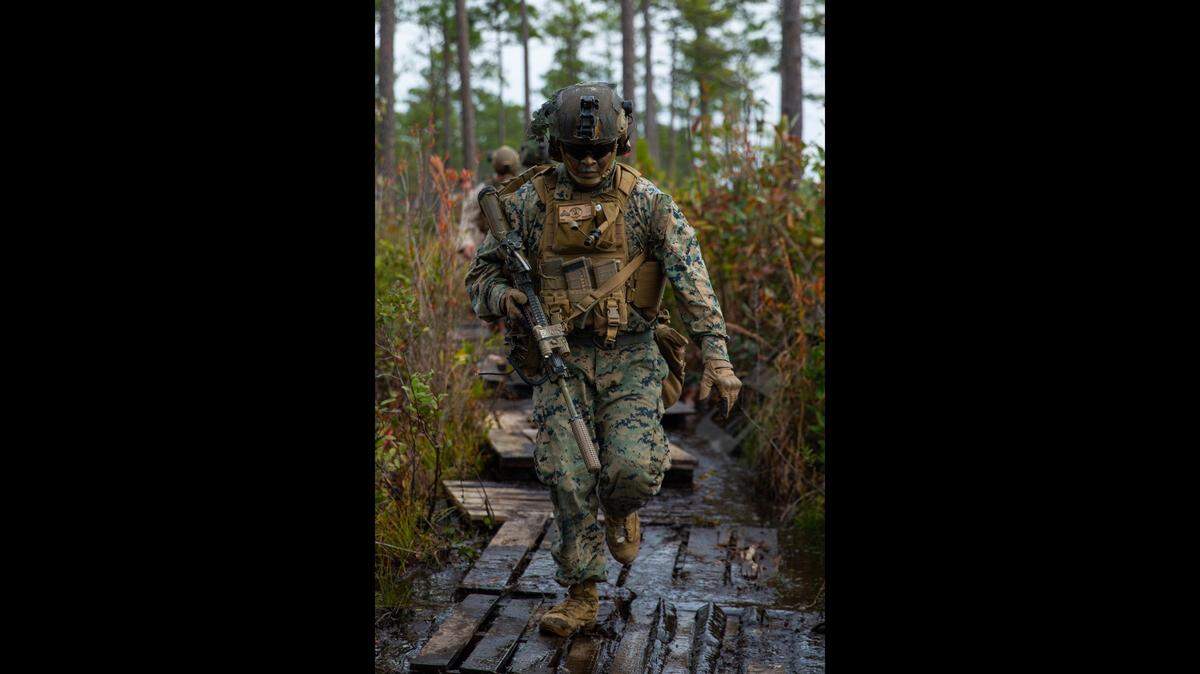
U.S. Marines are known as fearless, but Camp Lejeune in North Carolina has issued an unusual warning for personnel to avoid contact with all wildlife in their path.
A raccoon captured at the 153,439-acre base tested positive for rabies last week and “an additional raccoon was trapped and wildlife officials are awaiting lab results,” the U.S. Marine Corps said in a news release.
Marines and civilians at the camp should be on the lookout for “animals exhibiting suspicious behavior.”
“Installation personnel are advised to stay away from all animals, especially wildlife that are unusually aggressive, tame or disoriented,” base officials said. “Animals showing these types of behaviors do not necessarily have rabies, but should still be avoided.”
The base did not report whether anyone had come into contact with the two raccoons.
Marines at the facility are frequently in the wilderness for training, elevating their risk of coming into contact with wildlife.
The camp near Jacksonville “is the largest Marine Corps base on the East Coast” and includes 14 miles of coastline, according to the Department of Military and Veterans Affairs. It is home to “several training schools,” including the Marine Corps Combat Service Support School.
Camp Lejeune has had wildlife troubles in the past, including alligators.
In 2018, base officials noted an alligator living near one barracks had lost its fear of humans, likely due to being fed by humans people, officials said.
Base officials decided to capture and move the alligator away from the barracks “somewhere else on the installation.” American alligators are native to the southeastern North Carolina coast and can grow to 15 feet.
This story was originally published March 21, 2022 at 7:14 AM with the headline "Marines must ‘stay away from all wildlife’ due to rabies threat at Camp Lejeune in NC."