After tragic plane crash, resilient NC coastal residents lean on each other, as always
As soon as word got out that a plane had likely crashed into the ocean off Carteret County last Sunday — and word travels fast among people whose lives depend on watching the sea and the sky — more than a dozen fishermen untied their boats and headed to where the aircraft had gone in.
Back on land, in each of the dozen or so communities that make up the Down East region of Carteret County, cell phones were buzzing as people shared what they knew. On Facebook, neighbors pleaded: Pray. Please, pray.
The fishing boats crossed Core Sound, threaded Drum Inlet and went into the open sea, scanning the choppy surface for any sign of debris to which a survivor might cling. They were fighting rough seas and a ticking clock, with only a couple more hours of daylight.
They were looking for their boys.
Eight people, six of them local, four of them high school kids on their way back from an annual youth duck-hunting excursion in neighboring Hyde County, were on the single-engine aircraft that disappeared from radar shortly after 2 p.m.
By late Monday, searchers had found the fuselage 55 feet down on the ocean floor.
The plane ride had been a rare treat for the youths, offered by one of the boys’ mothers and her boyfriend.
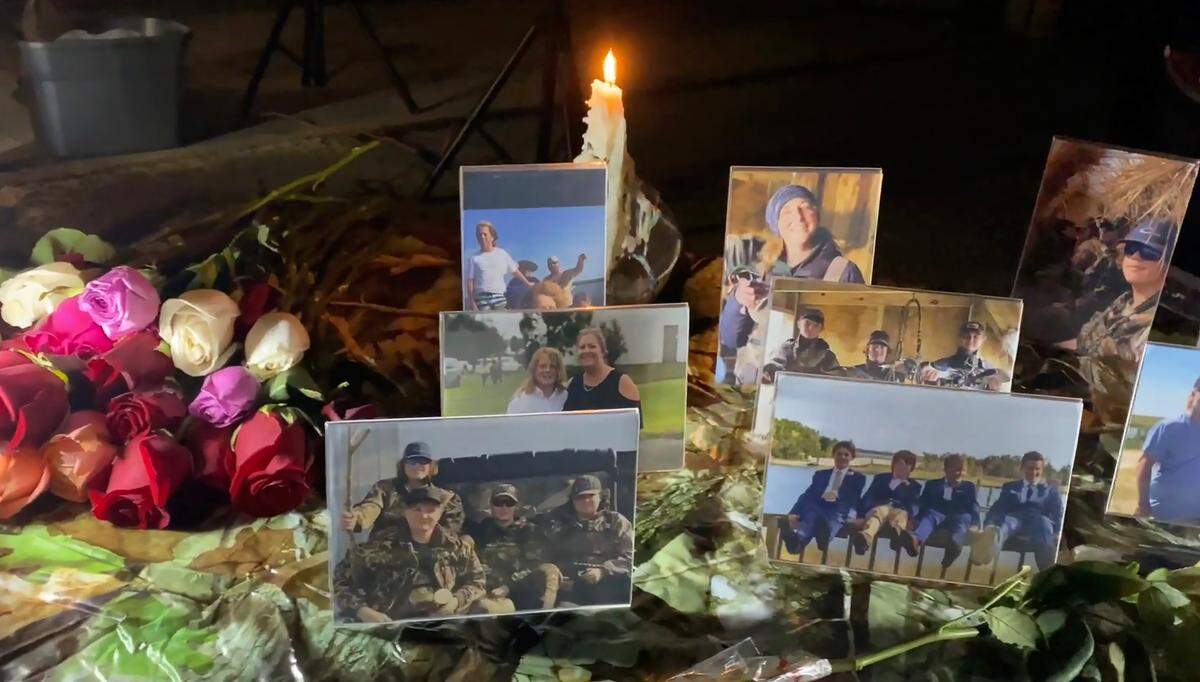
Adults on board the plane were the pilot, Ernest Durwood Rawls, 67, and his son, Jeffrey Worthington Rawls, 28, both of Greenville; Stephanie Ann McInnis Fulcher, 42, and her boyfriend, the owner of the aircraft, Douglas Hunter Parks, 45, both of Sea Level.
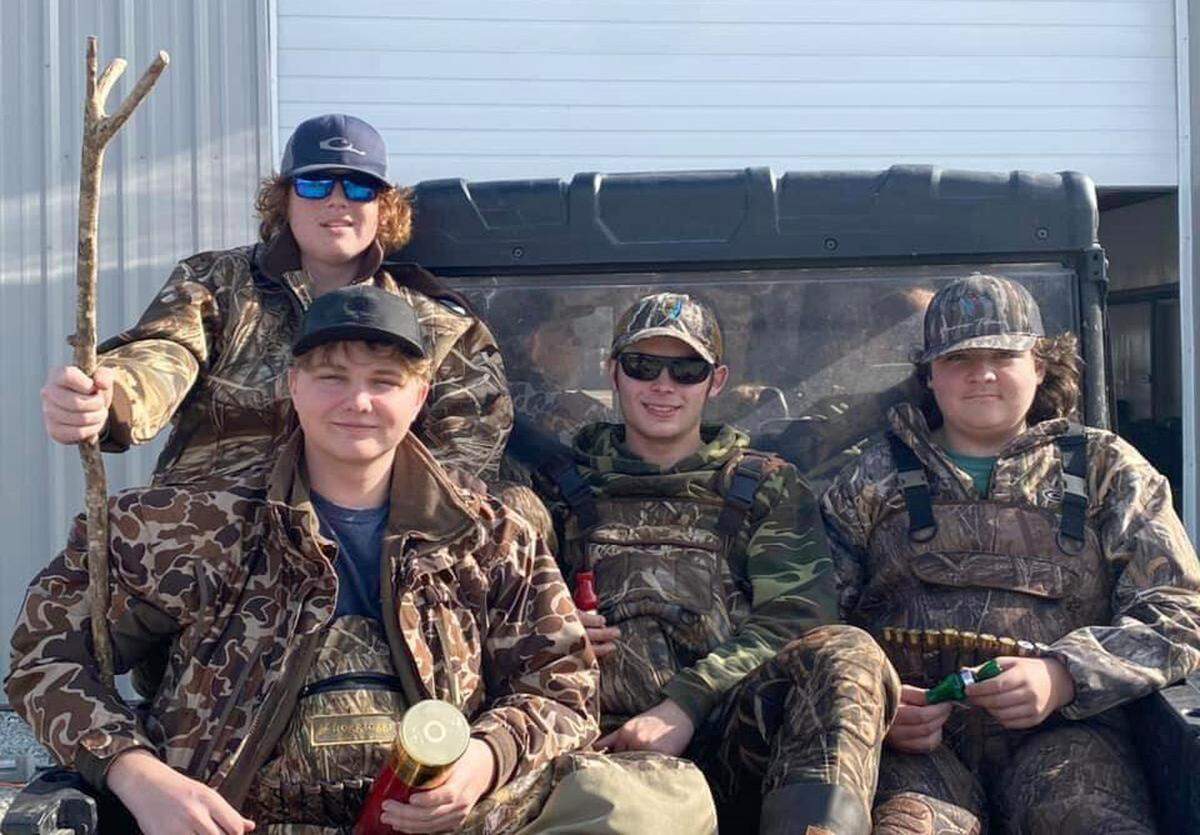
The teenagers were identified as McInnis’ son, Jonathan Kole McInnis, 15, of Sea Level; Noah Lee Styron, 15, of Cedar Island; Michael Daily Shepard, 15, and Jacob Nolan Taylor, 16, both of Atlantic.
Lessons in ‘loss, tragedy and strength’
Residents say the news that all had perished will test the resilience and prove the bonds in a place whose 300-year history has too often been shaped by disaster.
People here have been clobbered by at least six major hurricanes, including three in the past 20 years that have forced people to rebuild their homes or raise them up. They’ve lost fishermen in boating accidents and, in 1969, lost a crew of six at once when a tugboat went down in a storm.
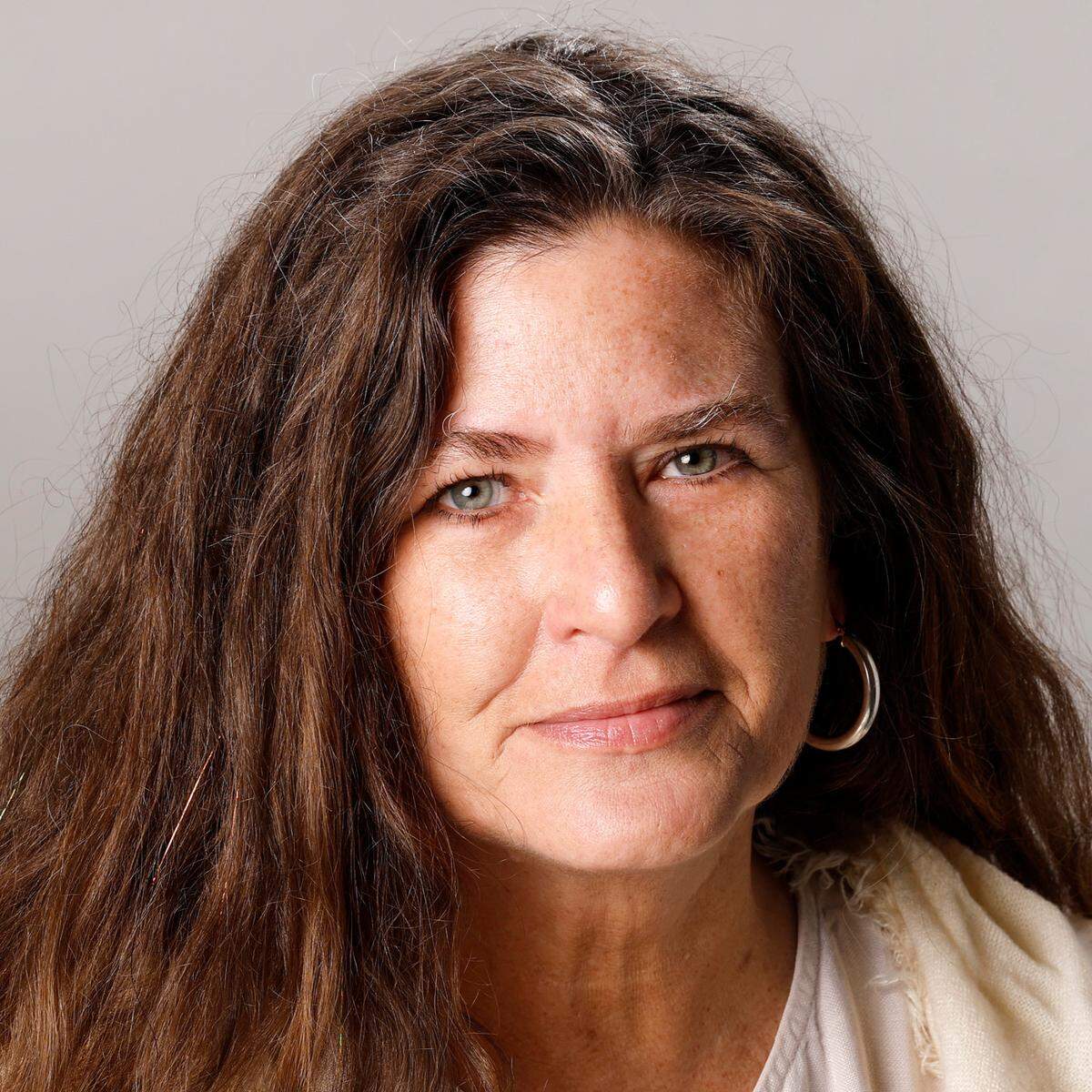
“The children that are left behind are learning hard lessons,” said historian and community activist Karen Amspacher. “The hard lesson they’re learning is loss, tragedy and strength. But they’re also learning that this crowd they’ve grown up with is going to hang with them.
“We know who we are here,” Amspacher said. “We know who we are, and we know whose we are. We know what we’re about.”
Who they are, mostly, are descendants of German, Scots-Irish, French and English settlers who migrated down from northern colonies in the 1700s. Many can trace their lineage to people who built villages on Shackleford Banks or Cape Lookout and resettled in the safety of the marshlands at the turn of the 20th century after a series of hurricanes proved those outposts to be unsustainable.
Over the ensuing decades, families intermarried and spread out, establishing the string of villages that occupy the picturesque, barely-above-sea-level land now traversed by U.S. 70, Harkers Island Road and N.C. 12, all of which run out near the water’s edge.
Each community developed a distinct identity based on a predominant vocation: cabbage farming, boat-building, hunting or fishing guide services, boat piloting, decoy carving, fishing, oystering or shrimping. Before roads and bridges connected the communities starting in the 1920s, moving between them required boats and small ferries. And traveling to and from Beaufort, the nearest Carteret County town, was a daylong effort.
Population estimates suggest that even now, fewer than 12,000 people are spread out across the Down East region, considered the southern Outer Banks, and many of those don’t live there full time. Some who do now commute to Beaufort or Morehead City for jobs as teachers, nurses or service-industry workers, though they may still be identifiable by the telltale traces of Brogue in their speech.
‘A determined group of people’
Alton Ballance, a native of Ocracoke who has written about the people of that island, says there is something about living in a remote place — even in the age of cell phones, internet and more or less reliable year-round ferry service — that instills in people a sense of independence from the outside world and interconnectedness among themselves.
“It’s an end-of-the road kind of place,” Ballance said. “The road begins and ends there. What grows up in a place like that is just a determined group of people who love that isolation.”
In their isolation, said Dwight Burrus, who is 73 and grew up on Hatteras Island before it had a bridge, residents treat each other with a generosity that is harder to find in places where hardware and grocery stores on every corner mean never having to ask a neighbor for a spare boat part or a stick of butter.
“In an isolated place, you’re going to live with that neighbor for 70 years,” Burrus said. “Your neighbors are going to bury you, or you’re going to bury them. So you learn to put up with each other. You learn that kindness and that goodness.”
Burrus, who traveled the world in 50 years as a pilot, said remote communities used to lag 50 to 100 years behind more developed places, not just in amenities and conveniences but also in attitudes.
There are no high-rise hotels or resorts in the villages Down East, no fast-food restaurants, and when a man’s boat breaks down on the water, he can call another fisherman and expect to get towed back to shore. Once there, the relentless do-it-himselfer will hone his mechanical skills to make the necessary repairs.
That willingness to help neighbors and even strangers, Burrus said, is one reason why villages such as those Down East or on Ocracoke or Hatteras have drawn so many tourists and newcomers. At the same time, those who weren’t born and raised in the salt air and don’t have people in the local graveyards are always regarded as outsiders.
These places are holding onto something, Burrus said.
“That’s why it’s so refreshing to people when they come. They’re looking for something that has the values of 50 to 100 years ago.”
They might have seen those values this week in Sea Level, Cedar Island and Atlantic, which each lost boys in the plane crash, but also in Harkers Island, Davis, Bettie, Smyrna, Williston, Stacy, Otway and the other villages that are connected to them by ties of family and friendship.
Ribbons of blue
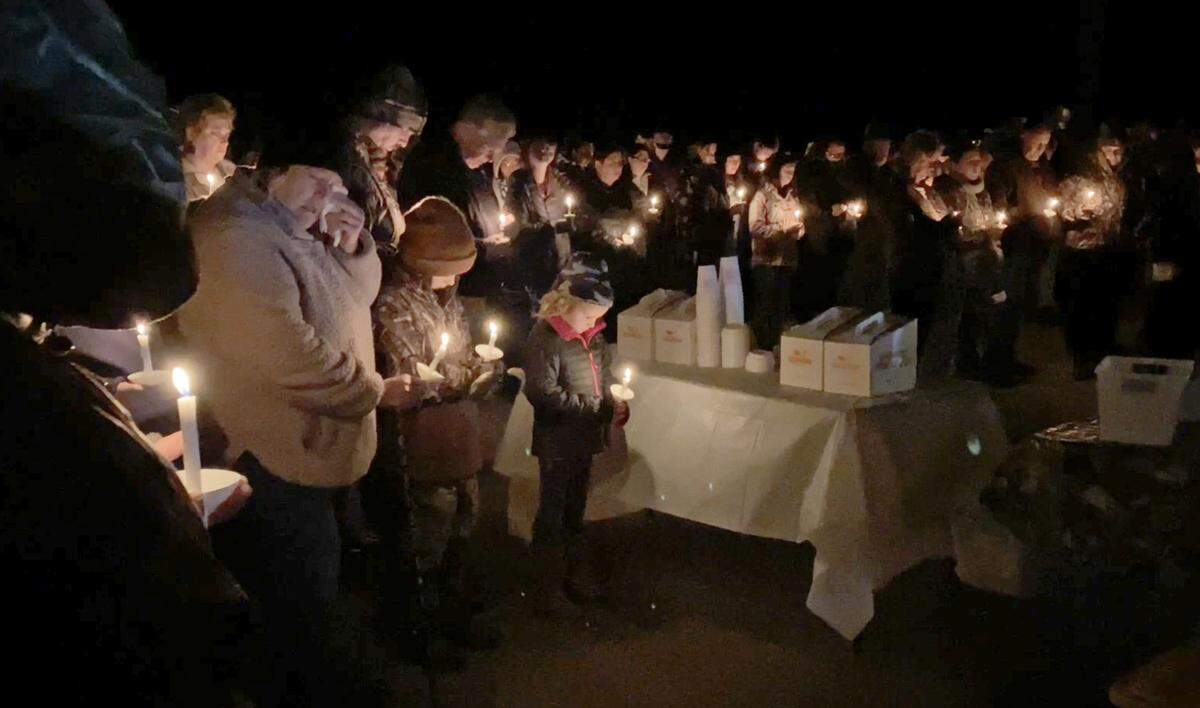
For that matter, locals say, people from all across Carteret County have searched for ways to show their support for the grieving. They have donated money to help pay for funerals, sent food for teachers at the schools, attended a candlelight vigil Tuesday night in the parking lot of the old Red & White Grocery store in Atlantic, and have tied ribbons of East Carteret High blue to everything that didn’t move out of the way.
Zack Davis, who teaches welding at East Carteret, said that Down East, nearly everybody knew at least one of the adults on the plane, or one of the boys, or a relative or youth who grew up alongside them. Local schools are small, and students often are together from pre-kindergarten until graduation. Davis taught Noah Styron and hired him to work on his shrimp trawler in the summer.
If by some statistical anomaly someone didn’t have a connection to anyone on the plane, Davis said, they probably could still relate to them.
“Not only were they our boys,” Davis said, “but 20 years ago, that was us. We grew up doing the same things: hunting, fishing, being out on a boat hanging out with the buddies outdoors. Out here, as teenagers, these boys will get a boat long before they get a truck, and that boat is freedom. When they’re out on the water, they’re free.”
The hunting trip the group was returning from is an annual tradition, a day outside the regular season designated by the Wildlife Resources Commission just for youth.
Hunting is a longstanding tradition Down East; Babe Ruth and Franklin Delano Roosevelt both hunted in the area, and Amspacher said fathers teach their boys to hunt at a young age, sometimes with guns and decoys that have been passed down through families. Hunting helps fill the winter hours when fisheries are closed.
It’s another way residents are rooted to the place, she said, spending time outside with their feet on the ground or their hands in the water.
She and Davis both believe those roots are what will help the people Down East absorb and survive this tragedy. Talking with one of his students this week, it seemed natural for Davis to use a bridge as an analogy for the healing process
“I told him, ‘Buddy, you can stare at the bridge all you want to. But eventually you’ve got to ask God to pick you up on your two feet and walk you across it.”
This story was originally published February 18, 2022 at 4:50 PM with the headline "After tragic plane crash, resilient NC coastal residents lean on each other, as always."