
NC governor declares state of emergency as state deals with coronavirus
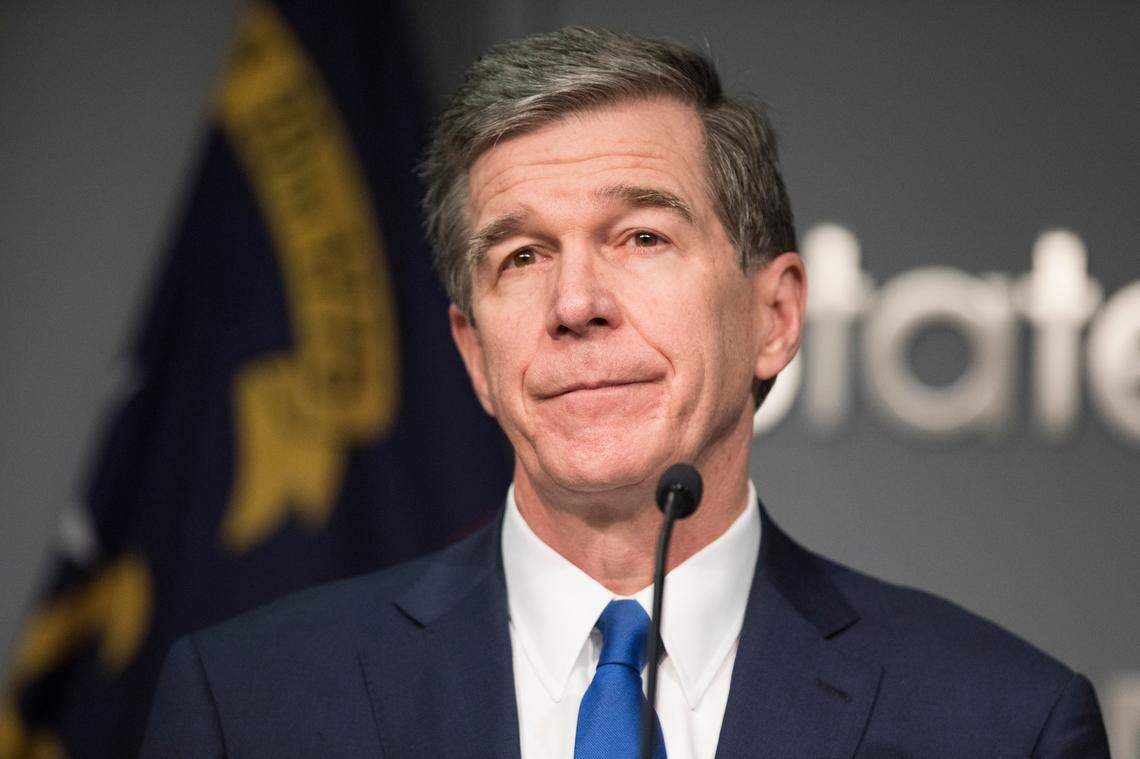
North Carolina Gov. Roy Cooper declared a state of emergency Tuesday as leaders continue to deal with the coronavirus outbreak.
The state now has 7 people who have tested positive for COVID-19, the disease caused by the coronavirus, health officials said.
All of the patients are in isolation while officials identify close contacts.
State workers and contractors who live or work in Wake, Durham and Orange counties are encouraged to work remotely “to the greatest extent possible” starting Wednesday, the state’s human resources office said in an email to employees.
Cooper also urged private businesses — particularly in the Triangle, where the state’s cases have been reported — to similarly allow their employees to work remotely if at all possible.
“This is a critical moment” for stopping the further spread of the disease, said Dr. Mandy Cohen, state Health and Human Services Secretary, at a Tuesday news conference with the governor. She urged people to avoid big gatherings, particularly if they’re considered at high risk for illness.
Cohen also said the state isn’t recommending closing schools at this time.
“This situation is rapidly changing and recommendations about school closures could change as we learn more, but today we are not recommending any preemptive school closure,” she said. “Perhaps the best thing we can do to protect ourselves, our neighbors and our state is to be sure that we are getting accurate information. Please rely on trusted sources of information.”
Duke University will teach classes remotely
Duke University announced Tuesday night that all on-campus classes will be indefinitely suspended and remote instruction will begin. Spring break was extended to Sunday, March 22, Duke said in a statement. Then classes will resume March 23 to give time for students and faculty to adjust to the new remote instruction plans.
Students should not return to campus “if at all possible,” the statement from President Vincent E. Price said. He said Duke is working on plans to give residential students a prorated reimbursement of any previously paid and unused housing and dining fees.
Trinity Academy of Raleigh announced it would be closed starting Tuesday after a student’s parent tested positive for the viral infection, according to a report by WTVD. The school, a Christian K-12 school in North Raleigh, did not say whether the parent was connected to Wake County’s recent Biogen outbreak or one of the two previous N.C. cases.
In an email, Timothy Bridges, head of the school, said that although Wake County health officials had not directed the school to close, it did so as a precaution, WTVD reported. Parents were to be notified later Tuesday about whether the school would reopen this week.
State officials are not asking the ACC Tournament or other big upcoming events to be canceled but want all event organizers to adopt “lenient” refund policies for sick people, to prevent the disease from spreading.
Cooper says he personally doesn’t plan to avoid things such as sporting events because he’s not a high-risk person, but cautions people to be aware of their own status and to keep following the news for potential updates. “I think people have to make their own decisions about that,” he said.
After a practice before the ACC Tournament in Greensboro, N.C. State University basketball coach Kevin Keatts acknowledged the threat of the virus, which prompted the cancellation Tuesday of the women’s and men’s Ivy League basketball tournaments.
“You know what? I’m a hand sanitizer guy,” Keatts said in an interview with The News & Observer. “I’ve gotten to the point where I carry a little, small container of hand sanitizer with me.”
Declaration ‘an appropriate next step’
Dr. Wesley Burks, CEO of UNC Heath Care, the state-owned not-for-profit that operates the UNC Medical Center in Chapel Hill, UNC Rex Healthcare in Raleigh and nine other hospitals in the state, is one of many health care experts who have been working with state and local officials on the new coronavirus response.
The emergency declaration “is an appropriate next step with the number of cases that have been identified,” Burks said Tuesday during a meeting at The News & Observer office. The declaration conveys to the public that the illness is enough of a threat that they should take protective measures against it, and it makes the state eligible for federal emergency funding.
“We need to be removing barriers that keep people from getting care,” Burks said, and federal funding can help with that. People who think they may have the virus should not have to worry about whether they can pay for care, Burks said; if they have symptoms and think they may have been exposed, they should call their doctor’s office.
Burks said epidemiologists estimate that every person who gets infected with the new coronavirus will spread the virus to three more people.
Starting Tuesday, UNC Health Care began asking people not to visit patients in its hospitals unless necessary, Burks said.
Do you have questions about the coronavirus? The News & Observer will get the answers for you. Go to bit.ly/virusnc and let us know what you need to know.
This week, he said, all UNC hospitals will use mobile home or empty office space to set up temporary triage and testing sites at their facilities where people can come and be screened for COVID-19. On its website, UNC Health Care advises people who have symptoms and have reason to believe they have been exposed to the virus to call UNC’s COVID-19 help line at 1-888-850-2684.
The triage centers will allow health care workers to determine which patients can be sent home and which ones need to be hospitalized. The measure is designed to prevent hospitals from being overwhelmed if the spread of illness accelerates. Most people can recuperate at home.
At the governor’s news conference, Cohen says she has spoken with the leaders of nearly every hospital in the state. They all have plans for epidemic outbreaks and are putting them into place, she said.
She said that North Carolina doesn’t have as many tests as it would like to have, but neither do other states. The state is trying to develop a new testing mechanism that, if approved by the FDA, will allow more people to get tested.
At the news conference, officials said the state has tested 44 people for the new coronavirus so far, and has enough kits to test another 300 people. By next week, they said, the state hopes to have the capacity to test another 1,500 people.
An unknown number of people also have been tested privately, and if any of those are positive, the state will be notified.
“We know that there are more cases out there,” Cohen said.
Cooper said the state requested testing supplies from the CDC but didn’t get as many as it needs. “I’ve talked with other governors; I’ve talked with the vice president. Every state is having this issue right now,” he said. Cooper reminded people that epidemiologists have estimated that so far, 80% of people who get the illness don’t have severe symptoms and don’t require medical attention. Around 20% of infected people need medical care.
Burks, of UNC Health Care, said those who do need medical attention typically need fluids and oxygen.
The Centers for Disease Control and Prevention will run second tests on the new North Carolina patients to confirm results, officials said.
Previous North Carolina cases
The state’s first case on March 3 involved a Wake County man who tested presumptively positive. Officials say he was exposed at a long-term care facility in Kirkland, Wash., the site of an outbreak, and then returned to North Carolina.
At the time of his return, he was “not experiencing symptoms” and presented no “identifiable risk” to travelers, according to RDU.
On March 5, a Chatham County man who had traveled to northern Italy, where there’s a COVID-19 outbreak, tested presumptively positive, state health officials said March 6. The man experienced “mild flu-like symptoms” while traveling in northern Italy, but his fever went away, the state said. He flew back to the United States the next day, arriving in RDU via John F. Kennedy International Airport in New York.
The man was a “close contact” to a case in Georgia, the state said, and Georgia health officials contacted their North Carolina counterparts.
On Monday, officials announced that five more people in North Carolina tested positive for COVID-19 after attending a Biogen corporate conference in Boston last month and began showing symptoms between Feb. 29 and March 3. The CDC has said the virus is most likely to be transmitted when the affected people are symptomatic, and Chris Kippes, Wake County’s public health director, said the county is in the process of determining who those patients may have come into close contact with before going into isolation.
One of the patients is known to have voted after showing symptoms of illness. Another ate a restaurant, and several flew through RDU, The News & Observer has reported.
More than two dozen people around the country who attended the Boston conference Feb. 24-27 have tested positive for the virus, including an Indiana resident. The Indiana patient also spent time at Biogen’s Research Triangle Park office last week before driving home, Wake officials said Monday.
Because of the number of known cases in Wake County, Cohen said at the news conference that in the Triangle, employers should encourage working from home as much as possible.
“Let’s be guided by compassion and reason, and work to support each other as a community,” she said.
Tuesday afternoon, the N.C. Department of Transportation told regular, temporary and contract employees by email that if they work in Wake, Durham, or Orange counties they should “telework to the greatest extent possible” starting Wednesday.
Coronavirus is primarily a respiratory disease, with symptoms similar to seasonal flu. According to the CDC, symptoms of coronavirus include fever, cough and shortness of breath. It can be differentiated from colds and allergies through screening, The News & Observer has reported.
People with questions or concerns about COVID-19 can call the state’s phone line at 866-462-3821.
Staff writers Kate Murphy, Zachery Eanes and Brooke Cain contributed to this report.
This story was originally published March 10, 2020 at 12:05 PM with the headline "NC governor declares state of emergency as state deals with coronavirus."