
Forget the migration. Hummingbirds are making NC their winter home.
Every fall, millions of hummingbirds fly half the length of the hemisphere in a migration that’s one of the great feats of nature by the world’s smallest birds.
But a curious subplot is playing out in the Carolinas: Growing numbers of hummingbirds are skipping the tropical journey drilled into their genetics over thousands of years to spend the winter in the Southeast.
“It’s something that really gets people’s attention,’’ said Susan Campbell, North Carolina’s leading hummingbird expert who heads a volunteer project seeking to make sense of the shifting migration patterns. “It’s so counter-intuitive.’’
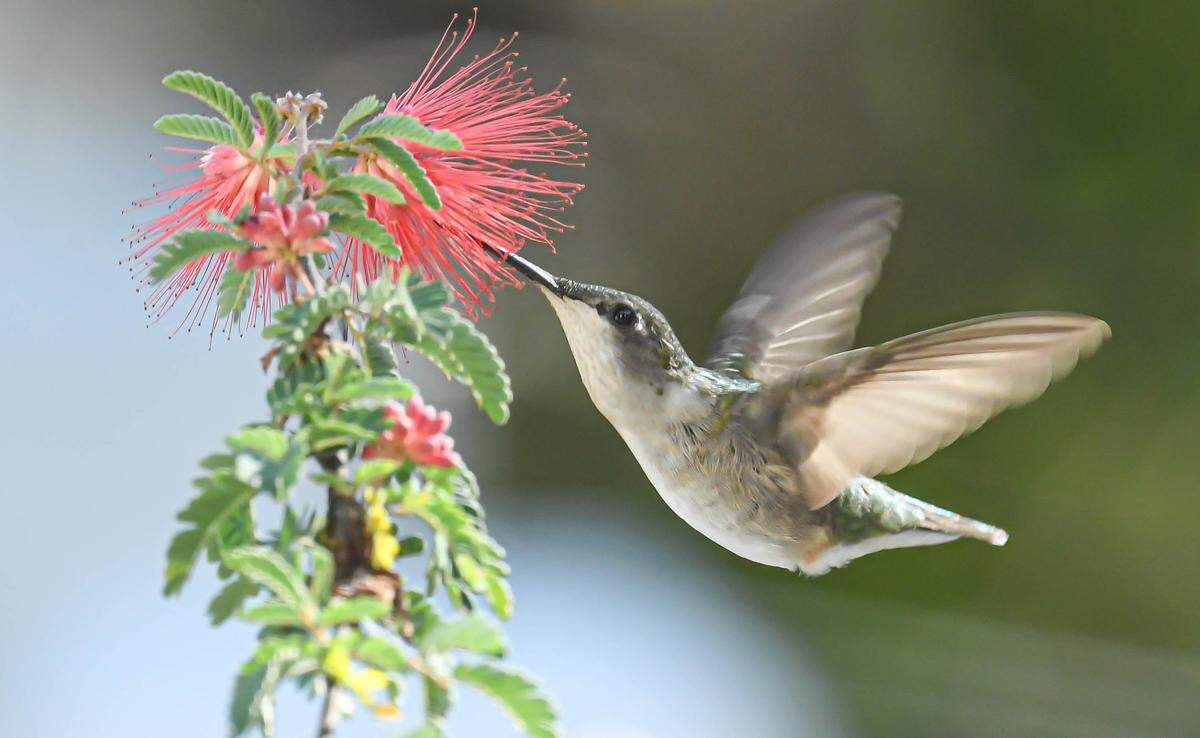
The wonders of the hummingbird make it one of the most popular species. The hummingbird is a wisp of a bird weighing just 4 grams, with wings that can beat 70 times a second — so acrobatic that engineers study it for flying tips.
Now it’s getting attention for staying put.
Researchers have plenty of guesses about why these birds might want to avoid the migration to Central America. The weather here is getting warmer, and flying thousands of miles is exhausting and dangerous. The tropics are swarming with hummingbirds in winter, while there’s less competition for food and territory in the U.S.
“Hummingbirds are definitely expanding their range and overwintering in places they never did before,’’ said Brooke Bateman, senior scientist for climate with the National Audubon Society.
Adds Scott Weidensaul, one of the nation’s foremost hummingbird researchers: “We’re seeing a pretty dramatic shift.”
This isn’t merely an academic question. Many of this country’s 1,000 species of birds are under stress from loss of habitat; changing climate and hazards such as windmills that can kill them; urban lights that confuse them; and feral cats that hunt them. A major study in the journal Science this fall found a third of the breeding bird population has been lost in the past 50 years.
So birds are adapting — in a kind of evolution on fast forward. They’re branching out in where they live, sometimes in what they eat and how they approach the annual migrations that follow the hemisphere’s weather cycles.
Mysterious migration
Up until recently, the avian migration was cloaked in mystery. That’s particularly true for hummingbirds, which aren’t big enough to handle the electronic transmitters attached to larger birds to signal their routes.
But other technologies have started to unveil fresh data, including weather radar and citizen science apps that birders use to share their sightings.
While details are still sketchy on hummingbird migration, two unusual trends are at work, Weidensaul said.
Some western species are heading east instead of south. And some eastern species, primarily the Ruby-throated Hummingbird that breeds here and is the most common, are cutting the migration short to stay in the Carolinas, Georgia, Florida and in other Gulf states.
North Carolina seems to sit at the intersection of these two trends. In recent years, more migrating and resident hummingbirds have been spotted in the state than any other except Arizona, Campbell said.
“Now we have so many people who are paying attention. A lot of people across the state are keeping an eye out,’’ said Campbell, who has studied hummingbirds for 20 years and leads a team working with the North Carolina Museum of Natural Sciences that’s funded primarily by donations.
Her team has documented more than a dozen hummingbird varieties — about half of all U.S. species — including the Ruby-throated, Rufous, Black-chinned, the tiny Calliope and a smattering of migrants passing through. Then in the late fall, when they usually clear out for the tropics, select numbers — perhaps hundreds, perhaps thousands — are staying in pockets around the state.
“If you don’t have to fly across the Gulf of Mexico, why do it?’’ said Geoffrey LeBaron, director of Audubon’s Christmas Bird Count, which has watched the numbers of hummingbirds steadily increasing in each of the winter censuses.
A new migration path
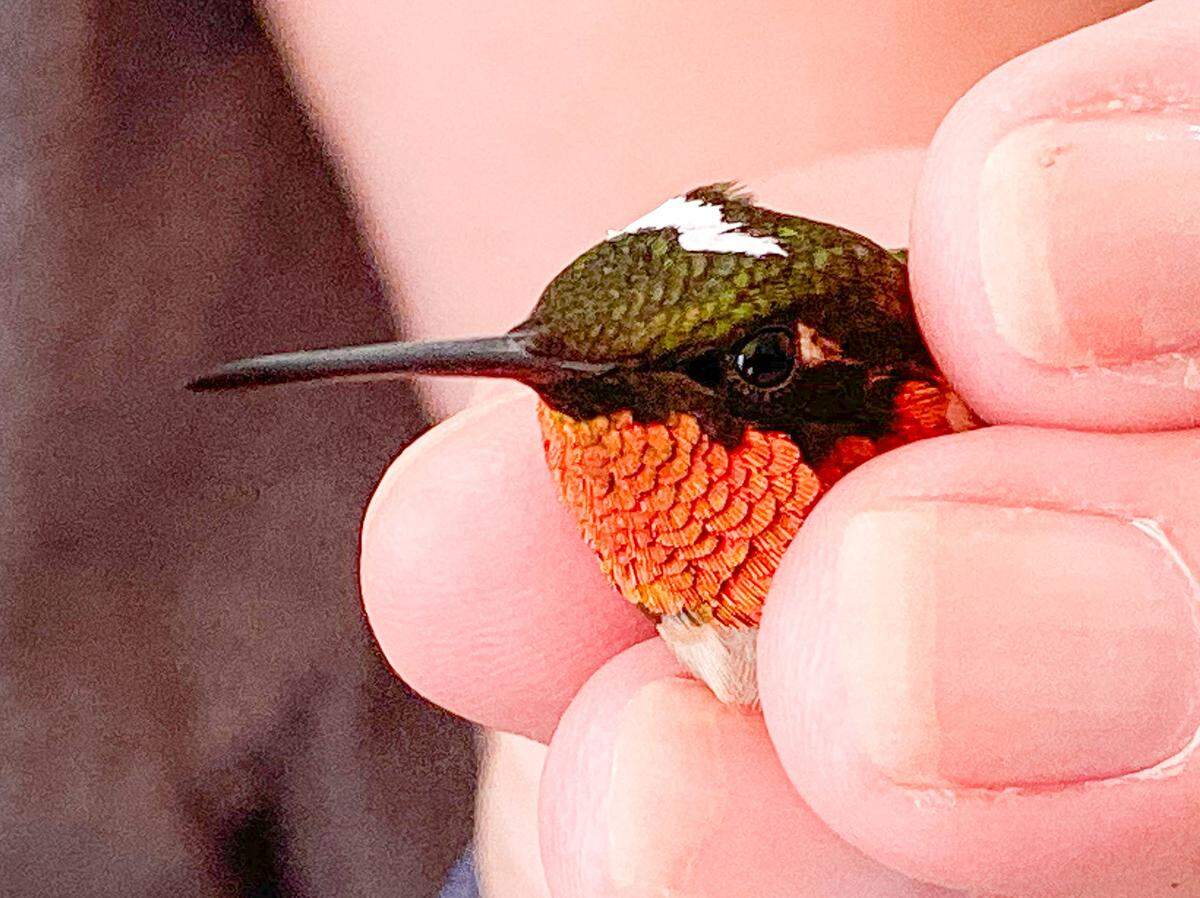
One place where the Ruby-throated congregate is along the Outer Banks, where North Carolina juts close to the Gulf Stream that help warm things up. Volunteers there keep feeders year-round and track which banded birds (hummingbirds can handle tiny ID bracelets) return to the same spots.
“These are small birds, and they move fast and don’t stay (in place) very long, all of which makes it a challenge to know what we’re looking at,’’ said Campbell. “What we can say for sure is these birds are here because they can survive here.’’
Weidensaul, the author and researcher, has banded hummingbirds all over the country. He said it’s fascinating to see birds go against their genetic inclinations. That’s mostly the work of young birds, some on their first migrations, pushing the limits of their range.
“It’s basically nature’s way of throwing spaghetti against the wall and seeing what sticks,’’ he said.
Once a hummingbird finds a new migration path, the route is instilled in the genetic code they pass on to their young.
“As these birds put that into the gene pool, birds born in that lineage are likely to come back to the same place,’’ said T.J. Zenzal, a research ecologist with the U.S. Geological Survey.
Changing landscapes
The hummingbirds are also probably reacting to changing landscapes in both the U.S. and Central America. The quality of habitat and food supplies are diminishing in the tropical wintering grounds, but the changing habitats in the U.S. that work against some species can be helpful to hummingbirds.
Development that reduces forests, which many other birds need, is creating more fields, gardens and flowers that support hummingbirds. Their popularity has led to an explosion of feeders serving the nectar that’s central to the hummingbird’s diet.
“So many people have created backyards designed for hummingbirds,’’ said Weidensaul. “That’s helped to make it possible for these birds to expand their range.’’
Researchers can’t say whether the overwintering trend will become commonplace among hummingbirds or remain a subplot in the migration story.
Either way, it’s worth watching to see what happens next.
“It’s a really fascinating subject,’’ said Weidensaul, “one that ties together a couple of important threads, including climate change and the adaptability of birds in the face of change.’’
Not to mention that these miniature birds put on such a good show.
“Hummingbirds are very special to people,’’ Campbell said. “They’re so unique. They’re highly adaptable creatures. They can be a very emotional subject for people.’’
This story was originally published December 31, 2019 at 7:35 AM with the headline "Forget the migration. Hummingbirds are making NC their winter home.."