
Reconstruction history long ignored, neglected: Are we finally ready to talk?
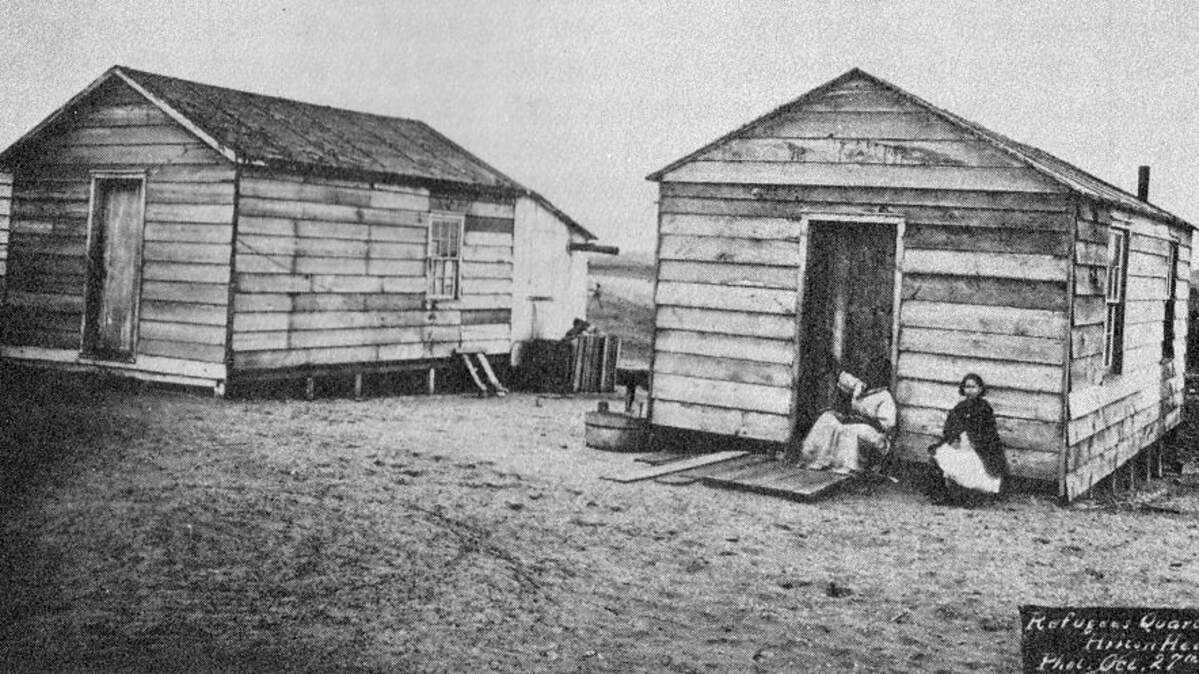
In Beaufort County, the end of the Civil War was a time of both darkness and light. Many Southern whites felt like a conquered people, reduced to lives of poverty. Many blacks were finally free, with great expectations for a new start as people, not property.
A new effort by the National Park Service seeks to tell their seemingly irreconcilable Reconstruction stories.
A STORY OF DARKNESS

Stephen Elliott Jr.
It was 1866. And Stephen Elliott Jr. of Beaufort was broken.
A young brigadier general in the Confederate Army, he was wounded several times. He limped home to Beaufort to find his plantation seized and his world undone. The wealthy planter was reduced to catching fish and selling them to survive. He died just 11 months after the war's end.
A STORY OF LIGHT

A map shows the historic extent of Mitchelville (See a gallery of historic photos from the site).
It was 1866. And Renty Greaves of Bluffton was tasting sweet-as-honey freedom for the first time.
After dodging through the marshes during the Battle of Port Royal, the Linden Place slave found refuge in a camp called Mitchelville. There, he and other newly freed men built homes. They elected leaders. They passed laws -- including the state's first compulsory education requirement.
Mitchelville showed Greaves what was possible. He later became a county politician and public figure.
"I think (Mitchelville) must have been a new beginning for him," said Giselle White-Perry of Orangeburg, a Greaves descendent.
THE PATH FORWARD
For generations, Southern families have told such contrasting stories about Reconstruction, sliced precisely down racial lines.
But not American historians. They have uniformly echoed the same story: Reconstruction was a monumental flop, a failure to realize one of America's loftiest goals of interracial democracy.
Still bruised and bleeding from the Civil War, scholars long theorized that the nation rushed too swiftly to remake itself. Dissension and violence took root, leading to the onslaught of Jim Crow laws that stripped African-Americans of their newly found rights.
Juneteenth Celebration June 20
The Mitchelville Preservation Project and others will host a celebration of Mitchelville from 11 a.m. to 3 p.m. June 20 at Fish Haul Park, 229 Beach City Road on Hilton Head Island. The event will include historical re-enactments about life in Mitchelville, live music, food and art. Tickets are $10 each and available now at mitchelvillepreservationproject.org.
"A lot of people are ashamed of that period," said Lou Benfante, president of the Heritage Library on Hilton Head Island.
The result: Text books have neglected to tell Reconstruction's stories. And many American's historical knowledge skips from the Civil War to the beginning of World War I, with little understanding about the years in between.
But that interpretation of the era is changing. Historians increasingly see the beginnings of the Civil Rights Movement in Reconstruction. They now see the seeds planted for racial equality, even if it was decades later before they bore fruit.
With the newfound appreciation for Reconstruction comes new chances for Mitchelville and dozens of other Reconstruction sites spread across Beaufort County to explain this muddled time to a national audience.
The National Park Service is conducting a yearlong study to inventory Reconstruction era sites through the South -- including Beaufort County, the crucible of the period.
The result could be newly designated historic landmarks, new exhibits at national parks, a boost to local groups already working to showcase the sites and most importantly, an understanding of Beaufort County's role as America struggled to reconstruct itself.
To get it done, many challenges must be overcome locally first.
Few Americans know the groundbreaking, country-shifting story that is Mitchelville, says Randy Dolyniuk, chairman of the non-profit Mitchelville Preservation Project. Beaufort County leaders like Dolyniuk say the story of the nation's first self-governed freedmen's town — the birthplace of African American freedom — is as historically significant as any in United States history. (Josh Mitelman/Staff video)
'THERE IS NOTHING LEFT'

Randy Dolyniuk
Randy Dolyniuk shoots a hand up in the air like a ringleader in a circus, pointing to an ancient oak on the Mitchelville site off Beach City Road.
"With the exception of this tree and maybe that big one over there, nothing is left from the time of Mitchelville," said Dolyniuk, the volunteer chairman of the Mitchelville Preservation Project, a nonprofit working to raise awareness about the historic site.
No homes or buildings have been preserved on the 60 acres that once encompassed the famed Mitchelville colony where Greaves and about 1,500 other freed slaves started new lives as flesh-and-blood people.
No artifacts are on display -- though thousands have been unearthed.
No museum exists.
A few years ago, the Hilton Head Island-Bluffton Chamber of Commerce Leadership Class raised private money to erect a gazebo and several panels of information on the site. And a local hotel, The Westin Hilton Head Island Resort & Spa, agreed to allow a Mitchelville exhibit to be permanently displayed on its second floor since Mitchelville had no building of its own.
Other than that, just 27 words tell the story. A historical marker along Beach City Road reads: "In 1862, after Hilton Head's fall to Union forces in 1861, this town, planned for the area's former slaves and named for General Ormsby M. Mitchel, began."
It troubles Dolyniuk, a Hilton Head banker and the great, great grandson of a Confederate soldier.
He and others have jumped up and down, trying to get the attention of local and federal officials, foundations and historical groups to help them showcase the site, to turn it into a tourist attraction. Their efforts have led to the purchase of some of the Mitchelville footprint by the Town of Hilton Head and Beaufort County.
But it's still far from the tourist hot spot they think it could be.
No tour buses shuttle in. No visitors snap photos.
A patch of woods and four or so feet of dirt are believed to hide the remnants of one of the largest buildings in Mitchelville. Dolyniuk wonders what pieces of American history lay there.
It could be Mitchelville's first church and perhaps a cemetery, too, speculates Lou Benfante, the library president who is also a member of the Mitchelville board.
It will take getting the attention of the right organization to make an excavation possible.
There's hope, the two men say, in the National Park Service's new study. It's a chance to shine that spotlight on Mitchelville and churn up interest.
"It is one of the most significant (historical) sites in the state of South Carolina," Benfante said. "It is a place that gave people hope, that allowed them to experience freedom for the first time. They showed they could learn and they could govern. It is an amazing place."

Michael Allen
A SACRED PLACE
Michael Allen knows about places like Mitchelville, places where history is hidden in plain site.
 National Parks Service employee Michael Allen, part of a team surveying Beaufort County for Reconstruction-era sites, stands near the Stephen Swails House historical marker in his hometown of Kingstree, S.C. (Submitted photo).
As a kid, he walked past an overgrown lot in his hometown of Kingstree, the seat of Williamsburg County in eastern South Carolina, thousands of times.
It wasn't until he was an adult that he learned the spot was once home to Stephen Swails, one of the few black officers during the Civil War and a state senator who served three terms as president pro tem.
It left a permanent impression.
Today, Allen is an employee of the National Park Service. He helped showcase Lowcountry sites that led to the creation of the Gullah Gechee Cultural Heritage Corridor.
Now, he and a group of historians and other NPS employees are charged with doing the same for the nation's Reconstruction sites.
"We want to bring to light what is in plain site," he said.
Allen is part of a team that will spend the next year traveling around the South, building a database of important period spots.
Already this summer, the group has visited Beaufort and Hilton Head Island.
So far, they are impressed with what they have seen, Allen said.
They noted that Mitchelville has no buildings.
"But there's a sacredness ... with being able just to stand in that environment," he said. "There are many important historical places around our nation that no physical structure is still standing. Think of all the battlefields."
At some point, Allen hopes Beaufort County's local organizations will work together to build a welcome center or some other structure so visitors can see artifacts and read about Mitchelville.
Advocates agree with the vision.
But they can't seem to make it happen.

A display cabinet contains a variety of Civil War artifacts that Jerre Weckhorst has found on his property, which is on the former site of Mitchelville next to Fish Haul Creek Park. (Jay Karr/Staff photo)
PIECES OF HISTORY
Those who twist and turn their heads just right can see the house through the woods. Just a little ways down from the panels erected by the leadership class sits a wooden home that looks ripped from the pages of a Civil War book.
That's what its owner Jerre Weckhorst wanted. Back in the 1980s, Weckhorst stumbled across a photo of the home of Mitchelville's namesake and founder, General Ormsby Mitchel.

Jerre Weckhorst is photographed Wednesday in his Hilton Head Island home, which is a replica of the home that Gen. Ormsby M. Mitchel (Mitchelville's namesake) lived in during the Union occupation of Hilton Head in the Civil War. Weckhorst also has a big collection of Mitchelville artifacts that he's found on his property, which is located next to Fish Haul Park. (Jay Karr/Staff photo)
Weckhorst, a boat builder by trade, was curious to see if he could replicate the house that long ago had been torn down.
The result: a replica house he built by hand. The only differences, he said, are a slightly different angle to the roof and a hand rail along the wrap-around porch.
The MPP wanted to buy the home and use it as a spot for displaying Mitchelville materials. Weckhorst agreed to the sale.
It is in Mitchelville after all. And every time it rains at the house, history is unearthed. Just this month, Jerre and his wife, Nanci, have found old nails, bits of plates and other Mitchelville bits in their driveway, uncovered by the rain.

Jerre Weckhorst's Hilton Head Island home is modeled after the house that Union Gen. Ormsby M. Mitchel (Mitchelville's namesake) lived in during the Civil War. (Jay Karr/Staff photo)

Gen. Ormsby Mitchel
Inside the home, two display cases are nearly overflowing with old door knobs, buttons, belt buckles, hairbrush backs, harmonica parts and other pieces of Mitchelville.
But money earmarked for the sale in the state's budget in 2012 was stripped out. And talks with Beaufort County to buy the property have stalled.
Jerre and Nanci Weckhorst recently retired and are now dreaming of buying a house on the May River where they could fish everyday. Maybe they would consider selling to someone other than the Mitchelville group, Jerre Weckhorst recently said.
If that happens, it would be another setback for telling Mitchelville's story.
But it wouldn't be insurmountable, Dolyniuk said. The organization is long used to switching courses and looking for new ways to tell the Mitchelville story.
"Weckhorst's property is just one of many opportunities, albeit a good one, for our community to consider," he said. "We will continue to be thoughtful and develop sustainable plans in this journey."
Follow editor Gina Smith on Twitter at twitter.com/GinaNSmith.
This story was originally published June 12, 2015 at 2:27 PM with the headline "Reconstruction history long ignored, neglected: Are we finally ready to talk?."