District 123 Republican primary: Candidates answer League of Women Voters questionnaire
Ahead of the June 9 Republican primary, the candidates for District 123, incumbent S.C. Rep. Jeff Bradley and challenger Phil Hartman, filed their answers on the League of Women Voters issue questionnaire.
Here are their answers:
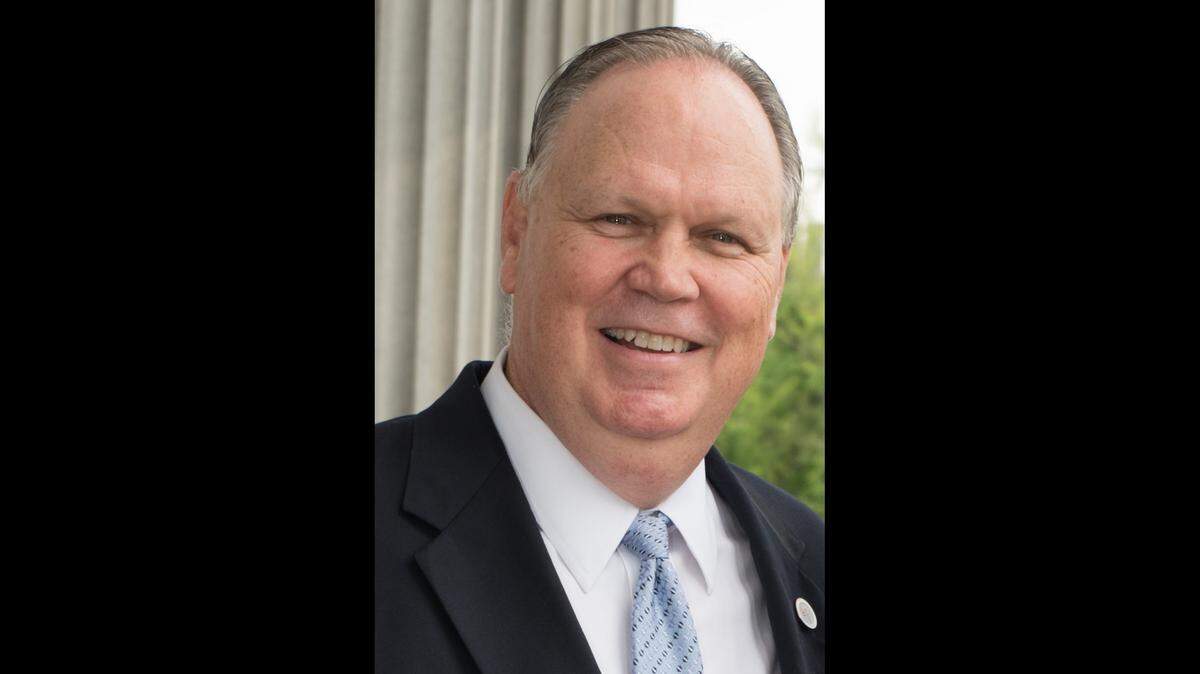
S.C. Rep. Jeff Bradley
What are your top three legislative priorities?
- Infrastructure: In general, I want to oversee that the SC DOT adheres to the 10-year road and bridge improvement plan implemented by the SC DOT. Specifically, I want to continue to press for funding for the Hilton Head Island bridge replacement project. I have lobbied to see that the $120 million required from the State Infrastructure Bank to complete the bridge replacement project is funded in our favor. By leveraging federal, state and local funding, we can get this vitally important project completed that can improve the economic vitality of the island and repatriate some to the tax dollars we have sent to Columbia over the years.
- Federal Stimulus Expenditures: The federal government has allocated $1.9 billion to the state of South Carolina to assist in Covid-19 pandemic relief. The ability to expend that money rests in the hands of the General Assembly. I am vitally interested that those dollars be spent wisely. I want to see that some of those dollars are used to replenish our Unemployment Trust Fund that has been hit so hard recently, and further I want to see that it is used to assist those that have been hit hardest by this event such as small businesses and individual families. I would like to see some of it used as an incentive for new businesses that might be started by people who were economically dislodged by this event.
- Pension Reform: When I came to Columbia six years ago, virtually no one was talking about the condition of the State Retirement System. As a result of my persistent involvement in this discussion, it is now on the front burner for policy makers in Columbia. We have shored up the plan since then and have shortened the amortization period needed to fully fund the plan, but there is still work to be done. I have introduced legislation to reform the plan at its core and would like to follow through with that reform over the next legislative session.
What steps should the state legislature take to provide equitable, quality public education for all South Carolina children pre-K through grade 12?
The top line of any specific changes to improve the education outcome in S.C. would need to include a change in the funding approach. Right now the governor, the speaker of the House and the president of the Senate are working with the Revenue and Fiscal Affairs Agency on a new approach where student needs for services in three areas — instruction, facilities and transportation — drive the funding for the school districts.
The second thing we need to do is implement the House-passed education reform bill. The House passed a bill last year that created an environment for less testing, it gave the teachers a Bill of Rights, it gave the children a Bill of Rights, it provided teachers with planning time, and an increase in teacher pay. In addition, we need to empower teachers with responsibility for results, and provide pay that goes with that. Last year the House passed an extensive Education Reform bill last year, and we’re waiting on the Senate at this point.
Currently there are 79 school districts in the state of South Carolina, and we have only 46 counties. I think if we consolidate the districts, we would reduce the amount of administration costs that are in the system, and we would push more money into the classroom as a result.
We need to work on broadband and making that available at the end of each one of the lines in the rural sections to South Carolina. I think if we could do that, we would improve children’s access to various information and ultimately improve outcomes.
We need to increase accountability across the spectrum. We need to increase accountability for the money spent and the results that we expect from teachers as well as from each School District.
Finally, we should look to the successes of states like Mississippi where they have a robust leadership with intense vision on how to improve education, and South Carolina Carrie White the superintendent of education for Mississippi is driving tremendous results there that would include high-quality curriculum and professional development for teachers as well as school boards.
Do you support regulation of business to ensure that our environment is not degraded? if not, who should bear the cost of remediation when damage is done to our air, soils and water?
First, businesses are already regulated to a very large extent. I agree that some level of regulations are necessary. We all want a clean environment. That is why I have voted against offshore drilling on the coast of South Carolina. In addition, my voting record has won the endorsement of the Conservation Voters of South Carolina as a result. However, we want to balance that in our regulatory process. Business needs to be able to operate without an undue regulatory burden and we also need regulations to help ensure a clean environment. We also need to take great care to protect personal property rights. That can never be ignored in South Carolina. I think that’s why the speaker asked me to chair the COVID-19 Small Business Regulatory Relief Committee to ensure that undue regulatory burdens are identified and removed so the business is able to reopen and thrive in the state of South Carolina.
What criteria do you think should be used to determine voting district lines for SC State (House & Senate) and US Congressional Districts for SC? Do you support the use of incumbent and/or party affiliation protections as criteria? Lastly, should there be transparency and public input as part of the redistricting process? Please explain your answers.
There are federal criteria that we have to address. However, the most important criteria is that we keep communities of interest together. Other criteria can be considered, but they need to take a back seat to communities of interest. In 2010-2011, our record of redistricting passed the scrutiny of the Obama administration. That is a group that could arguably be the most concerned about how a red state did redistricting. There were no complaints and no lawsuits. I think our existing process passed muster, and I think that’s how we should continue.
Third-party committees are beholden to no one and are not accountable to voters, whereas elected officials are accountable to the voters. Transparency and public input should be a part of the redistricting process and should be a part of all that we do in the State House. The people of House District 123 deserve to know the why behind the decisions we make and deserve the opportunity to provide input on these decisions.
Are you in favor of ratifying the Equal Rights Amendment? Please explain.
I am opposed to ratifying the Equal Rights Amendment. The deadline for ratifying the amendment expired in 1982, almost 40 years ago. It’s time to effectively address today’s challenges in a way that ensures that everyone is treated equally and fairly instead of re-litigating past battles.
Vouchers and scholarships are being discussed by members of the General Assembly. All taxpayers in SC will be impacted by passing such vouchers and scholarships. What is your position on voucher bills which divert taxpayers’ money to private, independent, home, and/or parochial schools?
First we use vouchers and scholarships for private and parochial schools at the university level. If it’s OK there, why not use it at the pre-K-12 as well? I believe that education is the closest thing we have to a social panacea. If people are given a choice, they will make decisions that are in their own best interest and that of other families. I think that follows through with education. In addition, I believe in a free-market system. I don’t believe that monolithic monopolies are always the best mechanism for delivering a service. Our education system fits that criteria. Education is one of the last monopolies in the country. In my view, competition is valuable. It helps raise the standard, and I believe that an all-of-the-above approach is how we should pursue this. Concerns that vouchers and scholarships will wreck the public education system are not borne out by other states. Florida has had great success with education savings accounts and allowing parents to choose for their children what they perceive to be the best route. Let’s learn from what others have done and see if we can’t move our system forward.
With public dollars comes public accountability. We need to see the value and the return on our investment for our children.
The coronavirus has pointed out the inequities in our national and state health care system, as well as how unprepared we were for such an epidemic to protect the health of all residents of the state no matter where they live and/or their racial or ethnic group or education or income. What will you do to significantly improve the health care delivery system in our state? Will you support providing Medicaid dollars from the federal government for South Carolinians who need it?
As a result of the COVID-19 pandemic there have been a lot of lessons learned about pandemics and how they should be handled. The foresight that the state of South Carolina had in the creation of its telehealth delivery mechanism should be looked at favorably. The Department of Health and Human Services and the Department of Health and Environmental Control and MUSC were already partnering in the delivery of healthcare before the pandemic. The pandemic illuminated the value that telehealth offers to public health. For instance, the best doctors and the best nurses could be made available to areas that otherwise wouldn’t have access to the best doctors and the best nurses. In an environment of allocating scarce resources, there are not enough resources to have a hospital in every community. So telemedicine is a good approach to delivering that care in the absence of hospitals in those areas.
What the pandemic has illuminated for us is that we need to build out broadband across the state. If broadband were available throughout the state, telehealth would be more broadly available to more people.
Regional health centers are another mechanism for the delivery of health care across the state. I have supported, I have pushed for funding of, and I will continue to support programs like the Beaufort Jasper Hampton Colleton Comprehensive Healthcare System and entities like that throughout the state. They are a well-run family care delivery system that covers the patient from head to toe, from podiatry to psychiatry.

Phil Hartman
What are your top three legislative priorities?
- Education. Improve the educational system for children and educators. The state needs to live up to its obligation of funding education to the amount that had been agreed upon.
- Infrastructure. Allocate gas tax dollars to repair our road and bridges. We need to work with the infrastructure bank to get the necessary dollars to repair our bridge.
- Local Control. Advocate for home rule. Decisions that affect our community should be made, as much as possible, locally.
What steps should the state legislature take to provide equitable, quality public education for all South Carolina children pre-K through grade 12?
The State Legislature should establish an equitable funding system that provides a base student funding amount throughout the state. Each student should be guaranteed a minimum dollar amount.
Do you support regulation of business to ensure that our environment is not degraded? if not, who should bear the cost of remediation when damage is done to our air, soils and water?
Yes, I support the regulation of business to ensure that our environment is not degraded. Any person or entity that harms our environment should be held responsible for the clean-up and repairs.
What criteria do you think should be used to determine voting district lines for SC State (House & Senate) and US Congressional Districts for SC? Do you support the use of incumbent and/or party affiliation protections as criteria? Lastly, should there be transparency and public input as part of the redistricting process? Please explain your answers.
I support using census figures to determine voting districts with some leeway for boundary flexibility. For example, if the number of residents we use to determine a district is 40,000, and Daufuskie and Hilton Head Island have 40,300, it makes sense to make some boundary exceptions. These boundaries should be drawn without party or incumbent involvement. The guidelines established should be transparent but should not necessarily require input from the public because the actual process of redistricting should be cut and dried. I am opposed to gerrymandering. An independent/bipartisan commission should have oversight.
Are you in favor of ratifying the Equal Rights Amendment? Please explain.
Yes.
Vouchers and scholarships are being discussed by members of the General Assembly. All taxpayers in SC will be impacted by passing such vouchers and scholarships. What is your position on voucher bills which divert taxpayers’ money to private, independent, home, and/or parochial schools?
As a former public-school superintendent, I believe in a strong public school system. I support vouchers and tuition credits if they apply to schools that are open to everyone, and they meet the same standards as the public schools. The rise in private and charter schools is in large part the result of multiple issues that have been ignored in public education. If we improve our public schools in areas such as: classroom size, safety standards, discipline and teacher support, the flight to private schools would diminish greatly.
The coronavirus has pointed out the inequities in our national and state health care system, as well as how unprepared we were for such an epidemic to protect the health of all residents of the state no matter where they live and/or their racial or ethnic group or education or income. What will you do to significantly improve the health care delivery system in our state? Will you support providing Medicaid dollars from the federal government for South Carolinians who need it?
The national health care plan continues to be an inadequate plan to cover citizens of not only South Carolina, but our entire country. There is much more to providing a national health care plan that meets everyone needs than just looking at Medicaid. I would be willing to work on any committee or legislation that would explore options to make health care available to everyone. To support the expansion of Medicaid dollars to improve health care services, I would need to see the plan and specifically how it affects services and dollars of the South Carolina seniors and citizens who are presently receiving Medicaid services.