
SC AI laws may be cut for a decade under Fed budget bill. Here are affected laws
South Carolina bills aimed at preventing nonconsensual deepfake pornography and AI-generated child sexual abuse materials became laws last month.
But both of those new laws may soon be unenforceable for the next decade under a proposed version of the federal spending and tax bill.
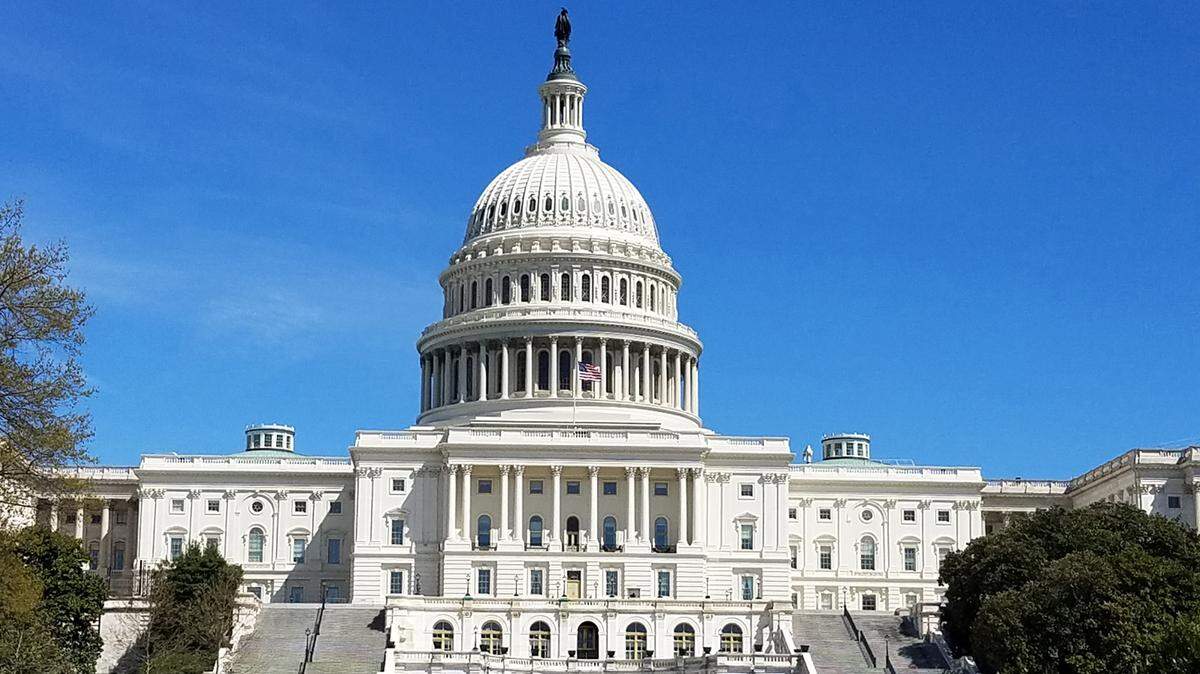
The extensive budget reconciliation bill, dubbed the One Big Beautiful Bill Act, prohibits individual states like South Carolina from enforcing and creating laws regulating AI for ten years.
It’s unclear what state laws would be unenforceable if the provision passes, said April Dawson, the associate dean of technology and innovation and a professor of law at the North Carolina Central University School of Law.
“The challenge is that the language of the moratorium is very broad,” Dawson said. “It’s very vague. We don’t quite know what that means. If it becomes law, then we know that the tech companies are going to argue that it should be interpreted in the broadest possible sense.”
The moratorium would ban AI legislation coming out of states for a decade, which could open up consumers and children to harm, Dawson said. It also could make lawmakers less reactive to future risks AI presents, critics of the provision argue.
“To imagine that states cannot regulate AI for a 10-year period,” Dawson said. “I can barely imagine where we’re going to be in two years, let alone 10 years. So it’s incredibly shortsighted, and it ignores all of the harms that are currently coming from AI and the future harms that can absolutely continue to accelerate.”
Proponents of the moratorium argue some laws are overly burdensome to technology companies, leaving the U.S. less competitive than other countries in developing artificial intelligence.
“At a time when China is racing ahead in AI development, the United States can’t afford to follow Europe down the path of overregulation and lost investment,” U.S. Rep. Russell Fry, a Republican representing the Myrtle Beach area, said in a statement to The State.
But critics worry that U.S. lawmakers won’t pass necessary AI regulations at the same pace that states would. U.S. lawmakers have yet to pass comprehensive AI or data privacy regulations, Dawson said.
The AI legislation moratorium, which has been led by GOP U.S. lawmakers, has seen some resistance from South Carolina Republicans, including Attorney General Alan Wilson and state Rep. Brandon Guffey, R-York. Guffey has proposed AI-related bills in the state legislature and advocated for more safeguards for children online. He traveled to Washington, D.C., to attend the signing of the Take it Down Act, a federal law that cracks down on revenge pornography.
“Artificial intelligence is growing daily, if not hourly, right now, and if we’re not able to regulate it as problems arise and be reactive,” Guffey said. “God knows, our federal government is anything but fast to react. I don’t want to leave my children or the citizens of South Carolina’s faith to protect them in the hands of the federal government.”
The House version of the budget reconciliation bill passed in May includes a 10-year moratorium on state and local government regulation of artificial intelligence. In the Senate, lawmakers are hashing out their own version of the bill, which includes a similar provision. Under its proposal, any state that passes or enforces legislation regulating AI could lose out on Broadband Equity, Access and Deployment funding, which seeks to expand high-speed Internet in the U.S.
The Senate’s moratorium has a better chance of surviving the reconciliation process after the Senate parliamentarian OK’d the provision over the weekend, according to lawmakers. The provision will only need a simple majority to pass. The Senate parliamentarian is responsible for making sure the budget reconciliation bill follows chamber rules.
GOP lawmakers Sen. Josh Hawley, a Republican from Missouri, and Sen. Marsha Blackburn, a Republican from Tennessee, both publicly opposed the provision. U.S. Senator Lindsey Graham did not respond to multiple email requests for comment. U.S. Senator Tim Scott’s office said he did not have comment on the AI moratorium at the time of publication.
Which South Carolina laws are in danger?
The AI moratorium could lend itself to multiple interpretations, so it is not clear which South Carolina laws could be swept up in a ban, said David Sella-Villa, an assistant professor of law at the University of South Carolina.
“All possibilities are on the table,” Sella-Villa said.
South Carolina has not regulated AI as aggressively as other states. Colorado, for example, passed a comprehensive AI bill in 2024 targeting many “high risk” uses of the technology. In 2024, Tennessee passed the ELVIS Act, barring AI users to create a deepfake of a person’s voice without their permission for commercial use.
However, in this year’s legislative session in South Carolina, several AI-related bills became law. Several other bills were filed, but not passed, indicating an appetite among some lawmakers to further regulate the technology.
A new law banning the dissemination of “revenge porn” may see its section on nonconsensual AI-generated images undercut. Another law makes it illegal to create AI-generated child sexual abuse material, even when the depicted child does not exist; portions of the new law may be unenforceable if the federal provision passes.
Other proposed bills include putting additional protections on children’s data, mandating supervision of AI systems when it is used to make health care decisions and giving individuals property rights over their voice and likeness. With an AI moratorium in place, those bills may be dead for ten years.
There are legal arguments that some legislation won’t be stripped under a moratorium, Dawson said. However, she said it won’t be clear what can be regulated until a court decides. That wouldn’t occur until after the provision is passed.
“You basically open up the possibility that things will be done irresponsibly and that marginalized communities will be harmed,” Dawson said. “Children will be harmed, consumers will be harmed, and they won’t have any recourse.”
Guffey said he would attempt to move additional AI-related legislation to test which laws the moratorium impacts, given it passes.
Bipartisan resistance to moratorium
State leaders have opposed the ban on AI legislation. With a bipartisan coalition of attorneys general, Wilson signed on to a letter to House and Senate leaders opposing the AI moratorium.
“AI brings real promise, but also real danger, and South Carolina has been doing the hard work to protect our citizens,” Wilson said in a news release from May 16. “Now, instead of stepping up with real solutions, Congress wants to tie our hands and push a one-size-fits-all mandate from Washington without a clear direction.”
Wilson cited the new ban on AI-generated child sexual abuse material in his denouncement.
Guffey, the Republican lawmaker from York County, opposes a decade long ban on AI legislation. Like Wilson, he argues it is an overstep from the federal government and cripples the state legislature in responding to issues associated with artificial intelligence. AI innovation and development is important to Guffey, but he thinks the state should be able to address problems as they arise.
“This is complete overreach with stating that we can’t protect our citizens,” Guffey said.
If the moratorium passes, which could occur before the Fourth of July, South Carolina residents will have to wait and see which state laws are impacted.
This story was originally published June 25, 2025 at 12:54 PM with the headline "SC AI laws may be cut for a decade under Fed budget bill. Here are affected laws."