$199 million Beaufort County budget approved. What does it mean for taxpayers?
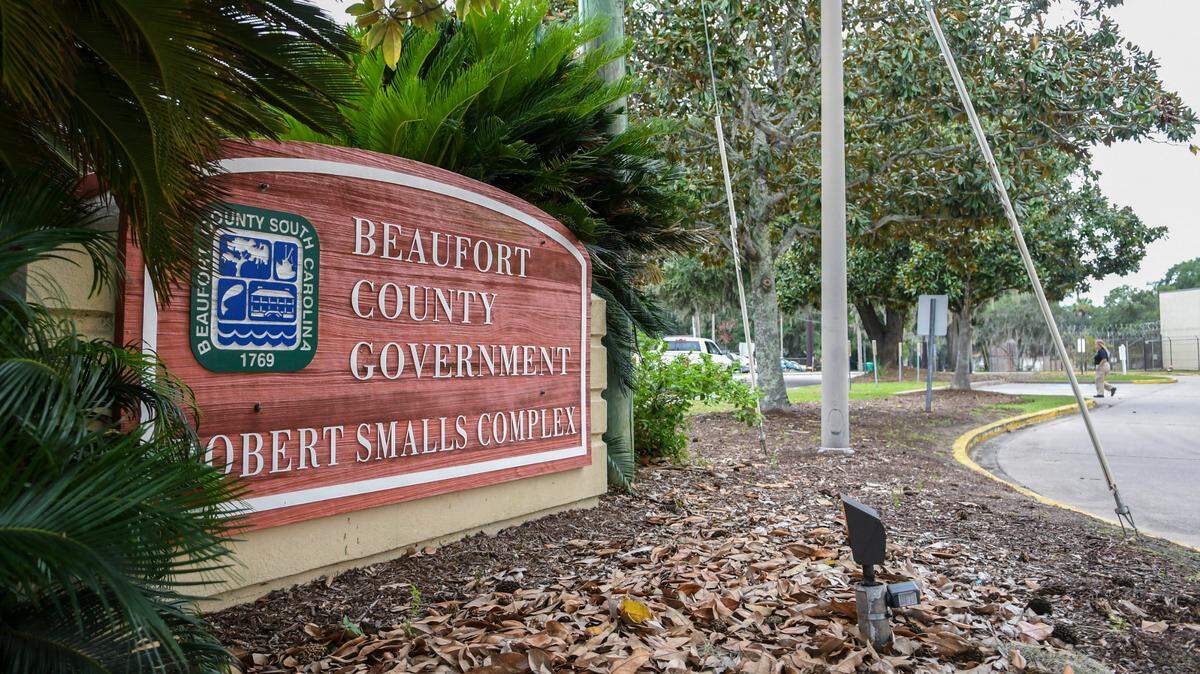
The Beaufort County Council has officially approved the new budget for the upcoming fiscal year, which begins in July. In a unanimous vote on Monday, council members signed off on the $199 million spending plan, representing a 21% increase in expenditures from the previous budget.
The final version of the budget includes just one notable change from earlier drafts: a new recommendation that future tax bills include a breakdown showing exactly where a taxpayer’s money goes — a move aimed, the council said, at improving transparency for taxpayers.
This budget sets the stage for some major changes across the county. It raises the starting salary for deputies in the Sheriff’s Office, adds a fourth shift for EMS workers to ease staffing strain and dedicates millions of dollars to capital improvement projects, such as infrastructure upgrades and facility improvements.
Still, the vote didn’t come without debate.
The main point of contention was over county’s funding for The Island Recreation Center on Hilton Head Island. The center, which received $200,000 in the previous fiscal cycle and requested a $25,000 bump this year is getting $173,000. In the end, proponents for adding additional funding to the center, council members Tom Reitz and Larry McElynn were unsuccessful in their motions.
The budget represents a significant increase in spending — more than $34 million over last year’s adopted budget, or about a 20% rise.
Revenues are projected to grow by roughly $40 million. (Note: these comparisons are based on last year’s adopted budget, not the actual revenue collected, which won’t be finalized until at earliest the end of June.)
Where’s the money coming from?
Most of the additional revenue — more than $24 million — is expected to come from collections of personal and property taxes.
The county plans to keep the tax rate flat, meaning the amount charged per dollar of property value — known as the “millage rate” — isn’t increasing overall.
In a May press release, the county said that the new spending plan would create “no tax increases” for Beaufort County residents. But while the tax rate is the unchanged variable, taxpayers could see a higher tax bill if their property was assessed at a higher amount.
Even though the total millage rate isn’t changing, the county is shifting how those tax dollars are distributed. For example, the solid waste account structure has moved to the general fund from the enterprise fund. Solid waste will remain fully funded and there won’t be changes to services.
Also, one mil used to fund the Beaufort County Economic Development Corporation will also be redirected back to the county. In total, county operations will receive 4.2 more mils than they did last year — the equivalent of $12 million.
As a result, general tax revenues are expected to bring in more than $140 million in the upcoming fiscal cycle. That includes:
$126.2 million from property taxes
$9.9 million from vehicle taxes
$3.1 million from delinquent taxes
$1.4 million from tax penalties
The $24 million increase is solely in reference to the property and vehicle taxes listed above, not delinquent taxes or additional penalties.
An earlier report from The Island Packet stated that the tax revenue increase would be about $11.6 million. That number came from a presentation by Chief Financial Officer Pinky Harriott circulated to council members and the public in April. But that figure has since changed.
Harriott later explained: if the way millage was divided between agencies had stayed exactly the same as last year, the increase would have been just $11.6 million. But there are two factors contributing to the increase in county operations funding for the 2026 budget. The first is a $275,000 increase in value for each mil. The second is the increase in mils allocated to the operations budget.
These predicted figures result from financial modeling that can eventually be assessed as actual dollar figures once a financial cycle has run its course.
The second biggest chunk of new revenue — $15 million — will come from the county’s fund balance. That money will be used to complete unfinished capital projects.
So, how will the county use the additional funds?
$36M is allocated for capital improvement projects
The county has set aside over $36 million to put toward 92 upcoming projects in fiscal year 2026.
Some of the projects include:
- Replacing the turf in kennel yards for the county’s animals services department, $140k
- Interior renovations at the county’s detention center, $600k
- Wimbee Creek fishing pier replacement, $200k
- Ribaut Road/Lady’s Island Drive intersection improvements, $1.5M
- New construction of a laboratory facility for Mosquito Control, $950k
- Hilton Head Library re-roof, $176k
- St. Helena Library HVAC replacement, $50k
An additional $11 million will roll over from last year’s funds for projects that have already been approved but have not yet started.
County EMS is adding a fourth shift
Beaufort County approved the transition from a three shift, 24-hour on, 48-hour off schedule, to a four shift, 24-hour on, 72-hour off schedule. The reason for this was to alleviate physical and mental exhaustion faced by emergency responders in the county.
To complete the fourth shift, which requires 31 people in specific positions, the county needed to provide enough funding for five EMTs positions and three other leadership roles. This would ultimately reduce the high price of unscheduled overtime.
According to an executive summary from the department, over the past four budget years, unscheduled overtime averaged 54.5% of the expenditure from the EMS overtime budget. In fiscal year 2026, EMS received an additional $1.65 million to fund the new salaries. Their overtime allocation was reduced by more than half, from $3.2 million to $1.5 million.
Sheriff, Solicitor see budget bumps
A sheriff’s deputy will now make a starting salary of $60,000, thanks to the cost of living adjustments and additional funds allocated to the department’s administrative division.
The department received an additional $3.5 million from the general fund compared to the past fiscal year, the large portion of which is going toward the salary bump.
The Solicitor’s Office will also see a 57% budget bump from $1.7 million to $2.8 million in the upcoming fiscal year. While the percentage seems high, the budget allocated to the department has stayed relatively flat for the past three years, as detailed in 2026 budget documents.
The Island Packet updated this story to clarify that the county operations fund is an expenditure that does not produce revenue. Additionally, the story now reflects that the solid waste account structure has changed, but that it remains a fully-funded department.
This story was originally published June 11, 2025 at 2:41 PM.