SLED investigation into former Beaufort Co. employees brings about frustration from Solicitor, Sheriff
Beaufort County’s two top law enforcement leaders are fed up with having to fight the administration to do their jobs. In a rare step, the leaders shared this frustration in light of two local investigations now being handled by the state’s law enforcement division.
The South Carolina Law Enforcement Division is currently investigating at least two recent incidents involving former county employees. They are investigating allegations of embezzlement involving the Bluffton Township Fire District and an after-hours incident involving a former employee within Beaufort County’s Probate Court for their alleged unauthorized practice of law. Both incidents landed with SLED by request of the Solicitor in March.
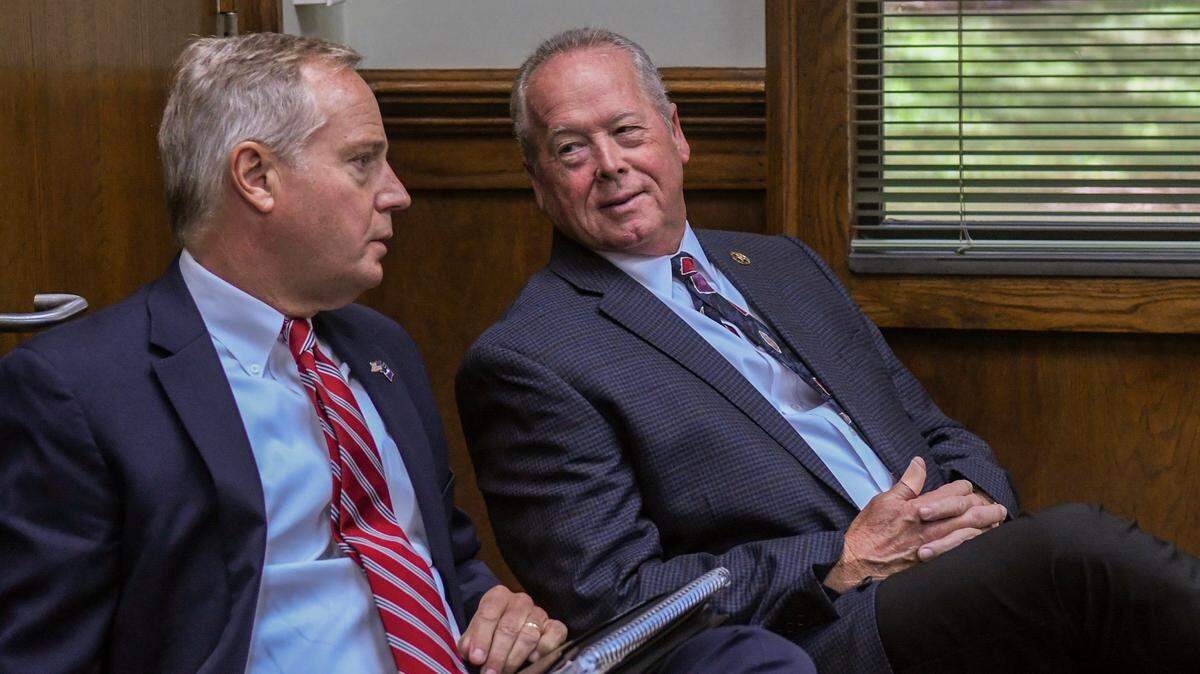
The 14th Circuit Solicitor Duffie Stone and Beaufort County Sheriff P.J.Tanner sat down with a pair of reporters Friday to help fill in the gaps of how the two investigations ended up in the state’s hands. Their main concern was that the county’s legal department, including newly-promoted County Attorney, Brian Hulbert, should have referred the issues to local law enforcement sooner instead of handling it in house.
The county, which has pledged to gain back the public’s trust in the aftermath of an administration marked by several ethical complaints made against county employees, should allow law enforcement professionals to conduct investigations without county interference, they said.
“If the general public wants to know if there is criminal activity, if they want to know if there are ethical violations, if they want to know if there’s bad government, that answer can’t come from the county government,” Stone said.
But Hulbert and the County Administrator, Michael Moore, pushed back Tuesday in a sit-down interview with The Island Packet. While the county’s goal is to always cooperate with law enforcement, they said, the county does have the authority and obligation to review complaints themselves.
Law enforcement’s concerns
Tanner alleges that Beaufort County attorneys have taken the position of not informing law enforcement sooner, even when criminal issues are potentially at play, and to instead look into the allegations themselves. Stone and Tanner agreed that the investigations need to be handled by independent professionals, not the county’s administration.
“What is the benefit for a county attorney to tell the public, ‘there’s nothing to see here?’” the Solicitor asked. “That’s not transparency, that’s not credibility.”
In a perfect world, the second there is an indication that criminal activity has potentially taken place, law enforcement should be informed, the Sheriff and Solicitor said.
“It’s got to be done correctly, and if it’s not done correctly, then it’s going to jeopardize the ability for the government to work correctly,” Stone said. “It’s going to jeopardize the rights of individuals. It’s going to jeopardize the ability to prosecute.”
Stone and 1st Circuit Solicitor David Pascoe collaborate on a Public Integrity Unit, a team of senior attorneys and investigators who review alleged public corruption.
Hulbert pushed back on the assertion that the county waited too long to inform law enforcement. The county attorney claims he received the complaint late one afternoon, and by 1 p.m. the next day, he had finished his investigation and made a recommendation to the Probate Judge, Heather Galvin. From there, it was the judge’s decision to refer to law enforcement, not its administration’s, he said.
“You can’t complain that took long,” Hulbert said.
In the case of the fire district, once he suspected potential criminal activity, he paused to consult with law enforcement. He said that there were several other witnesses he would have interviewed but paused before doing so.
Garrity and Miranda warnings
Tanner said Hulbert also attempted to provide law enforcement with a report of his findings, which would taint the department’s ability to investigate for themselves. Tanner now cannot get involved in the investigation because he has reviewed the internal file for the probate employee.
But when asked about this, Hulbert said he did not provide the Sheriff with those reports. He did provide the Probate Judge and the County Administrator with the report. A copy of the report made for the fire district probe has only been provided to the Administrator, he said.
The problem with receiving statements and notes collected by the county attorney is that law enforcement and the county have distinct interview processes and protections for interviewees, the Sheriff explained.
Law enforcement operates under Miranda warnings, which protects an individual’s right to not self-incriminate during a criminal investigation.
According to Tanner, the county operates under Garrity warnings, which can be used by employers to compel an employee to testify under the threat of potentially losing their jobs. It also protects employees from their statements being used against them in criminal proceedings. The Beaufort County employee handbook even lists insubordination and failure to provide information as examples of conduct that warrant disciplinary action.
But Hulbert said that Garrity warnings are rarely used, and that in his years of working both for the county and Hilton Head Island, the warning has not been issued to an employee. It is not automatically applied if a county attorney interviews an employee.
There is a great deal of misunderstanding of the warning, he said, which must be issued before an employer can discipline or terminate someone for refusing to participate. It is specifically used when an employee is refusing to testify in fear of incriminating themselves.
An ongoing frustration
The county’s legal department has engaged in a pattern that has created “a path of resistance” for law enforcement over the past few years, Tanner said.
During the investigation involving former County Administrator, Eric Greenway, for example, employees were advised by county attorneys not to speak with SLED, the Solicitor said. When asked about this, Hulbert said that from the start, he counseled to both county attorneys and the interim administrator that this was not a good practice or policy, and that they should comply with local law enforcement.
Hulbert and Moore agreed that some of law enforcement’s frustration could be compounded from woes that took place during the Greenway administration. Moore said that he has had conversations with the Sheriff about the previous administration as it relates to their inconsistent cooperation with law enforcement.
The County Attorney position has also seen significant turnover in recent years. Former attorneys representing the county, Brittany Ward and Thomas Keaveny, each facing their own controversies during their time in the county, stepped down last year.
What is the point of an internal probe?
While Hulbert and Moore said that they cooperate with law enforcement, they also have a responsibility to keep the government running. This means they need to know quickly whether or not the employee should be disciplined or replaced.
“When it comes to us, we have to determine, should we investigate or not? Should we just refer to law enforcement? Does it rise that level or not? We have to analyze it, assess it, and then exercise our best judgment, determine the best course of action, and that’s all we can do in each and every case,” Hulbert said.
They also said that independent investigations can happen simultaneously. In the Greenway case, there were three operating at the same time: one by SLED, one by the Ethics Commission and one within the county.
“We definitely need to and want to work with the Sheriff and the Solicitor, both individuals I respect and trust completely. I’ve known them for years. But they have different objectives and perspectives,” Hulbert said.
One of the reasons Hulbert was assigned to investigate the incident involving the fire district as opposed to an external law firm, he said, was the county’s shared frustration with two previous investigations that were done using outsourced help, including the county’s recent $60,000 internal workplace investigation that was inconclusive.
“Going forward, if there’s any doubt in our minds, we’re going to bring them [law enforcement] in as early as possible,” Moore said.
This story was originally published May 13, 2025 at 1:47 PM.