Like ‘awakened piranha,’ opponents continue to rally against St. Helena development
One Gullah-Geechee leader says a proposal to change the development rules on St. Helena Island — and another to build a golf course and gated community — has “awakened” opponents, who she compared to a school of piranha intent on stopping a big fish from eating the little fish.
But a developer and property owner say the regulations, as written, are infringing on private property rights and are confusing. They are seeking relief from the regulations that limit growth and say their development plans will be sensitive to the island’s environment and culture.
Meanwhile, Beaufort County is worried about getting sued.
The stand-off over future development on the barrier island east of Beaufort — which contains some of the last remaining large undeveloped tracts of land in the county — will continue at least until April following a meeting Monday of the Community Services and Land Use Committee, which took up a proposal by the Beaufort County planning staff to amend the St. Helena Cultural Protection Overlay District (CPO).
As it stands now, the CPO bans golf courses 9 holes or larger, gated communities and resorts on most of St. Helena Island. The amendment, suggested by County Administrator Eric Greenway and legal counsel, would allow those uses on parcels of at least 50 acres — but only if developers enter an enforceable development agreement and provide additional restrictions and protections that enhance the district.
They say the change would allow developers more flexibility while making the county less vulnerable to legal challenges, which they say are a real threat.
Critics don’t like the timing.
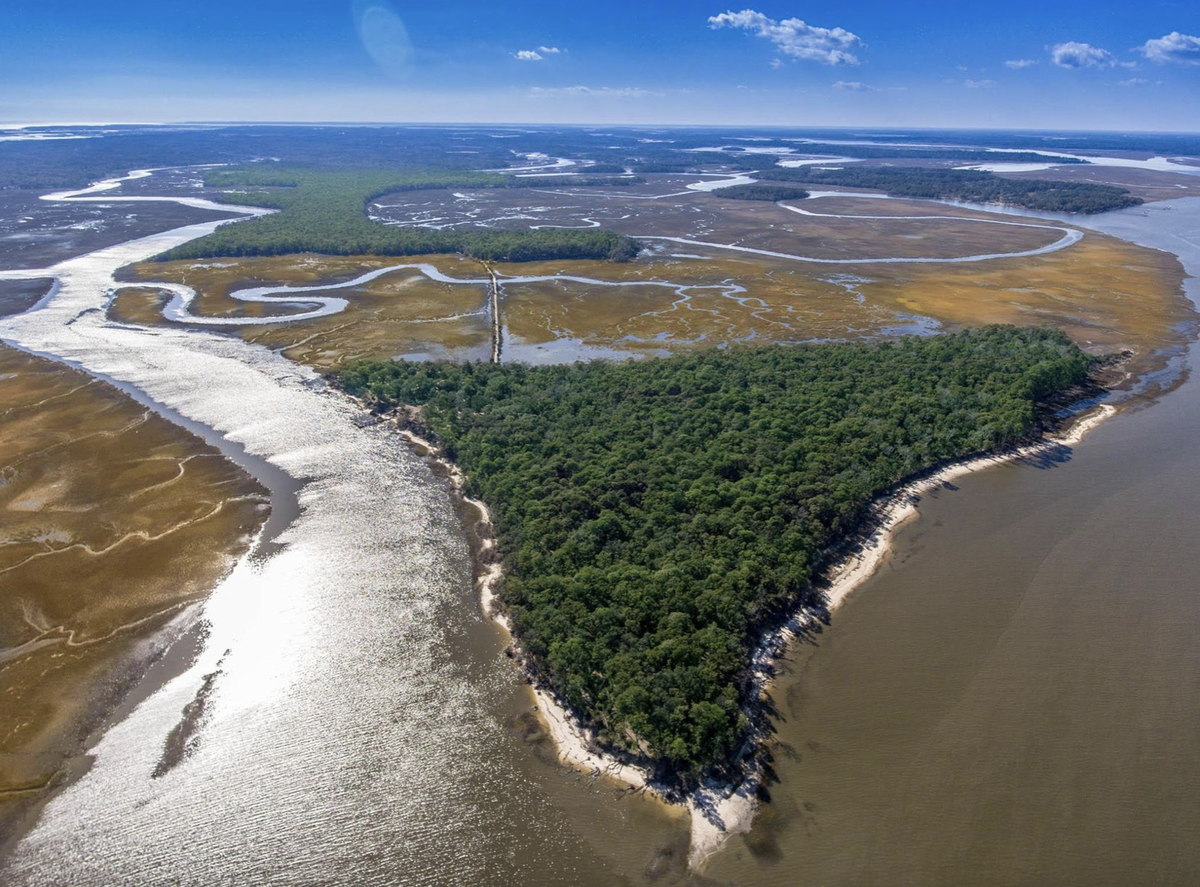
The proposed change is being made as Pine Island GC, LLC proposes building an 18-hole golf course, 65 houses, eight docks for over 7 miles of shoreline, lodging of up to 24 units and an outdoor recreational facility on 479 acres that comprise Pine Island Plantation and and St. Helenaville.
For its part, Pine Island is asking the county to remove the 479 acres from the overly, where it is planning what it calls a “world class, legacy development.” But the county has delayed a decision on that request while it considers the broader amendment that would affect the entire CPO, which protects all of St. Helena except Dataw, Fripp, Harbor and Hunting islands.
For the second time in five days, the proposal to amend the CPO drew a large crowd to the Beaufort County Council Chambers on Monday, this time to a meeting of the Community Services and Land Use Committee.
Last Thursday, the Beaufort County Planning Commission recommended that the County Council, which has the final say, reject the staff’s proposal to amend the CPO.
‘Something that rich white folks want’
At the start of the Community Services and Land Use Committee, Chairwoman Alice Howard announced she would be asking for a motion to postpone consideration of the CPO amendment until the committee’s April 10 meeting. That would give the Cultural Protection Overlay District Committee time to study the issue.
The county formed the CPO committee in November to suggest improvements to the overlay, which went into effect in 1999 to protect St. Helena’s historic cultural landscape and its importance as a center of Beaufort County’s most notable concentration of Gullah culture. Opponents to the staff’s text amendment to the CPO had argued for that committee’s involvement.
Later in the meeting, Councilman York Glover made the motion to postpone, which was unanimously approved.
Monday’s vote by the Community Services and Land Use Committee also delays action by the County Council, which had been scheduled to take up the CPO amendment on Jan 23.
Howard noted she witnessed a “great outpouring” of public input last Thursday. “This is all about local government in action,” Howard said.
The vote Monday by the Community Service and Land Use Committee to refer the CPO text amendment to the committee brought applause from residents.
When she submitted a petition signed by 5,800 people against the CPO change, Marquetta L. Goodwine, or Queen Quet, chieftess of the Gullah/Geechee Nation, referred to an old saying that big fish usually eat little fish. But, she added, that isn’t necessarily true if the fish are a school of razor-toothed piranhas.
“You have now awakened piranha,” said Goodwine, referring to the opposition to the golf course and CPO district changes, “that I didn’t know we had around St. Helena Island.”
Goodwine chaired the original committee that initially took up the CPO in the 1990s. Its development restrictions, she said, are keeping the Gullah-Geechee culture alive on St. Helena, and preserving burial areas and the barrier islands that are critical in protecting the Lowcountry. The St. Helena CPO, Goodwine, stands out.
“I have yet to find a zoning ordinance that protects a living culture,” she said.
For decades, said Jack Ladson, an 88-year-old pastor who was born and raised on St. Helena, Black folks have survived off the land on St. Helena. He predicted that allowing the Pine Island development would result in “no more crab, no more shrimp, nor more fish.”
“This is something that rich white folks want,” Ladson said.

The owners of the land speak out
Tom Mikell, a representative of the Hanna family, which owns the land, urged the committee to approve the text amendment because the CPO is vague, unfair and confusing.
The restriction against gated communities, as currently written, Mikell noted, implies that even family compounds within the CPO zone may not have perimeter fencing or restricted access. Why not? Mikell said, noting safety matters to residents. The prohibition against lodging with recreational uses also seemingly prohibits the use of private hunting retreats, Mikell added, which have abounded on St. Helena Island for decades.
The owners, he said, were only recently informed of the CPO restrictions and were surprised by the constraints on the use of private property on such a large portion of the county, noting the family’s ownership predates the CPO.
“Further, the family is confused how such extreme restrictions on the use of private property can be imposed,” Mikell said in a statement he gave to the committee, “as these restrictions have an economic impact on the property owners which interfere with the property owners’ distinct and reasonable investment-backed expectations.”
In its application to have the 479 acres removed from the CPO, Pine Island GC says it is protecting the environment and the community of St. Helena from encroaching development pressures.
“By returning the property to base zoning, the developer will be able to undertake extraordinary levels of environmental stewardship through permanent conservation easements of approximately 50% of the property, permanent density reduction of over 60%, permanent dock reduction of over 90%, and the protection of over 400 contiguous acres of open space/green space forever,” the application says.
The CPO committee is charged with studying the existing ordinance. It can also get help from others, including the county’s legal department. The committee will then suggest provisions that can be added to improve protections for St. Helena and the surrounding islands.

This story was originally published January 10, 2023 at 10:24 AM.