Supreme Court abortion ruling added to list that would bring SC lawmakers back after June
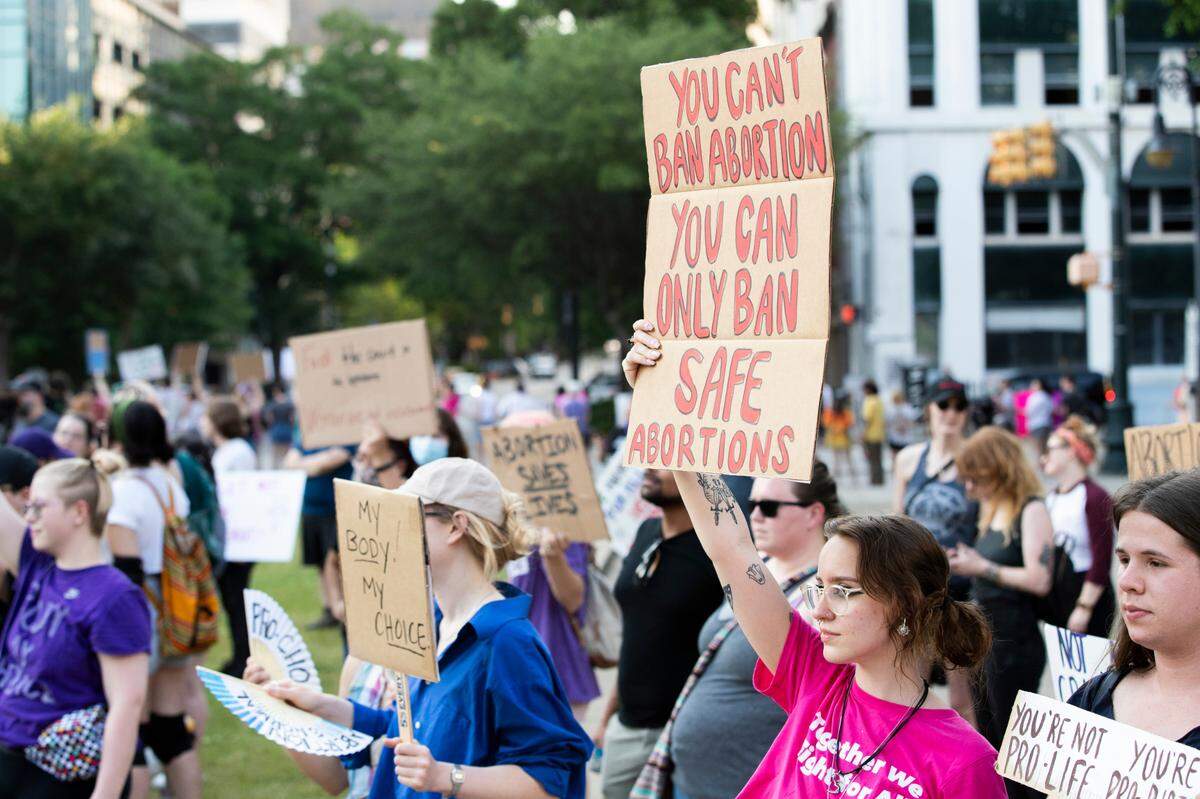
South Carolina legislators have agreed to a possible return to Columbia for a special session to debate further restrictions to abortion access as the U.S. Supreme Court readies to issue an opinion that could wipe out its landmark 1973 Roe v. Wade ruling.
What won’t be on the agenda is hate crimes legislation after Senate Democrats on Tuesday failed to find enough support across the aisle to debate the proposal after the regular session ends Thursday.
The Senate on Tuesday agreed to a resolution, known as a sine die resolution, which dictates what the General Assembly can debate and act on after session ends on May 12. It includes the traditional priorities, such as passing a budget and taking up the governor’s vetoes.
But it also includes a provision that says lawmakers can be called back after June to debate legislation in a response to a pending Supreme Court decision that could overturn Roe v. Wade or uphold Mississippi’s 15-week abortion ban.
The House on Wednesday signed off on the agreement.
Under the agreement, lawmakers will return June 15 — a day after the state primary elections — to complete the budget that starts July 1, to agree to changes made to state House and U.S. House district lines, to override or sustain any vetoes, to hash out any differences over legislation, and hold elections for college board trustees.
The agreement also gives lawmakers the ability to return June 28 and take up any budget vetoes.
Any debate on abortion restrictions would happen after June, whenever the speaker of the House and Senate president decide to call members back to Columbia.
Lawmakers gave themselves the option to come back and debate abortion restriction legislation after a leaked draft opinion that was written by Justice Samuel Alito and published by Politico that said five justices had voted to overturn Roe, allowing states to decide whether abortion is legal within their borders.
Gov. Henry McMaster has said he would favor a ban on abortions without any exceptions, and is willing to call back lawmakers for a special session to allow them to take up the issue.
Last year, South Carolina enacted a “fetal heartbeat” bill, which bans abortions after a heartbeat can be detected, usually at the six-week mark of a pregnancy before women know they are pregnant, critics say. That law includes exemptions for rape, incest and the life of the mother.
However, a federal court blocked the law from being enforced.
Senate won’t debate hate crimes legislation
Senate Democrats wanted to add hate crimes legislation to the sine die agreement, but failed to find enough support across the aisle Tuesday.
The hate crimes bill has sat on the Senate calendar, held up by Republican objections, since April 2021 after the House passed the legislation.
“The South Carolina House of Representatives stood up and passed a hate crimes bill,” outgoing House Speaker Jay Lucas, R-Darlington, said Wednesday. “We sent it over to the Senate and they didn’t take it up. They had an opportunity to put it into sine die resolution yesterday, and they rejected that.”
The bill would provide enhanced penalties for violent crimes committed against someone based on their age, political opinion, race, color, religion, sex, sexual orientation, gender, national origin or physical or mental disability.
“We cannot even have a debate on hate crimes in South Carolina,” said state Sen. Darrell Jackson, D-Richland. “I really don’t think that’s something we should be proud of. Regardless of how it turned out, let’s debate it. Let’s vote up or down on hate crimes.”
Senate Majority Leader Shane Massey, R-Edgefield, countered that Democrats have objected to about 20 bills in the Senate, preventing those proposals from moving forward.
And he objected to arguments that the House passed the bill therefore they should. The House, Massey said, last week declined to take a vote on the medical marijuana bill, hasn’t passed a proposal that would split the Department of Health and Environmental Control and killed the so-called certificate of need bill that would eliminate the requirement for health care provider get approval to build a new hospital or buy new equipment from the Department of Health and Environmental Control.
“We‘ve had debates on a number of things that the Senate has passed and the House has not acted on,” Massey said. “Those bills are not going in with the sine die.”
This story was originally published May 11, 2022 at 5:00 AM with the headline "Supreme Court abortion ruling added to list that would bring SC lawmakers back after June."