‘There’s a breakdown’: Cities, school board rap Beaufort Co. over plan to cut impact fees
City and town officials are letting Beaufort County have it for what they say is a lack of communication over a proposal to eliminate development impact fees that raise millions for infrastructure work.
The County Council is scheduled to take a final vote Monday night, although Chairman Joe Passiment says he’s trying to prevent an elimination of all impact fees.
At issue is millions in revenue raised through impact fees on commercial and housing developers that’s used to build libraries, fire services, roads and parks. It’s one funding source used to pay for big infrastructure projects. For example, a proposed emergency services impact fee would raise an estimated $4.1 million over 10 years.
At a meeting Thursday, several city and town officials said the county has failed to provide critical information they need to have an informed discussion about the intergovernmental agreements, or IGAs, they need to pass in order to collect the fees for the county.
Previously, county officials said they decided to eliminate the fees because cities and towns have been slow in finalizing IGAs.
“There’s a breakdown,” David Striebinger, chairman of the Beaufort County School Board, said of communication between the county and other local governments. “We don’t know why the county is jettisoning impact fees.”
As an example, Striebinger said it was unacceptable for the School Board not to be informed about a lawsuit that a developer has filed against Beaufort County over school impact fees that were passed in 2021.
That lawsuit is behind the move to repeal the school impact fees, County Council Chairman Joe Passiment told the Island Packet and Beaufort Gazette after the meeting.
County Administrator Eric Greenway said he had informed the office of Frank Rodriguez, superintendent of public schools, about the lawsuit.
On March 28, the council voted 8-2 to refund school impact fees collected since the fall when they were enacted. However, the council also voted 7-3 to repeal all development fees.
The move to cut the fees caught cities and towns such as Beaufort, Port Royal, Bluffton and Hilton Head, which rely on the funds to help finance infrastructure projects, off guard.
Because of the legal issue, the county plans to repeal the school impact fee Monday, Passiment said.
However, he added, he plans to speak with County Council members about the other fees.
“I’m hoping I can convince council to do something other than repeal every other impact fee,” Passiment said.
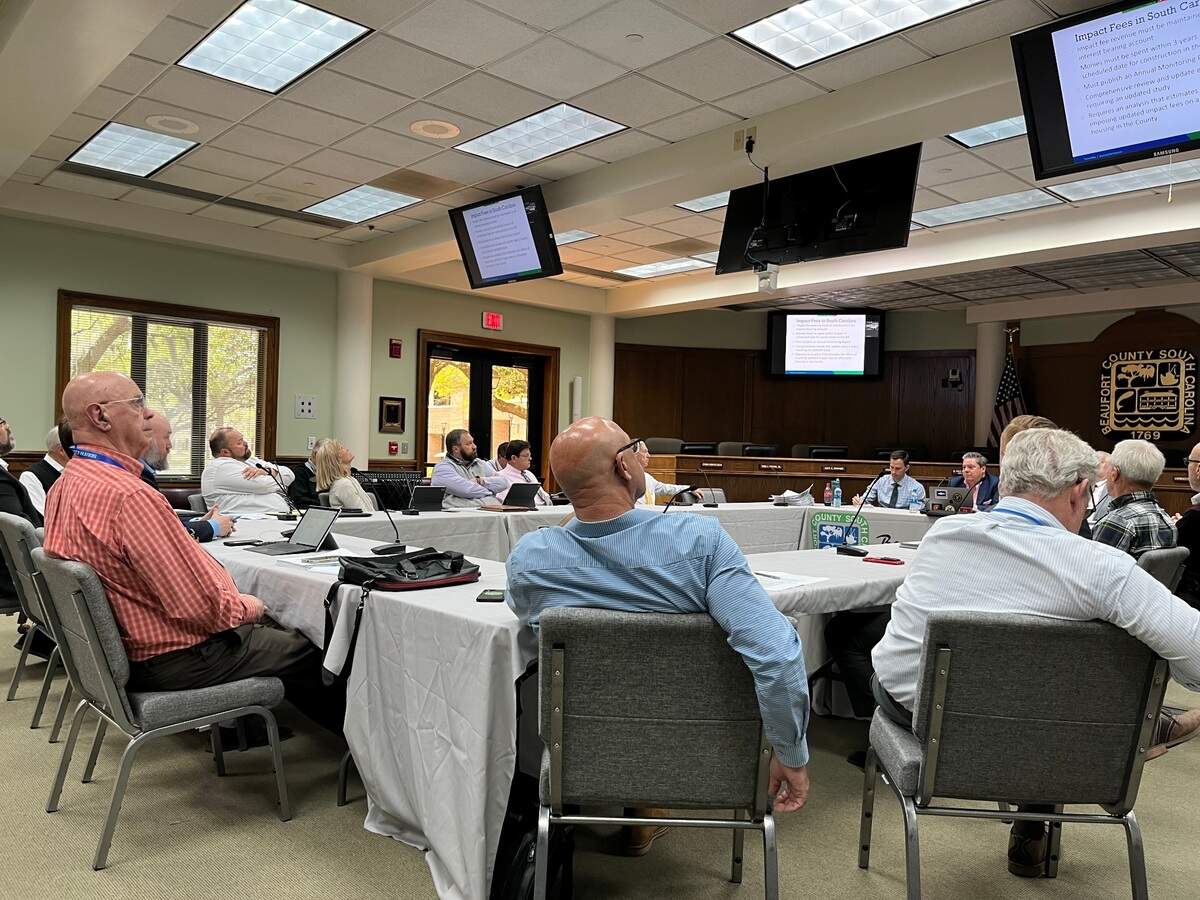
Passiment said the purpose of the meeting was to clear the air. Notice of the meeting, which Passiment described as “semi-private,” was not given to the public and it was not broadcast. Because none of the jurisdictions had a quorum of officials present, Passiment said, the meeting did not need to be public.
But Beaufort Mayor Stephen Murray and others argued that the meeting should remain open considering the public interest in impact fees. Mayors and administrators from Port Royal, Beaufort, Bluffton, Hilton Head, Hardeeville and county leaders were present.
“What we’re concerned about is the lack of communication we’ve been getting,” Bluffton Mayor Lisa Sulka said, adding the meeting should have been called a month ago.
Sulka and Murray said they did not think a single person — the county administrator Greenway — should have control of millions of dollars in impact fees. They said the funding requests for the impact fee dollars should go directly before the County Council.
County Spokesman Chris Ophardt said Greenway recommends large budget items funded by impact fees, but approval comes from council members following three public meetings.
There’s no disagreement on the fees per se.
Impact fees help pay for growth
By 2029, 18,962 new housing units are expected to be constructed in the county, according to a 2020 impact fee study commissioned by the county.
“We have a tremendous need in this county to upgrade infrastructure,” Passiment said.
Other options of paying for it, such as user fees and property taxes, Passiment, won’t go over well with the public.
Cities have the option to decide which type of fee they want to collect and receive. If they agree, they need to pass IGAs, which allow them to collect the money when building permits are issued. Coming up with capital improvement plans with projects funded by the fees are also part of the dialogue between the local governments and the county.
Council Member Flewelling has previously noted that IGAs with municipalities still were not in place after years of discussions and two years since the 2020 impact fee study was released.
But Murray, the Beaufort mayor, said there are outstanding issues in the IGAs. The city, he noted, was still waiting Friday on questions it submitted to the county in March, Murray said.
The “devil’s in the details,” he said.

Impacts fees have been in place since 1999.
The county is updating the fees, proposing to add the EMS fee and streamlining the process so fees are more proportional to the areas of growth.
The monthly mortgage payment for the owner of a new home would increase by approximately $100 if all fees were adopted, the county says.
The school impact fee was passed last year and has been collected since the fall.
Murray urged the county to pass capital improvement plans proposed by towns and municipalities Monday, instead of removing the impact fees that fund those projects, “to get us back on track.”
What’s next?
The Beaufort County Council meets at 6 p.m. Monday. A public hearing on repealing impact fees is on the agenda.
This story was originally published April 23, 2022 at 5:00 AM.