‘Balancing act’: Hilton Head wants to regulate short-term rentals like Airbnbs. Here’s how
The town of Hilton Head Island is one step closer to regulating short-term rentals like Airbnbs and Vrbos with a new set of rules and a $250 permitting process.
The plan would create a new short-term rental permit that may cost $250 per year, a process to suspend or revoke those permits and a rule about how quickly short-term rental owners or agents must respond to citizen complaints about a property, among other things.
A Town Council committee in a 3-1 vote Thursday recommended that the town’s full seven-member council approve the new regulations for short-term rental owners, but acknowledged that the proposed rules — as currently drafted — may be revised in the coming weeks ahead of, or during, a public meeting in April.
The four-person Hilton Head committee represents a majority of the full Town Council.
Ward 3 representative David Ames, the committee chair, said Thursday he understands that “some things aren’t perfect” in the draft rules, but wants to move forward and get the full council’s opinions.
The proposed regulations are contentious on Hilton Head, where tourism is key to the local economy.
Short-term rental owners and critics of the new rules raised a litany of concerns about the town’s proposal Thursday. Some blasted the plan as being too strict or argued that questions remain unanswered about the regulations. One resident knocked the town’s definition of a short-term rental, which is “any residential property” in the municipal limits that is offered for lease or occupancy under some agreement for less than 30 days.
But Ames and Ward 6 representative Glenn Stanford offered this justification for the proposal: While the majority of short-term rentals on Hilton Head seem to cause no problems, others do.
“An awful lot of this work,” Stanford said Thursday, has been spurred by “a few bad apples.”
Ames reasoned that 20% of the island’s short-term rentals create quality of life issues like loud noise, so the plan “has to have some teeth in it” to stop disruptive behavior at those properties, even if the majority of short-term rentals operate as good neighbors.
“The complexity of the balancing act that we’re trying to achieve here can’t be overestimated,” Ames said.
The town, he said, must take into account the perspectives of fun-loving vacationers and the impacts of those visitors on full-time residents.
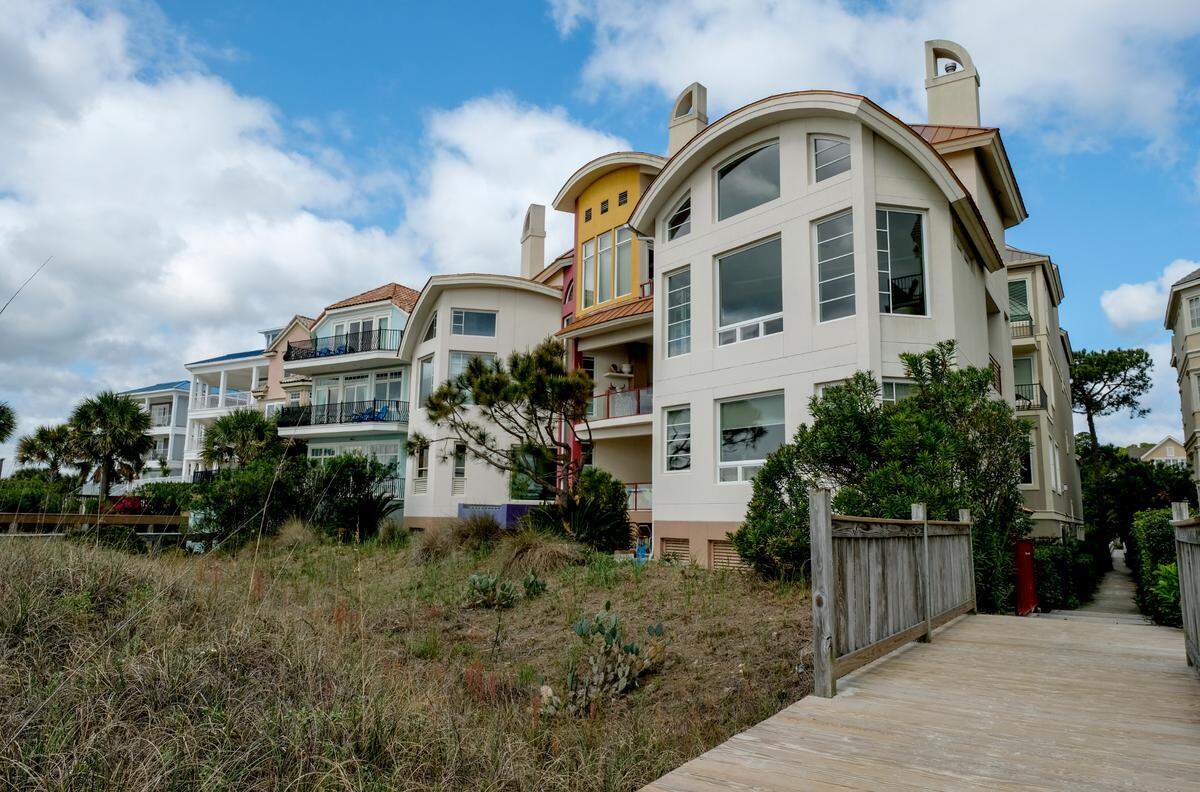
What are the proposed rules?
Here’s what the Hilton Head plan would do:
▪ All short-term rentals would need to apply for and receive a special type of permit. Town staff members have recommended that the annual permits cost $250 each — for now — and that the Town Council reevaluate and set the cost of the permits every year during its budget adoption process. The permits would be non-transferable.
▪ The new rules would go into effect on Jan. 1, 2023.
▪ The town would mandate that: short-term rental owners or agents be available to respond to complaints about guests and be capable of taking action within one hour of being notified of a complaint; maintain smoke and carbon monoxide detectors, as required by law; maintain fire escape routes and at least one fire extinguisher; display information about Hilton Head’s quiet hours between 10 p.m. and 7 a.m. and other town noise rules; have a designated trash storage area with a fence or screen so garbage cans are not visible from the street; and designate the number of parking spaces that are available for guests, among other things.
▪ A violation of the new rules could result in a fine of up to $500 or 30 days in jail, or both, under an existing section of town code.
▪ Hilton Head would be allowed to suspend and potentially revoke a short-term rental permit if a property was declared a nuisance; an owner was convicted of more than two violations of the new rules in a 12-month period; or an owner failed to pay taxes or fees, among other things.
▪ The Town Council would hold a hearing on whether a permit suspension should be upheld and whether that permit should be revoked, during which a short-term rental owner could have an attorney and provide testimony or evidence. The owner also could appeal the council’s decision in the matter.
Anne Cyran, the town’s interim community planning manager, added that Hilton Head would contract with a third-party company to man a hotline or offer a web form where residents could submit complaints against short-term rentals.
The company, Cyran said, would call the short-term rental owners or agents about the alleged problem, and the town would obtain data on each complaint so staff members could track the outcomes.
Cyran did not immediately return a phone message early Friday seeking clarification on this process.
‘I am not alone’
Hilton Head is just the latest municipality in South Carolina that wants to regulate Airbnbs, Vrbos and other short-term rentals. The city of Charleston and the town of Kiawah Island, for example, already have rules on the books.
There are vocal advocates both for and against regulating short-term rentals, but during the Hilton Head committee meeting Thursday, the majority of speakers — many of whom said they were affiliated with short-term rentals in some way — still had questions about the exact language of the proposed rules or were critical of the town’s current plan or the handling of the matter.
Dru Brown, a founder of Island Time Hilton Head, a vacation rental company, said that council members brought up valid points, but added that the committee was poised to move the plan forward to the full Town Council even though there still were unanswered questions about the draft rules and short-term rentals on Hilton Head. He referenced, for example, that Cyran on Thursday only could provide data on the number of Airbnbs and Vrbos listed on the island and not the total number of all short-term rentals.
Another resident, Risa Prince, asked for clarification on how the town would differentiate short-term rentals from timeshare units, where visitors may stay for only a week or two each year.
Alan Prochazka, of the South Forest Beach area, meanwhile, in an email Friday to Town Council members implied that the proposed rules could have a negative impact on Hilton Head’s economy.
“I have one STR (short-term rental), this ordnance (sic) has me seriously considering no longer renting,” Prochazka wrote. “What is the economic impact of the island losing the 22 weeks of guests I currently host? I have talked to others and I am not alone.”
What’s next?
The proposed rules will go before the full Town Council for a first reading at 3 p.m. April 19 in Town Hall, Town Attorney Curtis Coltrane said.
This story was originally published March 25, 2022 at 1:46 PM.