McMaster wants SC teacher pay raised by $2K, but won’t require it for all school districts
Gov. Henry McMaster will on Monday call for raising South Carolina public school teachers’ minimum pay by $2,000, as school districts statewide struggle to fill teacher vacancies.
The governor’s executive budget proposal is part of an additional $120 million he wants the Legislature to spend this year on K-12 public schools. The way the money is distributed to school districts would be simplified and offer them more spending flexibility.
That money, however, would include a caveat: School districts would have to publicly itemize how they’re spending taxpayer dollars.
“It’s something the House will review and consider,” said House Budget Chairman Murrell Smith, R-Sumter. “We need to see more of the details and understand all of the ramifications of it, but it’s something we’ll review and explore as we go through the budget process.”
Under McMaster’s spending proposal, South Carolina would help pay for the raises.
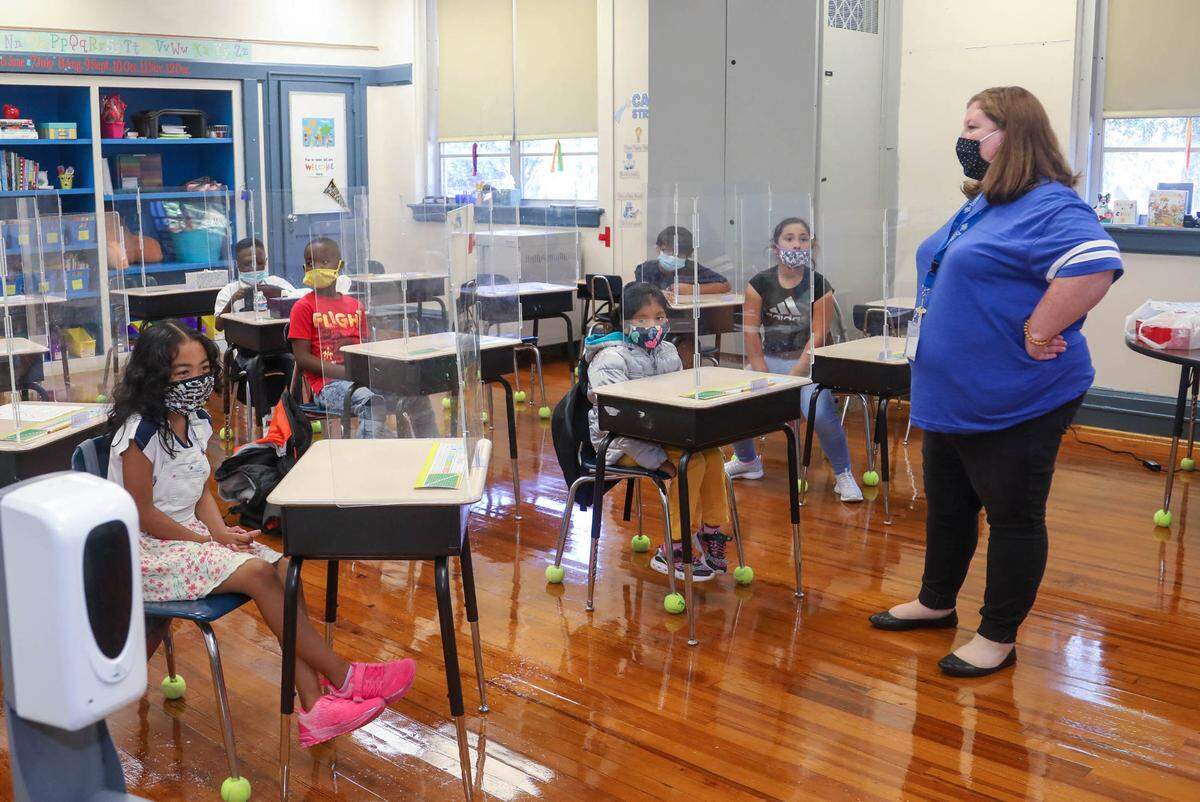
For years, though worsened by the COVID-19 pandemic, the state has grappled with a teacher shortage as more than 1,000 teacher positions in the state were unfilled during September and October, according to an annual survey by the Center for Educator Recruitment, Retention, and Advancement.
One of the ways the state has sought to recruit and retain teachers is to increase pay and raise the average teacher salary.
The governor’s proposal would raise the state’s starting salary for teachers to $38,000, up from $36,000, covering 25 school districts that do not match that pay now, including the Lexington 1 School District.
School districts already have the option of paying above what’s called the state’s minimum salary schedule, which takes into account a teacher’s education level and years of experience.
The raise would not be across the board, unlike the $1,000 pay hike done for this school year, and will not be required for every school district paying above the minimums.
Patrick Kelly, the director of governmental affairs for the the state’s largest teachers group, Palmetto State Teachers Association, said the proposed change would benefit teachers in poorer, rural school districts that need help recruiting teachers.
“The devil is in the detail with the numbers,” said Kelly, who said the group wants an across-the-board pay increase in the budget this year. “We cannot afford in the midst of a teacher shortage crisis to engage in accounting measures that are going to mean that the majority of teachers in the state don’t see a pay increase next year.”
A few months before the pandemic took hold in 2020, the governor pushed for a $3,000 pay increase for teachers, which would have raised the state’s starting pay to $38,000 from $35,000.
That was put on hold because the state’s budget writers were concerned about a potential economic slow down.
Raising teacher salaries has been a long-term goal for the state in order to be more competitive.
In 2016-17, the starting pay was $30,113. The state has been working to bring its average teacher salary to the top half of the country ever since.
For McMaster, raising the minimum teacher pay is part of his broader goal of overhauling how money is sent to school districts.
However, his current proposal would not address the size of annual raises for teachers early in their career, which is something the Department of Education wants to tackle.
The education department proposed giving teachers a 2% raise that would equate to $800 to $1,700 more per teacher, depending on where they fall on the salary schedule, and would be paid for with every teacher in the state. The department also wants to give teachers in the first five years of their career an additional raise to ensure they receive the full value of their step increase.
The governor’s office said the proposed reforms are just the first phase of a funding reform.
Fixing the early steps in the salary schedule would be part of a subsequent phase.
Funding formula simplified, made more equitable
The motivation behind overhauling the education funding formula is to simplify the process, make it more equitable and bring more accountability and transparency.
Using the revised formula, which calculates state aid to classrooms based on the cost of the average teacher — $66,524, if salary and fringe benefits are included — and a student-to-teacher ratio far lower than the actual ratio in most South Carolina classrooms, districts would get more than $3.4 billion in classroom aid next year, or $120 million more than this year.
The way those dollars are allocated to districts is also set to change under the new formula, which places a greater emphasis on equitably funding districts where students live in poverty.
Poor students, students with disabilities and students receiving speech therapy carry more weight under the new formula, while English language learners, dual credit students and students enrolled in career and technology programs carry less weight than they currently do.
“One of the most glaring needs in our funding system for decades has been to recalculate how we distribute money based on student poverty,” said Kelly, who called the funding formula change the most promising aspect of the governor’s proposal. “The governor’s proposal to significantly increase the per pupil poverty rating is a significant movement toward enhancing equity in the distribution of state funds to target them to our students who we know are most in need of additional educational resources.”
On the whole, the vast majority of districts in the state stand to benefit from the revised formula, the governor’s staff said.
Using 2019 data, which is considered the fairest barometer because it predates changes wrought by the pandemic, all but seven of the state’s 79 school districts would get more money.
Roughly $20 million of the $120 million in additional state aid to classrooms will be used to supplement the seven districts that would otherwise be disadvantaged by the new formula, so that those districts get as much money next year as they did this year.
The governor hopes to foster greater transparency by requiring districts to publish spending plans on their websites and mandating that all district audits are performed by vendors preapproved by the State Auditor.
The Department of Education will then be asked to collect and publish an online dashboard of individual district expenditures so state officials and the public have a better sense of how education dollars are actually being spent.
Officials hope eventually to be able to tie district spending decisions to student outcomes as a way of developing best practices and more easily spotting districts that are misallocating money.
Department of Education spokesman Ryan Brown said that because the agency already tracks individual district spending as part of a federal requirement, it shouldn’t be a huge lift to compile that data and convert it into a digestible online dashboard.
He said education officials had yet to fully assess the governor’s proposed changes to the education funding formula, but said generally that the department favors anything that provides more transparency and accountability.
“Any time we can make more data and information concerning any part of government spending more transparent to the public that’s a positive thing,” he said. “I think that’s something everyone in state government strives to do.”
Ultimately the proposed school funding formula changes have to get through the General Assembly, and budget discussions will start in the House. The House Ways and Means Committee will begin meeting next week, but won’t finalize their proposed spending plan until March.
Smith said raising teacher pay needs to be a priority for the Legislature, but said the same consideration must be given to state employees and law enforcement.
“With this inflationary environment and tight labor market, we need to make sure we recognize those essential workers to the state of South Carolina,” Smith said. “We’re going to have to incentivize them to stay by increasing their pay.
“There’s no decisions made at this point.”
This story was originally published January 8, 2022 at 6:00 AM with the headline "McMaster wants SC teacher pay raised by $2K, but won’t require it for all school districts."