Hilton Head suspends $25 road usage fee after SC Supreme Court ruling. What that means
The town of Hilton Head Island has suspended the collection of its $25 road usage fee in response to the S.C. Supreme Court’s recent ruling that a similar fee in Greenville County violated state law.
The island’s Town Council received legal advice on the matter behind closed doors last week and then voted 7-0 to suspend the annual $25 fee, which was first implemented in fiscal year 2017.
The fee was imposed on every vehicle registered to an address in the town.
The fee has generated at least $1 million in annual collections over the course of four fiscal years, according to John Troyer, the town’s finance director.
Town staff members have used the fee to pay for road maintenance and to pave dirt roads, budget records show.
The suspension of Hilton Head’s fee is a direct result of the Supreme Court’s ruling on a lawsuit filed against Greenville County, said Josh Gruber, deputy town manager.
“Looking at the factual background of their matter, and then looking at the factual background of the town, and understanding that they’re similar enough, we believed we needed to take action and make sure we didn’t get ourselves in a bad position,” Gruber said.
The town, Gruber said, has not been sued or threatened with a lawsuit over its road usage fee.
The state’s high court on June 30 ruled that a $25 road maintenance fee and a $14.95 telecommunications fee imposed in Greenville County violated state law and were actually improper taxes.
The county’s road maintenance fee benefited all drivers and not just those paying the fee, meaning it did not meet the 1997 state definition of a “service or user fee,” the court found.
“Local governments, for obvious reasons, want to avoid calling a tax a tax. I am hopeful that today’s decision will deter the politically expedient penchant for imposing taxes disguised as ‘service or user fees,’” wrote Justice John Kittredge.
Governments across the state have rushed to repeal their road usage fees following the Supreme Court’s opinion, including the city of Aiken and Spartanburg County, said Scott Slatton, director of advocacy and communications for the Municipal Association of South Carolina, or MASC.
What’s next for Hilton Head?
The island’s fee has not been permanently scrapped, Gruber said. The Town Council will likely have to review the issue again.
It’s too early to know when elected officials will next discuss the fee, Gruber said. Town staff members are reviewing the ramifications of the Greenville County case and are monitoring how other governments respond to the Supreme Court opinion.
“If council wants to keep the fee in place, what would we need to do,” he asked, to do that lawfully?
Beaufort County has historically collected the fee via property tax bills, Gruber said.
The county collected a total of roughly $4.9 million in fees from fiscal year 2017 to fiscal year 2021, according to Troyer.
Gruber stressed that the fee suspension will not have an immediate impact on Hilton Head’s budget.
“Obviously, it does have impacts when you look a little further out,” the deputy town manager said.
The town has been able to pay for annual road work using the fee.
In fiscal year 2022, for example, Hilton Head is spending at least $1.5 million in revenue generated by the fee to support various capital improvement projects.
The town plans to pave Mitchelville Lane and Pine Field Road using about $1.1 million and will use $100,000 for right-of-way acquisition and design work on the section of Main Street between Whooping Crane Way and Wilborn Road.
More than $333,500, meanwhile, is earmarked for “other roadway enhancements.”
Why was the fee originally imposed?
Fewer than six cities in the state have imposed road usage fees, Slatton, of MASC, estimated. (Counties have been more likely to do so, he said.)
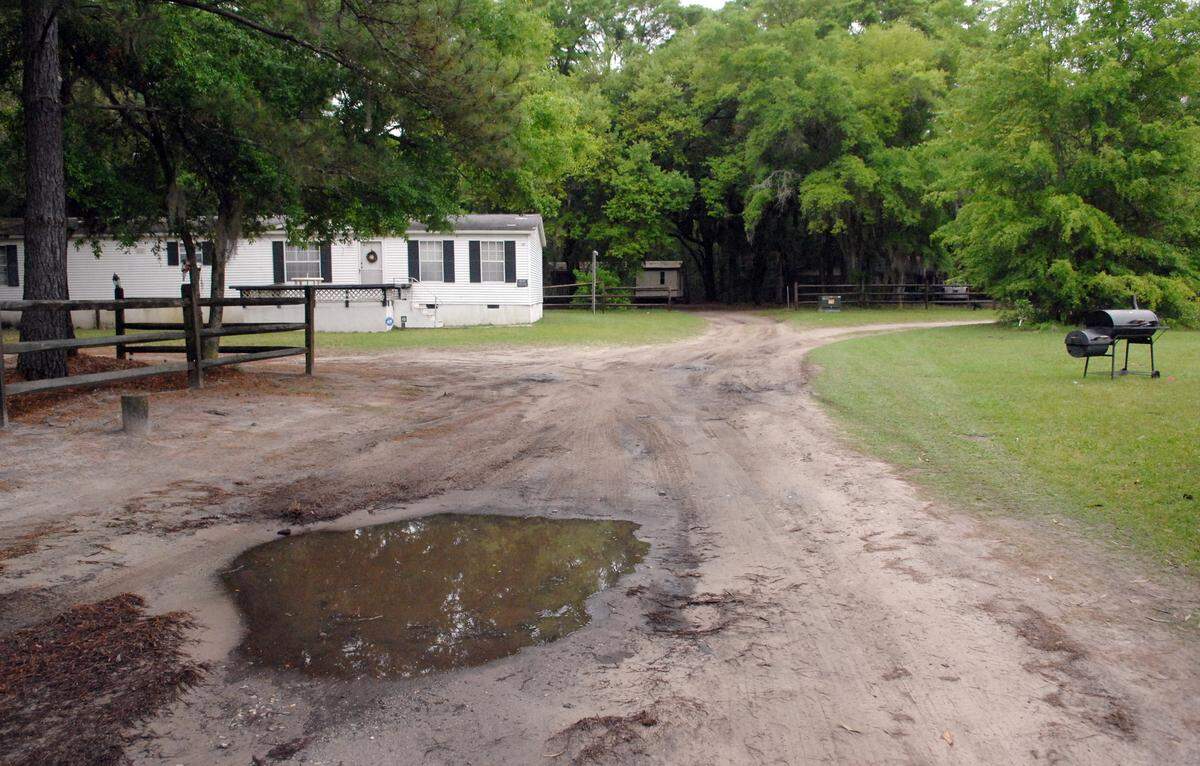
Hilton Head Town Council members in 2016, though, approved the town’s fee in an effort to acquire, maintain and pave dirt roads where some of the island’s poorest residents had lived for generations, according to previous reporting from The Island Packet and Beaufort Gazette.
“This is one of the very few revenue sources we could determine was available for this,” said Susan Simmons, the town’s finance director at the time.
Since then, the road usage fee revenue that the town has used for its capital improvements program has mostly flowed into its annual initiative to pave dirt roads, according to a review of budgets.
There are 37 privately owned dirt roads on the island now, including Mitchelville Lane and Pine Field Road, said Jeff Buckalew, interim director of infrastructure services, in a Wednesday phone call.
In 2015, meanwhile, Hilton Head had 94 dirt roads, and some of them were “rocky, pitted and prone to flooding,” according to an Island Packet and Beaufort Gazette investigation published that year.
“One of the reasons that we haven’t been able to” pave more dirt roads, Gruber said, “is because of the issues with acquiring right-of-way and making sure that we have sufficient width, and striking that balance between impacting properties but being able to provide that infrastructure.”