Taxpayers picked up the tab for $63K in repairs to Bluffton councilman’s business. Why?
In 2017, the Town of Bluffton sought a state grant meant for parks and recreation, intending to make major repairs to a public building. But the structure, the Bluffton Oyster Company, isn’t actually open to the public. It’s leased to a Bluffton council member and used as his private business.
The town won a grant for $50,000, but after roughly $63,000 in construction costs, state officials realized exactly where the funds were headed and reversed course, requiring that Bluffton foot the bill with local funds, according to records reviewed by The Island Packet and Beaufort Gazette.
The Oyster Company, a historic concrete building perched on land formed by discarded shellfish on the banks of the May River in Old Town Bluffton, has long been operated by council member Larry Toomer and his family.
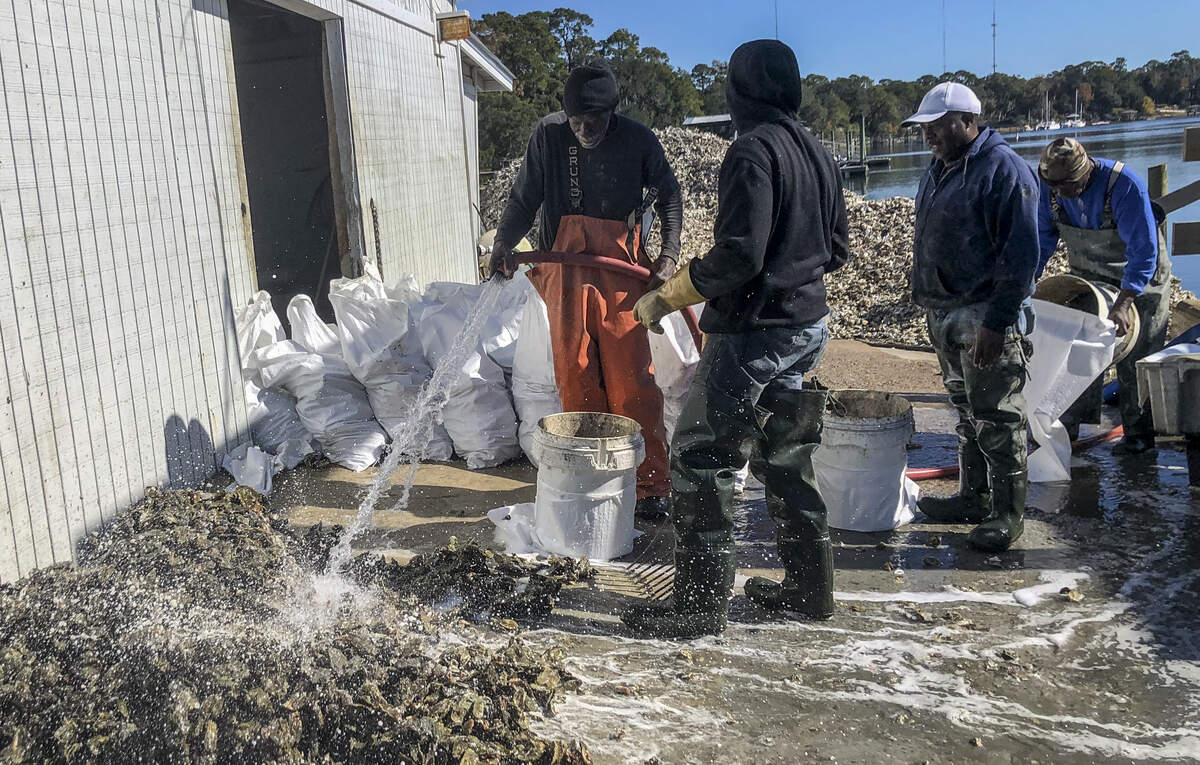
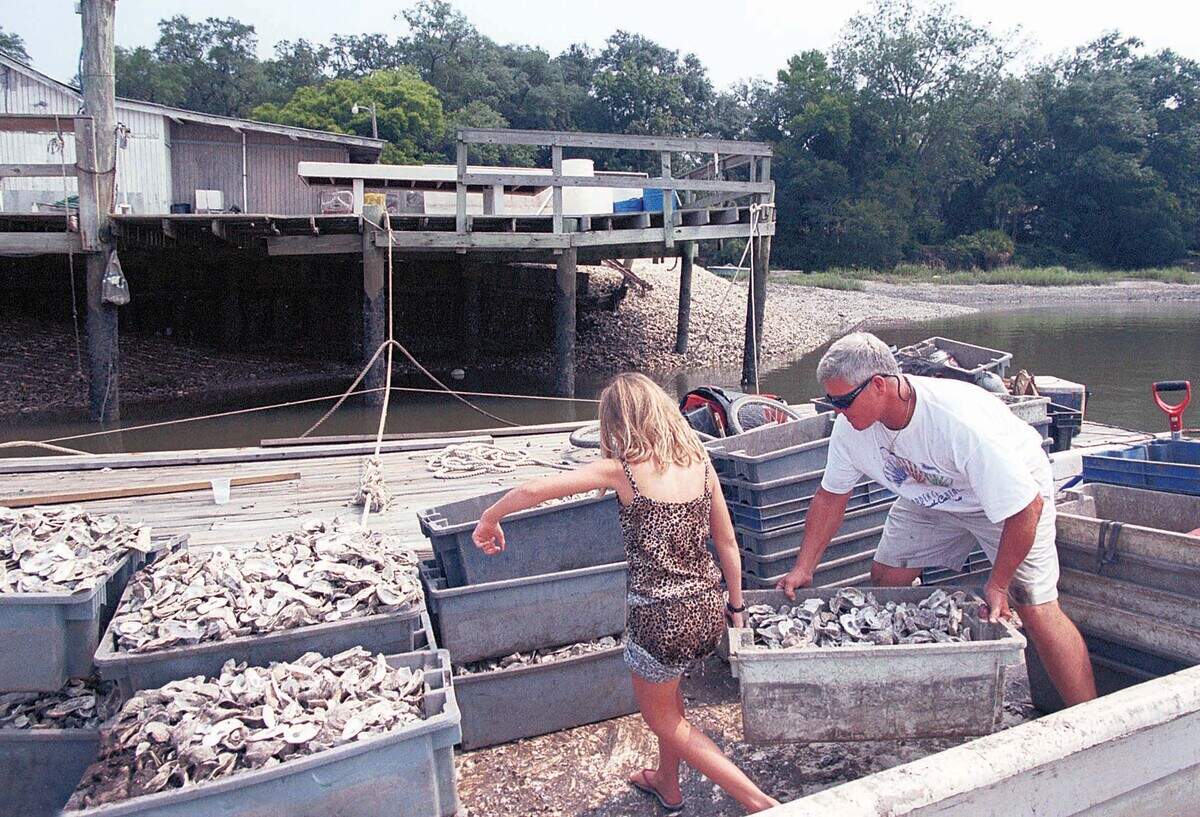
The last remaining traditional hand-shucking oyster house in South Carolina, the business has employed generations of Bluffton residents.
After Bluffton paid contractors for repairs to the building using S.C. Department of Parks, Recreation and Tourism grant money, a PRT official who inspected the project was surprised to find a private business operating there. Had state officials known, “the application for roof repairs would not have been approved initially,” a PRT staffer wrote in an email obtained by the newspapers through a public records request.
“In the application, the Oyster Factory was referred to as an historic structure and directly compared to the Garvin House, another historic structure on the park site that had been recently renovated to preserve local history. This led to the misunderstanding by SCPRT that the Oyster Factory building had become an interpretive facility or historic structure that was available for public use,” said Justin Hancock, director of PRT’s office of recreation, grants and policy, in a statement.
Records show that state officials worked with Bluffton to broker a workaround, applying the grant funds to other improvements to the surrounding Oyster Factory Park, and leaving town officials to cover the Oyster Company repairs with local tax dollars.
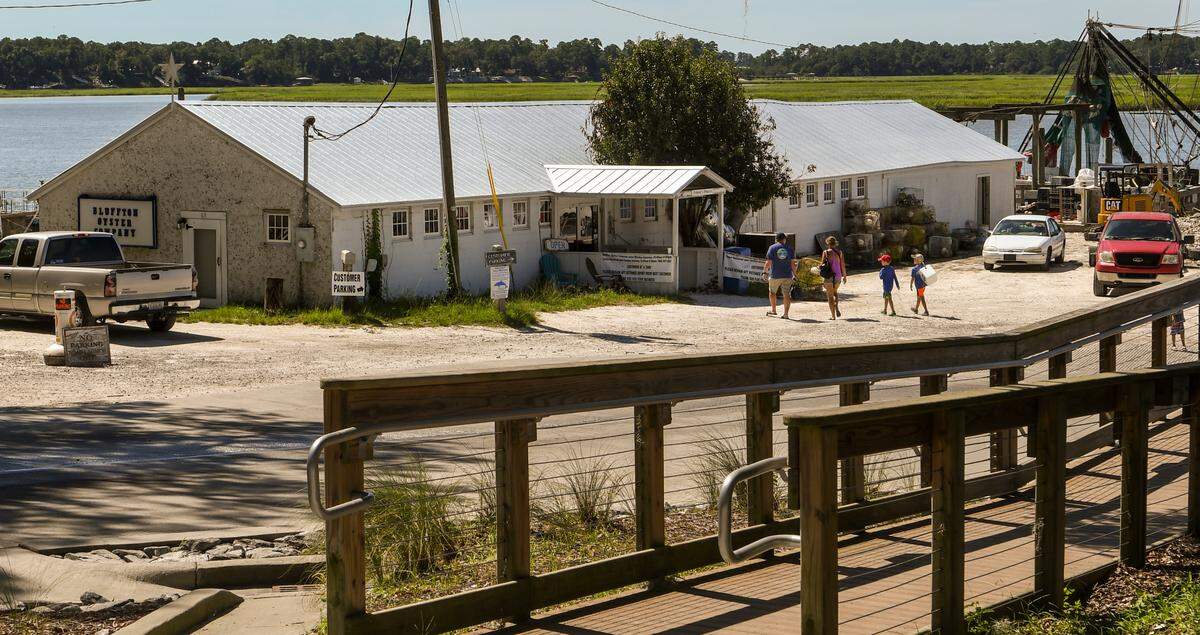
In interviews, Bluffton officials defended the decision to seek funds for the Oyster Company and described the funding switch as a simple fix to issues with the parks grant.
“We recognized issues with preserving the longevity of a publicly owned building,” said Town Manager Marc Orlando, describing the business as “a pillar of the community.”
Since 2003, Toomer has leased the building from Beaufort County, which assumed ownership of the structure in a land conservation deal that year. A 2002 lease, adopted by the county during the sale and in effect to this day, gave Toomer’s company a deeply discounted rent — about $4,000 a year rather than $24,000 a year.
In exchange, the Oyster Company is required to pay all “operating costs,” defined as “all capital and non-capital expenditures required to be made in the operation, management, repair and maintenance” of the premises.
Toomer, a lifelong fisherman descended from generations of oyster men, said he and his family have constantly made out-of-pocket repairs to the 66-year-old building after hurricanes and to meet state health requirements. “We’ve spent all we made trying to stay in business many, many years,” he said, adding that the county never contributed to the building.
When Bluffton officials sought grant money to replace the Oyster Company’s roof and make other structural repairs in 2017, Toomer welcomed the renovations, but said he never asked for them, nor was he involved in looking for the funds.
Bluffton’s application for a Park and Recreation Development Fund grant was submitted in September 2017, seven months after an agreement with Beaufort County transferred full responsibility for the property to the Town of Bluffton.
Orlando said the improvements were “a staff initiative” and part of the overall plan Bluffton developed for the surrounding Oyster Factory Park. He defended the decision by citing a provision in the lease for the building that exempted the Oyster Company from paying for maintenance due to “normal wear and use.”
“We didn’t spend funds on the Oyster Company outside of the terms of the lease, without having it carefully examined by our attorney,” he said.
Toomer, who has sat on town council since 2012, said he always consults with legal counsel on potential conflicts of interest and said he wasn’t involved in the town’s decision to repair the building where his business operates.
“I have nothing to hide,” he said.
Bluffton seeks state money for roof repairs at historic oyster house
In February 2017, the Town of Bluffton took charge of Oyster Factory Park, including the Oyster Company building. As part of an agreement inked with Beaufort County, the town agreed to manage the land, ending years of joint responsibility with the county.
In the process, Bluffton also became the Oyster Company’s landlord, assuming responsibilities outlined in a 2002 lease signed when the land that is Oyster Factory Park was purchased for conservation purposes.
Prior to that lease agreement, Toomer’s company had paid $24,000 a year for use of the building, according to archived Beaufort County Council meeting minutes from the time. The new arrangement reduced that obligation to roughly $4,000 a year, with the understanding the the business was a unique and historic aspect of the area that deserved preservation.
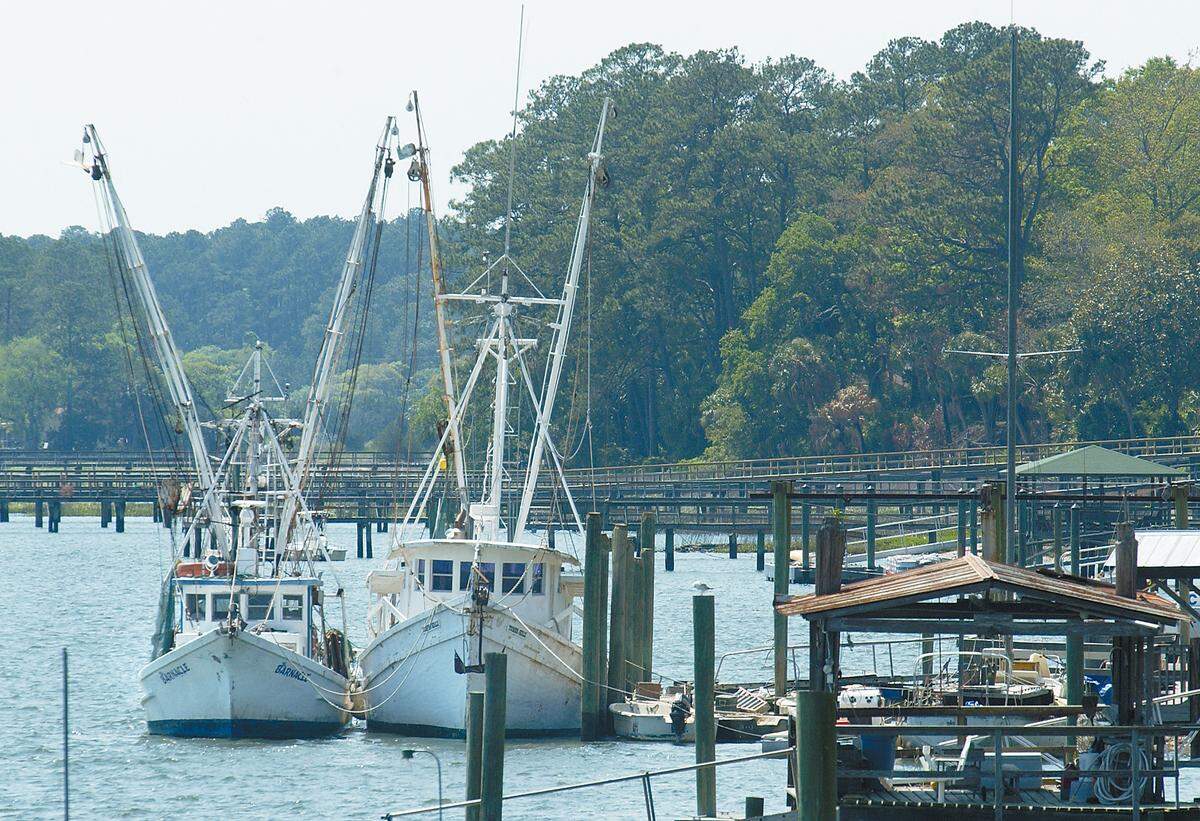
The agreement also left the Oyster Company on the hook for all maintenance required to upkeep the businesses’ permitting and operations, according to the lease.
“Beaufort County has not put a dime in there since the day they bought it,” said Toomer, describing annual resurfacing of the floors and repairs to the roof and walls he carried out each year to meet health and safety requirements. “It’s not been easy. It’s been a hardship.”
The county did allocate money to the surrounding Oyster Factory Park and once considered investing in the Oyster Company building.
Former County Administrator Gary Kubic, who retired in 2017, recalled that Bluffton officials once approached him looking for a local match for a state grant for repairs on the building. Kubic said he sent inspectors to the facility and reviewed their report, but decided the upkeep of the building hadn’t met the obligations outlined in the lease, and he declined to support the project. (In response to a public records request, Beaufort County said it couldn’t locate the report Kubic referenced.)
“I thought that the county should not invest more money until the matter was completely reviewed or assessed,” Kubic said.
Toomer remembered the inspection and that renovations to bring the building up to code would have cost over $300,000. “They didn’t have the funding, or didn’t want to do it for whatever reason,” he said.
But when Bluffton assumed full control of Oyster Factory Park in 2017, things changed.
Town staff set out to secure funds to replace the aging roof, said Town Manager Orlando, who described it as leaky and growing mold following repeated hurricanes.
“The exterior shell of the building, based upon the lease, isn’t the responsibility of the tenant,” he said.
Town Attorney Terry Finger said that interpretation is drawn from one clause of the agreement, which says the tenant must maintain the roof, windows and other structural elements of the building in good condition “except for normal wear and use.”
In August 2017, Deputy Town Manager Scott Marshall fired off a letter addressed to lawmakers representing Beaufort County in the state legislature. “Costs for repairs required to maintain the facility exceed what can reasonably be expected of its current tenant,” it said, outlining the town’s plan to apply for a Parks and Recreation Development Fund grant from the state.
Toomer said he remembered first hearing about the grant from State Rep. Bill Herbkersman, who signed off on the application, along with other state legislators representing the area.
“No question about it, I was behind that,” Herbkersman said when asked about his role in seeking the grant.
The lawmaker said that Bluffton — including the Oyster Company — is a “performing asset,” drawing tourism dollars from across the country. “We’re going after every single grant that we can,” he said.
The final grant application, which included a copy of Toomer’s lease for the building, called the structure and the company occupying it “a vital part of the history of Bluffton,” but warned that the roof “has become hazardous to both workers and visitors.”
The grant was approved, records show.
First publicly funded repairs to Oyster Company in years
In 2018, Bluffton paid several contractors to carry out repairs to the building, replacing the roof and also removing rotten wood, installing new windows and a door and adding new insulation and a coat of paint, according to invoices obtained by the newspapers.
Orlando said the work was part of a ongoing capital improvement project at Oyster Factory Park. In January 2018, Bluffton Town Council voted unanimously to amend the year’s budget, adding in the state funds for the Oyster Company and a small piece of local accommodations tax revenue for the renovations.
Toomer voted on the amendment, a procedural formality that allows town council to OK changes to the budget mid-year, meeting minutes show. The council minutes reflect the vote was to add the state parks and recreation funds for “structural repairs at Oyster Factory Park.”
“It probably would have been more prudent for him to recuse himself from that vote or at least offer to recuse himself from that vote,” said John Crangle, an S.C. ethics advocate, who described the repairs to the building as “indirect benefit” to Toomer and therefore not a potential violation of the state’s ethics law.
Crangle pointed to free legal advice available to public officials in these situations from ethics experts at the S.C. Ethics Commission.
Toomer said he asked the town attorney about this vote and was advised he did not need to recuse himself. Previous council minutes show the council member removed himself from a vote on Bluffton taking over responsibility for the Oyster Factory Park, given it would affect his business’ lease.
“I try to do things the right way,” he said. “I don’t serve on council for the money or for the benefits to myself.”
“...had she known the current use of the building...”
When the repairs, which totaled $63,267.76, were finished, Parks, Recreation and Tourism sent a staff member to inspect the property ahead of reimbursing the town for the expense.
What the inspector found caused the state agency to reverse course. The use of the public building for a for-profit business came as news to the administrators of the grant program.
“[H]ad she known the current use of the building, the application for roof repairs would not have been approved initially,” wrote a PRT official summarizing the road block, in an email obtained through public records request.
In response to questions about why the grant was approved in the first place, Hancock, director of PRT’s office of recreation, grants and policy, singled out Bluffton’s description of the Oyster Company in its application for the grant.
“Roof replacements for park structures are an allowed use of PARD funds; however, the structure’s current primary use must provide or support either active or passive recreation opportunities. When the application was initially reviewed and approved, SCPRT did not interpret the project narrative to mean that the building was currently being used exclusively by an active business,” he said in a statement.
“I was surprised that we could apply for a grant, be awarded a grant, and then as we close out the grant, PRT tell us that it’s not how we can use the money,” Orlando said.
Such compliance issues with parks and recreation grants are rare, according to PRT officials. Eventually, the state agency and Bluffton officials resolved the problem, emails show.
The state agency arranged a switch, grant records show, allowing the grant funds to cover improvements to the public parking lot by the Oyster Company.
The Town ended up using hospitality tax funds to cover the Oyster Company repairs, Orlando said, describing the switch as just another routine part of his role managing changes in the town’s budget.
By mid-2018, the Oyster Company had a brand new roof.
“It was something that I think needed to be done, and I can only say that we were grateful it was able to be done,” said Toomer.