Hilton Head ex-council member settles, drops defamation claims. Hoagland gets jail time
A long-awaited jury trial in a defamation lawsuit against Skip Hoagland, scheduled to start Monday, didn’t happen.
Instead, the outspoken government critic, who was not in court, was sentenced to 60 days in jail, and the defamation case against him was dropped.
Tenth Judicial Circuit Judge Lawton McIntosh found Hoagland in criminal contempt, the final decision in a day full of surprises, after learning Hoagland had defied his order not to talk about the case.
McIntosh sentenced Hoagland to 60 days in jail and a $2,500 fine — or 100 hours of community service and a $1,000 fine — as he instructed Hoagland’s attorney to get his client back to the U.S. to serve his sentence.
The day began with Hoagland’s insurance company Privilege Underwriters Reciprocal Exchange settling with Kim Likins, the former Hilton Head Island town council member who had sued Hoagland, in a case completely separate from the defamation suit.
The amount, undisclosed, apparently is enough to repay the nearly $200,000 in legal expenses the town of Hilton Head Island had paid on Likins’ behalf. Then Likins dropped all claims against Hoagland for defamation, ending the need for the 500 potential jurors summoned to the courthouse.
That left one matter for McIntosh: what to do about a permanent restraining order against Hoagland that would ban him from contacting Likins or her employer.
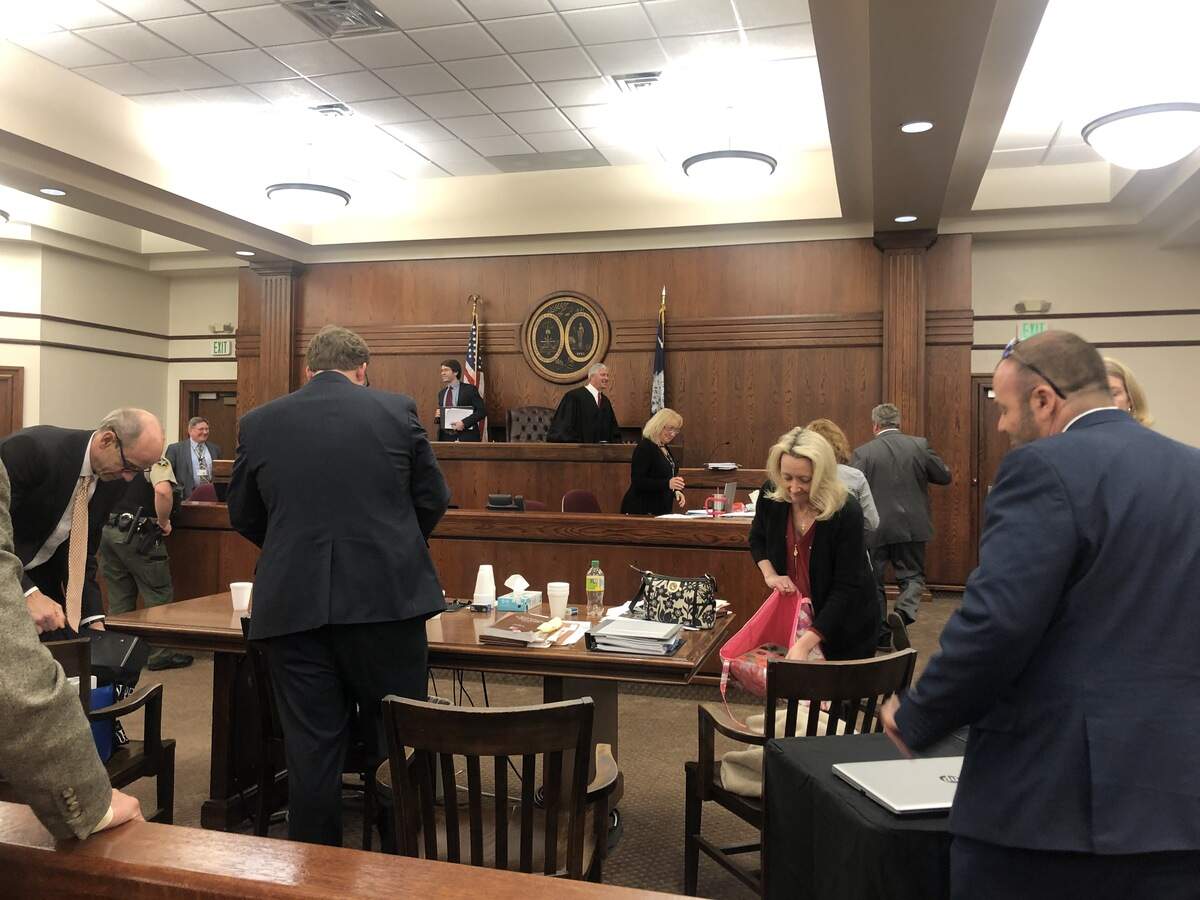
The restraining order was put in place. But then the visibly frustrated McIntosh, a circuit judge for 11 years, said he’d never seen someone with such disregard for a court or its orders.
Hoagland has argued that his emails are his right to free speech, but McIntosh told Hoagland’s attorney that his client was violating the gag order.
“I’ve never seen such a thing,” McIntosh said. “I thought about putting him in jail right then and there.”

In a text to The Island Packet Monday evening, Hoagland said he will be “filing an appeal on all this insanity. None of this would have happened if Likins used her own money including a gag order. I will file 2 more lawsuits for damages and keep saying the same truth and facts.”
What was supposed to happen?
Monday was intended to be the first day of a jury trial, expected to run as long as two weeks, over a 2015 defamation lawsuit.
The suit, which Likins filed against Hoagland in December 2015, alleged that Hoagland called Likins’ bosses and told them she was unfit for her job as director of the Boys & Girls Club of Hilton Head Island.
Hoagland did so after she voted, along with three others on council, in favor of a contract with the Hilton Head Island-Bluffton Chamber of Commerce — a contract Hoagland had repeatedly criticized.
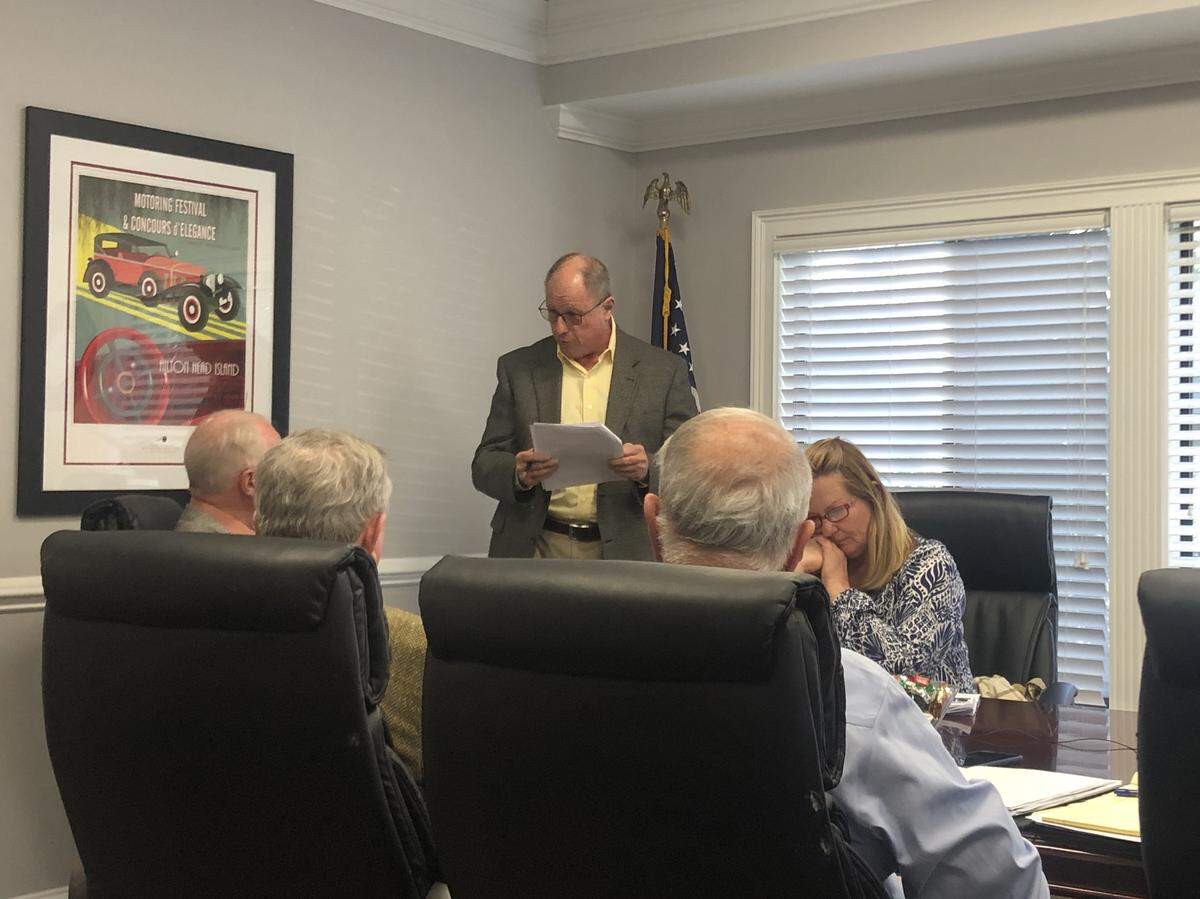
Likins did not lose her job, but her lawsuit alleged that Hoagland’s attacks damaged her mental health and reputation and that Hoagland was illegally trying to influence her vote as a public official.
Shortly after filing her defamation suit, Likins obtained a restraining order against Hoagland that barred him from contacting members of the club’s board of directors, publishing defamatory statements or harassing Likins about her job.
What actually happened?
On Monday morning, Likins and her legal team dismissed all her claims of defamation against Hoagland.
This came as a surprise to most — including friends and associates of Likins.
Submitted to the court was notice of a settlement in a related case where Likins sued Hoagland, his wife and Hoagland’s insurance company after he failed to identify his $7.5 million insurance policy as a source of money for the claims against him in the defamation case.
The settlement was not public as of Tuesday morning.
Likins’ attorney refused to talk about the case Monday afternoon.
Hoagland’s attorney, Barrett Brewer, said the settlement “provides [Likins] the capital to repay the town.”

The defamation suit was controversial because Likins’ legal counsel was paid by the Town of Hilton Head Island. The council unanimously approved footing the bill for the suit in 2015 because officials said she was harassed because of her public duties.
In the five years since the case’s filing, the town has spent $194,447 on the suit.
Once the settlement was submitted to the court, Likins dropped her claims of defamation. Brewer said she did so because the settlement in the separate case negated the need to pursue additional monetary damages from Hoagland.
McIntosh then heard evidence for the permanent restraining order.
“She just wants him to stop harassing her and her employers,” Likins attorney Trenholm Walker told the court. “And we are not asking for damages for anything for the Boys and Girls Club.”
McIntosh granted the injunction, but went further.
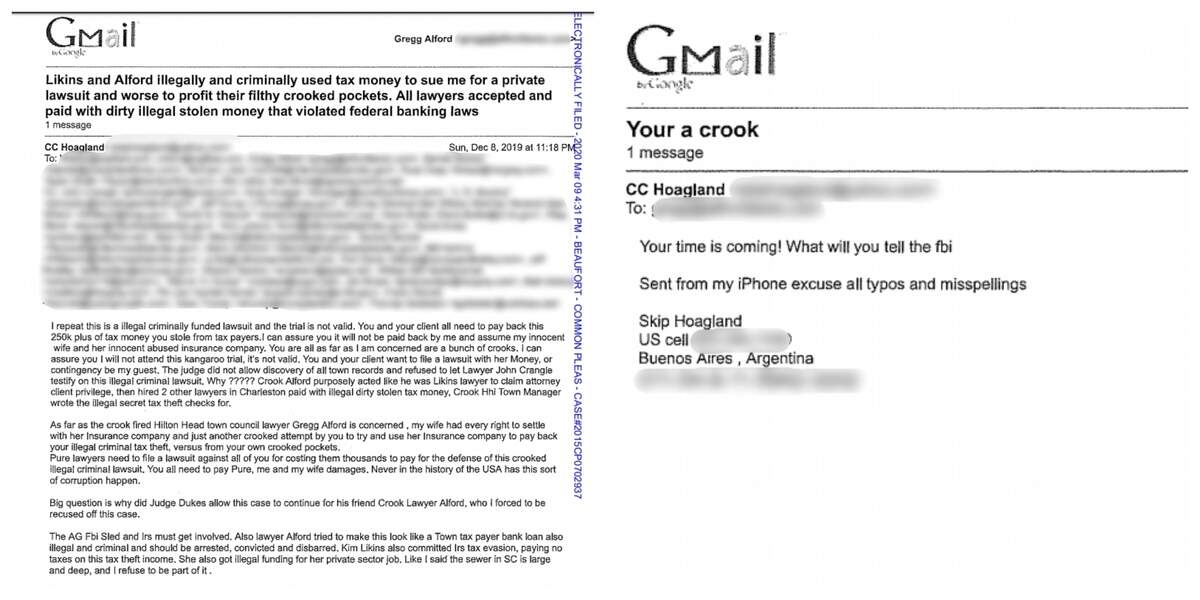
He found Hoagland in criminal contempt after he was handed 35 pages of emails Hoagland sent about the case to Greg Alford, another of Likins’ attorneys, and others.
The emails, which range from long-winded essays calling Alford a crook and liar to 10-word threats of the FBI coming to arrest Alford, are typical of Hoagland.
McIntosh sentenced Hoagland to 60 days in jail and a $2,500 fine for disregarding his orders to every party in the case not to discuss it.
If Hoagland serves 100 hours of community service, his sentence can be reduced to a $1,000 fine, McIntosh said.
Town’s involvement
Some residents have questioned why the town was financially involved in a civil lawsuit.
In late 2015, after Likins sued Hoagland, town council unanimously approved a resolution allowing the town to pay lawyers “to protect council members through appropriate legal process from improper and/or unlawful harassment by third parties.”

However, the resolution does not specifically mention defamation and does not define “improper harassment.”
After the council passed the resolution, Hilton Head resident and businessman Peter Buonaiuto countersued the town for $183,000, claiming the town was illegally paying for Likins’ suit.
That suit said Hoagland’s critiques of Likins were protected under the First Amendment and that she was using “the Town’s unlimited taxpayer funded resources to sue a private citizen and bankrupt him with attorney fees.”
Within 18 months, the town had spent nearly $185,000 for Likins’ litigation. In August 2017, the council changed the way it paid legal counsel from an hourly rate to a contingency fee agreement.
Under the contingency agreement, had Likins won the case, 30% of any award would be paid first to the law firms that represented her: Alford & Thoreson Law Firm of Hilton Head and Pratt-Thomas Walker of Charleston.
After the law firms were paid, the agreement said the town would be reimbursed for its costs. Any leftover balance would be awarded to Likins.
This story was originally published March 10, 2020 at 1:35 PM.