
Metal detectorist finds two Roman swords — then ancient settlement uncovered
From the first coin discovered in an ancient hoard to the first stone of a medieval wall, many major archaeological discoveries stem from one initial find.
In the United Kingdom, a recent catalyst of discovery came in the form of two centuries-old weapons discovered by a metal detectorist.
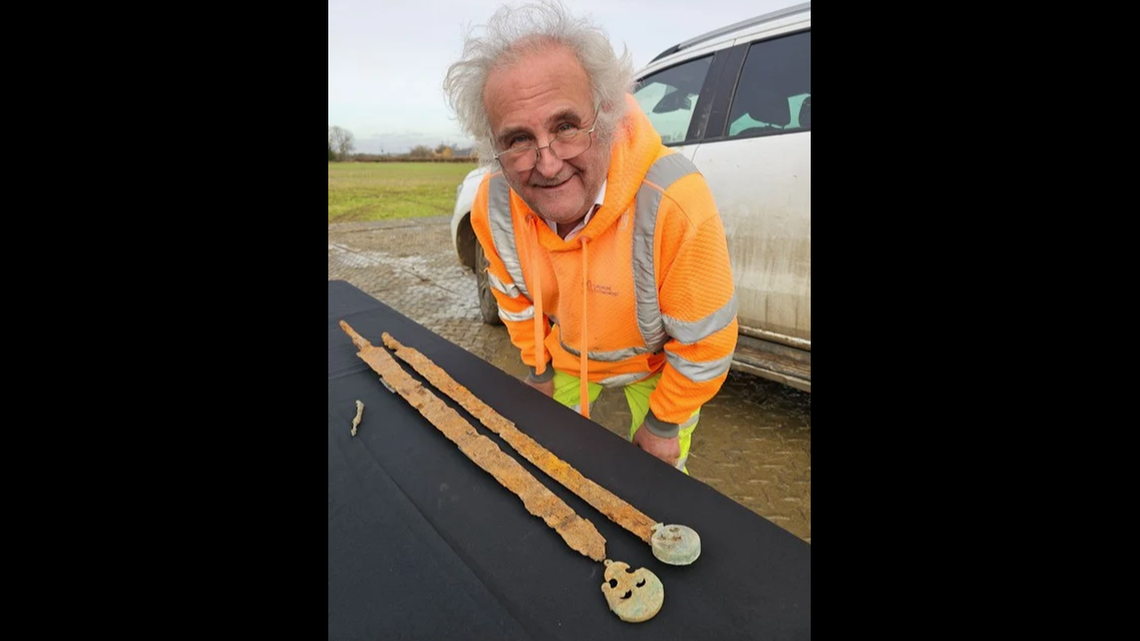
Glenn Manning was only on his second metal detecting search ever when his machine pinged on two Roman-era swords in the spring of 2023 in Willersey, according to a July 4 news release from Historic England and an interview with The Guardian.
The swords were donated to the Corinium Museum, and X-rays were later taken of the weapons to see past the degradation, according to Historic England.
The swords still had traces of their scabbards, or cases, but had been severely damaged over time, officials said.
“The X-rays clearly show that the swords were constructed differently: one has evidence of decorative pattern welding running down the (center), whereas the other sword is plain,” Historic England said. “The pattern-welded sword would have been more expensive to produce and therefore higher status.”

The swords themselves were a significant find, but their discovery sparked interest in searching the area for any other Roman items, officials said.
Instead, archaeologists found an entire settlement.
At least three, and possibly more, Iron Age ring ditches reaching about 60 feet across were unearthed, as well as a large rectangular enclosure, according to Historic England.
Archaeologists also found “possible evidence of a Roman villa, which may also have a pair of flanking wings, one at either end of a central range,” according to the release.
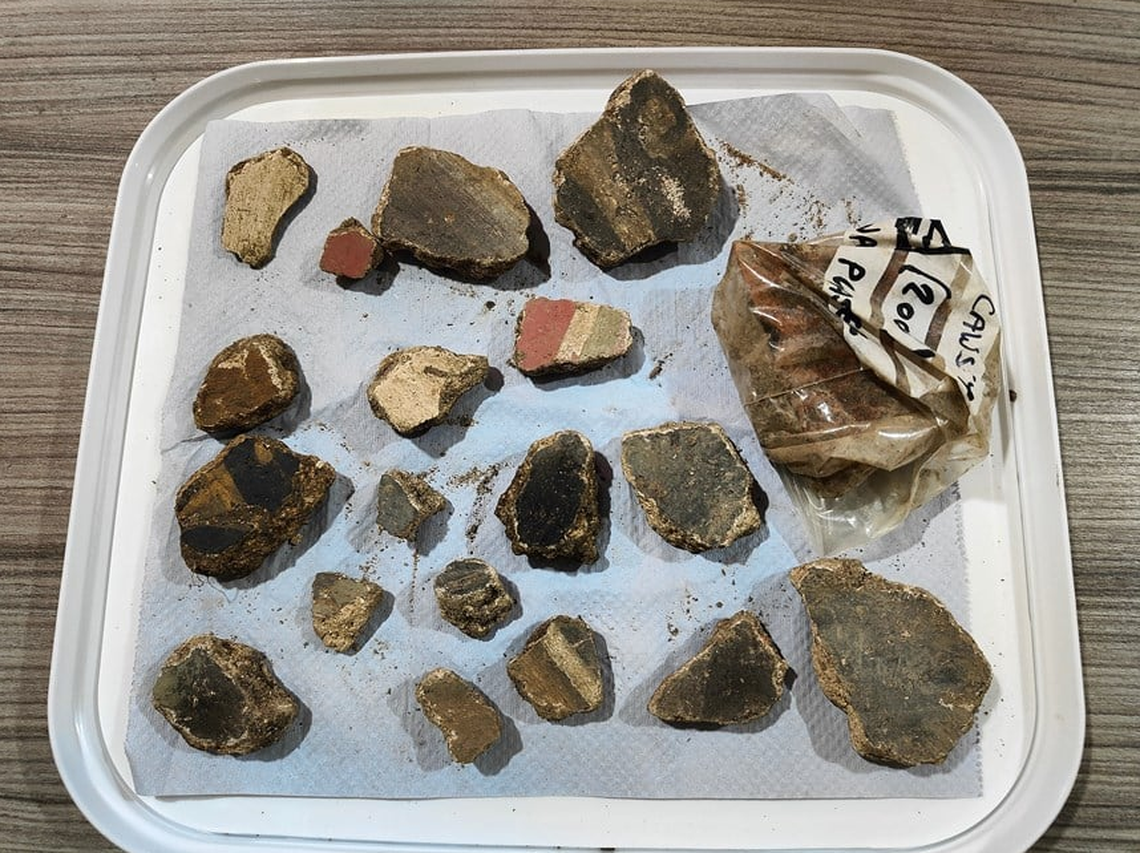
Roman building materials like ceramic roofing tiles, box flue tiles and painted plaster were also found at the site, archaeologists said.
Finding the swords, and therefore the settlement, was like the “stars aligning,” Cotswold Archaeology project officer Peter Busby, told The Guardian.
Busby said the swords had been damaged by farm machinery and likely would have been destroyed if they weren’t identified during the metal detecting search.
“It was phenomenally lucky,” Busby told the outlet. “The swords were within half an inch, no more than an inch, of oblivion.”
The swords are believed to be “spatha” or long swords used by horse-riding Romans in the second and third centuries and date to about the same time as the suspected villa, according to Historic England.
The swords may have been intentionally buried in the courtyard or garden near the villa to protect them from being stolen by the Saxons who were moving through the region, officials told The Guardian.
Along with the Roman items, archaeologists also uncovered an older Iron Age burial with an iron arm band and a horse skull in a nearby pit, as well as an arm and hand found in a different trench, according to Historic England.
The human remains were dated to between 800 and 100 B.C., according to The Guardian.
A final report is still to come from archaeologists, and more work is needed to confirm the Roman villa and understand why it might have been built at an Iron Age site, officials said.
“I am very proud of how much our team of volunteers, professional archaeologists and metal detectorists achieved in 15 days, despite the heavy January rain,” Busby said in the release. “We turned a ploughed field, the swords and geophysical anomalies into the story of a settlement spanning hundreds of years — the first stage in telling the history of these fields and their cavalry swords.”
Willersey is in south-central England, about a 95-mile drive northwest from London.
This story was originally published July 9, 2025 at 3:21 PM with the headline "Metal detectorist finds two Roman swords — then ancient settlement uncovered."
