‘Shark graveyard’ — with 750 fossilized teeth — lurks under Australian sea, photos show
%20Islands%20at%20depth%205400m_Credit%20Yi-Kai%20Tea.jpg "Marine researchers discovered a new hornshark species and deep-sea “shark graveyard” with fossilized teeth near the Cocos (Keeling) Islands.")
—Marine researchers discovered a “shark graveyard” and a new shark species while exploring the bottom of the ocean off the coast of Australia.
Scientists aboard the Investigator research vessel used underwater cameras and trawling equipment on a voyage to the Cocos (Keeling) Islands Marine Park, CSIRO, the national science agency in Australia, said in a Dec. 7 news release.
Surveying the seafloor, the researchers trawled about 17,700 feet — or 3.4 miles — below the surface, the release said. On their last sweep, the trawling net brought up more than 750 fossilized shark teeth.
%20Islands%20at%20depth%205400m_Credit%20Yi-Kai%20Tea.jpg "04a_Shark teeth collected from seafloor near Cocos (Keeling) Islands at depth 5400m_Credit Yi-Kai Tea.jpg")
Teeth found at the “shark graveyard” included a mix of “modern and ancient sharks,” Glenn Moore, curator of fishes at the Western Australian Museum, said in the release. “It was astounding that such a large number of teeth were collected from a relatively small area on the seafloor.”
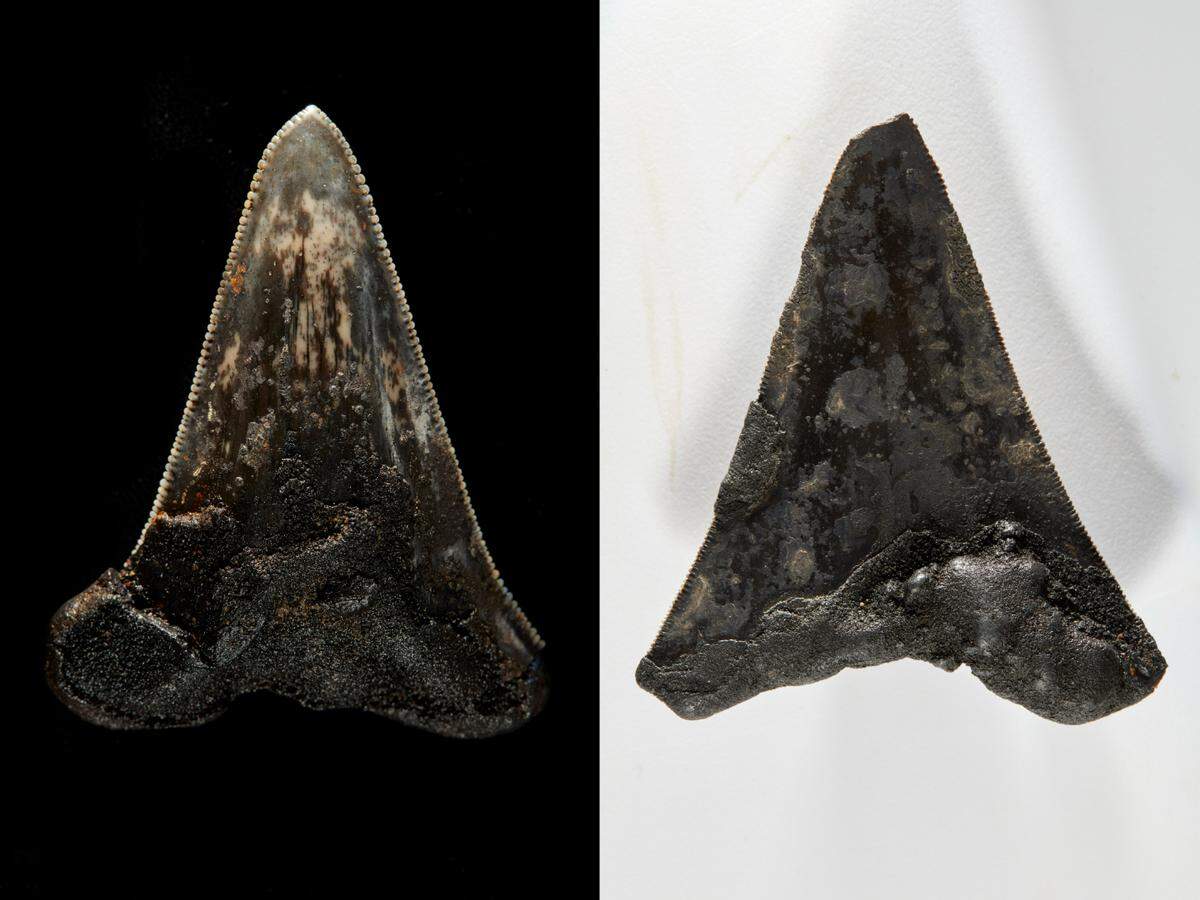
Researchers found fossilized teeth belonging to “the immediate ancestor of the giant megalodon shark,” Moore said. “This shark evolved into the megalodon, which was the largest of all sharks but died out about 3.5 million years ago.”
Photos show the fossilized megalodon tooth next to the fossilized tooth of its immediate ancestor. Both teeth have a black color with smaller ridges running along the sides and point.
The Cocos (Keeling) Islands are a remote territory in the Indian Ocean, about 2,570 miles northwest of mainland Australia and 800 miles southwest of Jakarta, Indonesia.
The graveyard was not the only exciting discovery. On a second voyage to explore the Gascoyne Marine Park, researchers discovered a new shark species when they collected a hornshark specimen, the release said.
The shark specimen is small with a brown and tan striped pattern and two fins on top, photos show. Its head has a square-like shape with a blunt nose.
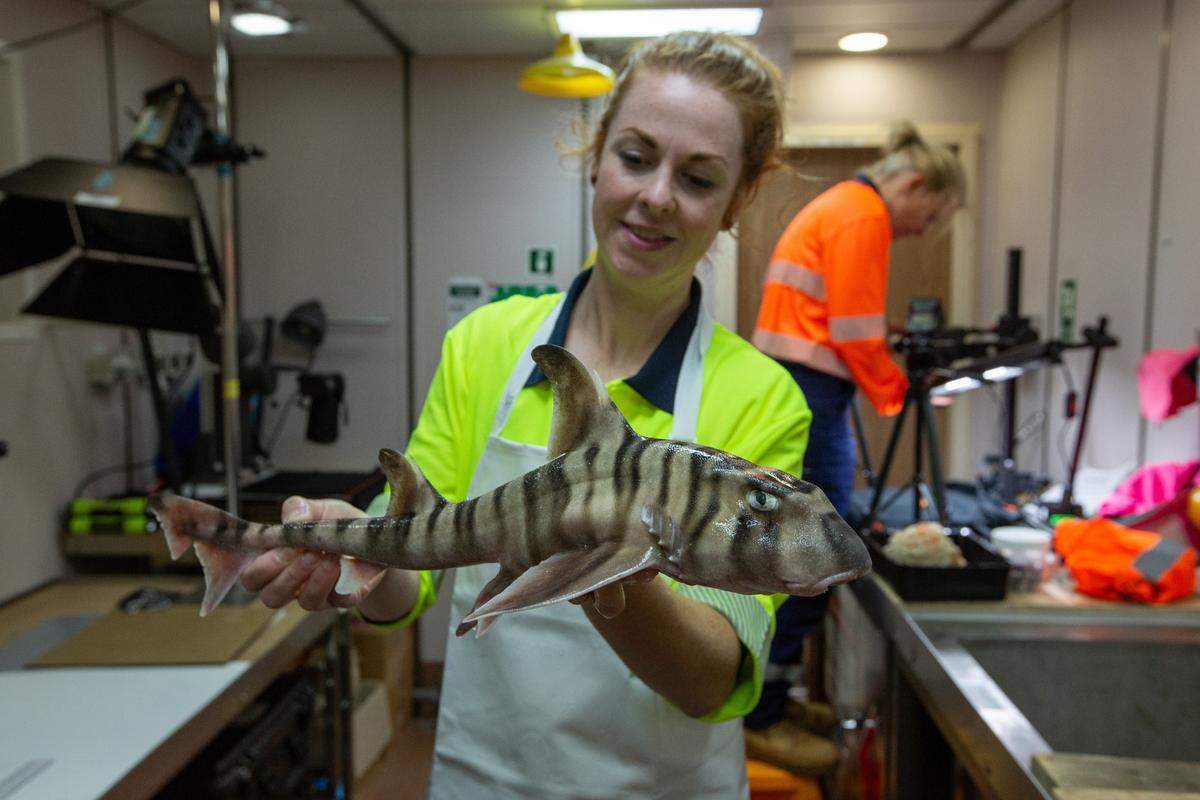
A shark expert from CSIRO’s Australian National Fish Collection, Will White, described the specimen as “a striking small, stripey hornshark,” per the release. “This species is unique to Australia, but it hasn’t yet been described and named. The specimen we collected will be incredibly important to science because we’ll use it to describe the species,” he said.
Hornsharks are generally slow-moving creatures found in shallow waters, the release said. Most remain camouflaged in the seaweed and rocks during the day then come out at night to feed. This new hornshark, however, was found almost 500 feet below the surface and nothing is known about its behavior.
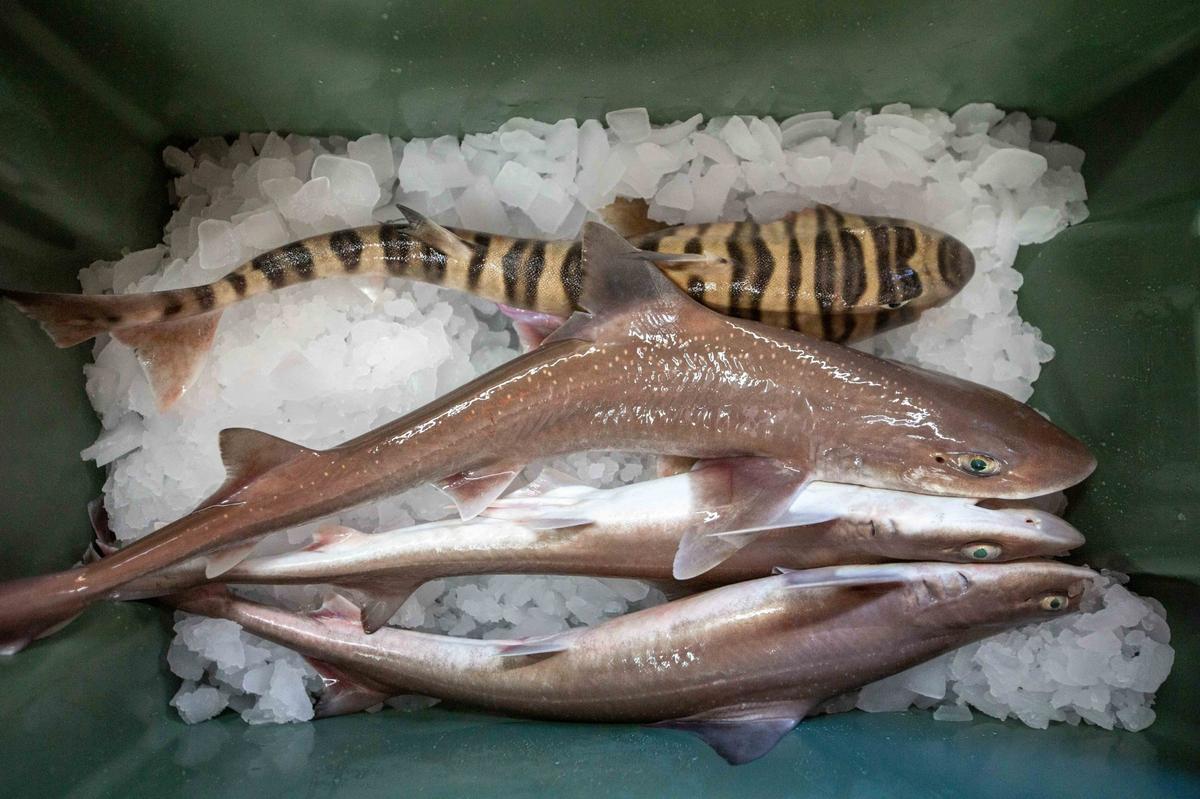
The researchers collected other shark specimens as well, photos show. Occasionally on the voyages, some sharks tried biting the researchers’ equipment, the release said.
“Australia has a truly enormous marine estate that’s home to some of the most diverse marine life on the planet,” White said, “but we still know very little about what lives beneath the waves.”
Gascoyne Marine Park is located off the northwest coast of Australia, near the Cape Range National Park.
This story was originally published December 7, 2022 at 6:33 PM with the headline "‘Shark graveyard’ — with 750 fossilized teeth — lurks under Australian sea, photos show."