
Bald eagles bouncing back from the brink of extinction, officials say. How’d it happen?
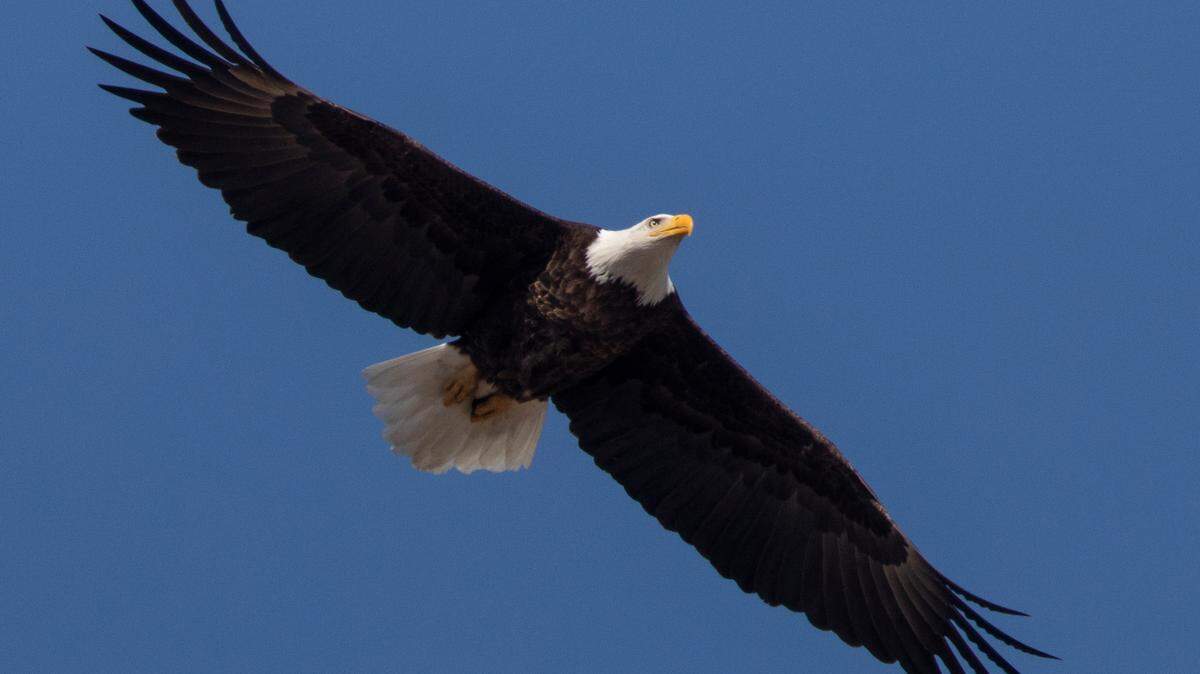
Bald eagles were on the brink of extinction — but now their population is booming, officials said.
There are now about 316,700 individual bald eagles in the continental U.S., the U.S. Fish and Wildlife Service said Wednesday. The population has quadrupled since 2009.
“The recovery of the bald eagle is one of the most well-known conservation success stories of all time,” service Principal Deputy Director Martha Williams said in a news release. “The service continues to work with our partners in state and federal agencies, tribes, non-government organizations and with private landowners to ensure that our nation’s symbol continues to flourish.”
Over the past several decades, there have been multiple conservation efforts to protect the American bald eagle. Officials have banned certain pesticides and protected the species to help grow the population.
The population started to boom with protection, according to the Fish and Wildlife Service.
“Bald eagles once teetered on the brink of extinction, reaching an all-time low of 417 known nesting pairs in 1963 in the lower 48 states,” the Fish and Wildlife Service said. “However, after decades of protection, the banning of the pesticide DDT, and conservation efforts with numerous partners, the bald eagle population has flourished, growing to more than 71,400 nesting pairs.”
To get a population estimate, biologists and observers conducted aerial surveys in 2018 and 2019. They survey “high-density eagle nesting areas” to get an accurate estimate of the number of eagles in the nesting area. In lower density areas, the agency used Cornell Lab of Ornithology data to get a count.
“Working with Cornell to integrate data from our aerial surveys with eBird relative abundance data on bald eagles is one of the most impressive ways the service has engaged with citizen science programs to date,” service Assistant Director for Migratory Bird Program Jerome Ford said. “This critical information was imperative to accurately estimate the bald eagle population in the contiguous United States.”
This story was originally published March 24, 2021 at 5:07 PM with the headline "Bald eagles bouncing back from the brink of extinction, officials say. How’d it happen?."